
Explore the precision and efficiency of superconducting sensors, their technological advances, applications, and the future of detection technology.
Introduction to Superconducting Sensors
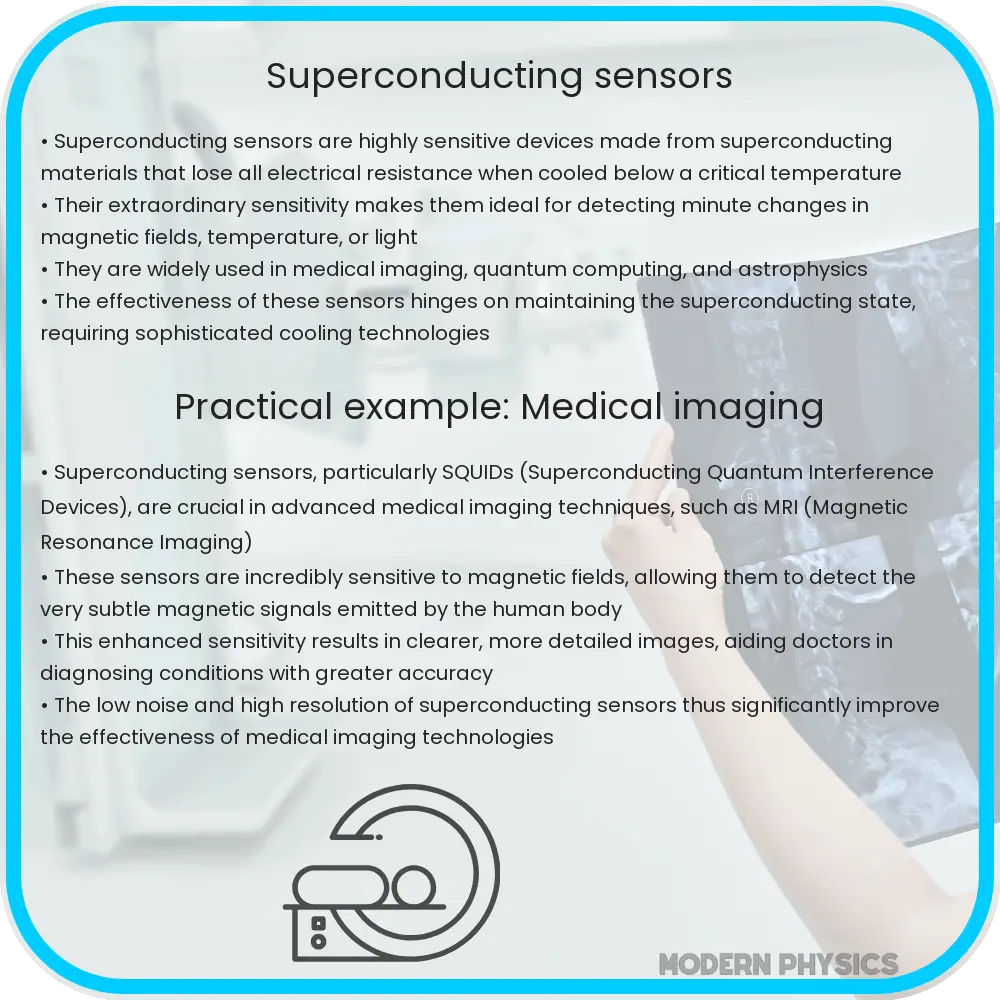
Superconducting sensors represent a significant leap forward in measurement and detection technology. By utilizing materials that exhibit superconductivity, these sensors achieve unparalleled levels of precision and efficiency. Superconductivity, a phenomenon where materials conduct electricity with zero resistance below a certain temperature, enables these sensors to detect even the most minute changes in physical quantities such as temperature, magnetic fields, and electrical current.
Advancements in Superconducting Sensor Technology
The evolution of superconducting sensor technology has been marked by substantial advancements in materials science and cryogenic engineering. High-Temperature Superconductors (HTS) like Yttrium Barium Copper Oxide (YBa2Cu3O7-x) have revolutionized the field, operating at higher temperatures than traditional superconductors. This development has made superconducting sensors more practical and accessible for a wide range of applications.
Applications and Precision
Superconducting sensors are employed in a variety of fields, from medical imaging to quantum computing. In medical diagnostics, for example, superconducting quantum interference devices (SQUIDs) are used in magnetoencephalography (MEG) to map brain activity with remarkable precision. The ability of these sensors to detect minute magnetic fields generated by neuronal activity offers a non-invasive method for diagnosing and studying neurological disorders.
Energy Efficiency and Environmental Impact
One of the most notable advantages of superconducting sensors is their energy efficiency. Because they operate without electrical resistance, they consume significantly less power compared to conventional sensors, contributing to lower operational costs and a reduced environmental impact. Additionally, the use of superconductors in sensors eliminates the generation of heat during operation, further enhancing their energy efficiency and making them ideal for use in sensitive environments.
- Improved Sensitivity: Superconducting sensors provide unmatched sensitivity, allowing for the detection of extremely low-level signals.
- Reduced Noise: The absence of electrical resistance minimizes signal noise, leading to clearer and more accurate readings.
- Higher Efficiency: Lower energy consumption and reduced heat generation make superconducting sensors both cost-effective and environmentally friendly.
Technological Innovations and Future Directions
The relentless pursuit of innovation in the field of superconducting sensors is paving the way for groundbreaking applications. Recent advancements include the development of hybrid sensors that combine superconducting materials with other technologies, such as nanomaterials and photonics, to enhance performance and functionality. Furthermore, ongoing research into room-temperature superconductors holds the promise of revolutionizing the field by eliminating the need for costly and complex cryogenic cooling systems.
Challenges and Solutions
Despite their numerous advantages, superconducting sensors face certain challenges. The requirement for low operating temperatures necessitates the use of cryogenic systems, which can be expensive and cumbersome. However, advances in cryogen-free refrigeration and the development of higher-temperature superconductors are mitigating these issues. Additionally, integrating superconducting sensors into existing systems and ensuring compatibility with standard electronics remain technical hurdles. Nevertheless, interdisciplinary collaboration among scientists, engineers, and technologists is leading to innovative solutions that overcome these challenges.
Conclusion
Superconducting sensors stand at the forefront of precision measurement and detection technology. Their unparalleled sensitivity, efficiency, and low environmental impact make them invaluable tools in a wide array of applications, from healthcare and scientific research to environmental monitoring and national security. As the technology continues to evolve, with ongoing research addressing existing challenges and pushing the boundaries of what is possible, superconducting sensors are poised to play an increasingly significant role in advancing our understanding of the world and improving our quality of life. The future of superconducting sensors is not only promising but also indicative of the broader potential for superconducting materials to revolutionize technology as we know it.