
Explore static electricity eliminators: their working, types, applications in industry and daily life, maintenance tips, and latest eco-friendly innovations.
Understanding Static Electricity Eliminators
Static electricity, a familiar yet often misunderstood phenomenon, occurs when there is an imbalance of electric charges within or on the surface of a material. This imbalance can lead to sudden discharges, which are not only startling but can also be harmful to electronic devices and potentially hazardous in environments with flammable substances. However, with the advent of Static Electricity Eliminators, it is now possible to mitigate these risks effectively.
How Static Electricity is Generated
Static electricity is primarily generated through the process of tribocharging, where certain materials become electrically charged after they come into contact with a different material through friction. For instance, walking across a carpeted floor and then touching a metal doorknob can result in a static shock. This phenomenon is quantified by the triboelectric series, which ranks materials based on their tendency to gain or lose electrons.
The Role of Static Electricity Eliminators
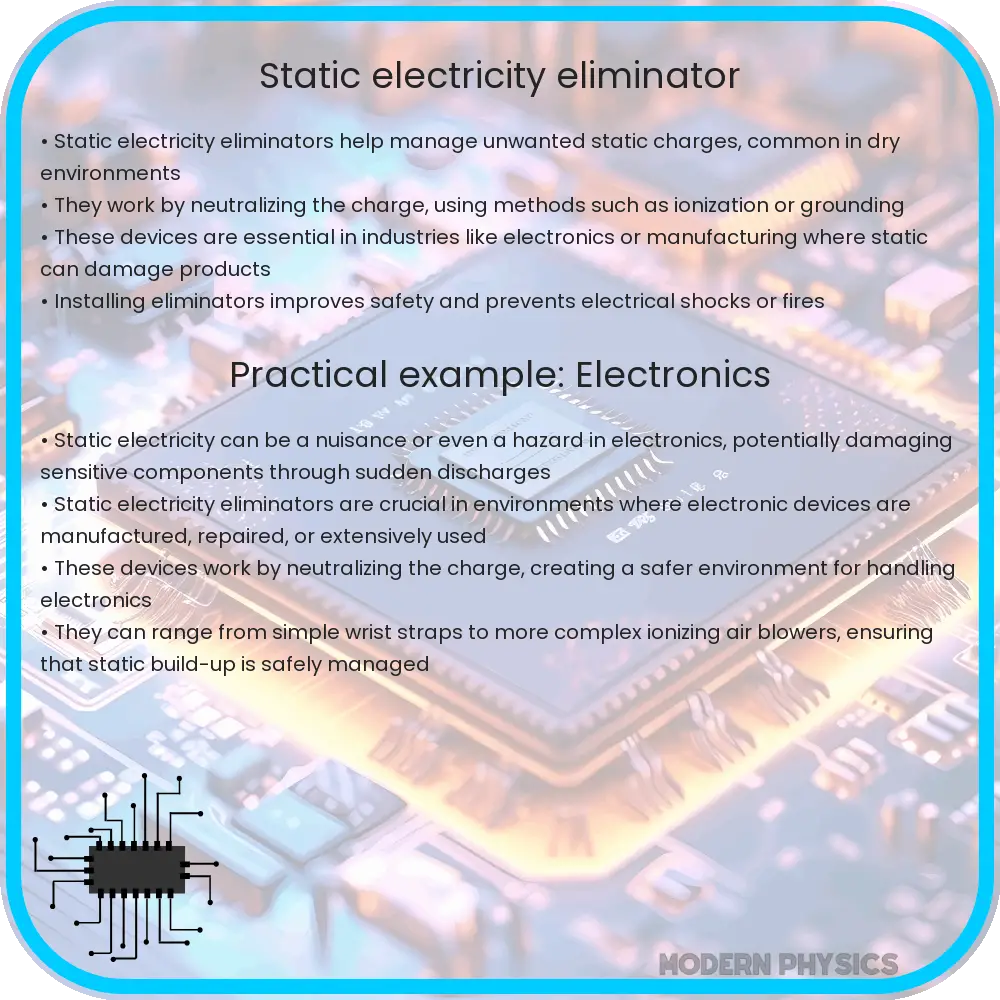
Static Electricity Eliminators are devices designed to neutralize the charge buildup in various environments. They come in different forms, such as anti-static sprays, mats, wrist straps, and more advanced ionizing air blowers. These devices work by either providing a path for the static charge to ground or by neutralizing the charge in the surrounding air.
Advancements in Static Electricity Elimination
The technology behind these eliminators has evolved significantly. Modern eliminators often use ionization techniques, where the air is electrically charged to create positive and negative ions. These ions then neutralize the static charge present on nearby surfaces or objects. This method is particularly effective in industrial settings where electronic components or flammable substances are handled.
Applications and Benefits
- Electronics Manufacturing: In this industry, static charges can damage sensitive electronic components. Static eliminators prevent this, ensuring the integrity of the products.
- Safety in Flammable Environments: In industries dealing with flammable gases or liquids, eliminating static is crucial to prevent ignition and ensure safety.
- Everyday Convenience: From preventing clothes from clinging to reducing dust accumulation on screens and furniture, these eliminators add a level of convenience to daily life.
Static Electricity Eliminators are not just about convenience; they are essential tools for safety and efficiency in both industrial and everyday settings. By understanding how they work and their applications, we can better appreciate their importance in our modern world.
Choosing the Right Static Electricity Eliminator
When selecting a static electricity eliminator, it’s crucial to consider the specific needs of your environment. For industrial applications, ionizing air blowers or anti-static bars might be more suitable. In contrast, for personal or home use, anti-static sprays or mats could suffice. The key is to assess the level of static charge and the sensitivity of the materials being protected.
Maintenance and Safety Considerations
Maintenance is an essential aspect of ensuring the long-term effectiveness of static eliminators. Regular cleaning and inspection of these devices are necessary, especially in environments where they are continuously exposed to dust and other particulate matter. Additionally, it’s important to adhere to safety guidelines, particularly when using eliminators in environments with flammable substances.
Innovations in Static Electricity Control
Recent advancements in technology have led to the development of more sophisticated static eliminators. These include devices with self-monitoring capabilities, adjustable ion balance features, and more efficient designs that consume less power while offering higher performance. Such innovations not only enhance efficiency but also contribute to environmental sustainability.
Environmental Impact and Sustainability
Modern static eliminators are designed with environmental sustainability in mind. Manufacturers are increasingly focusing on reducing energy consumption and using eco-friendly materials. This approach not only minimizes the carbon footprint but also aligns with the global push towards greener technologies.
Conclusion
In conclusion, static electricity eliminators play a vital role in various industries and everyday life by safeguarding sensitive equipment, preventing accidental fires, and enhancing convenience. The selection of an appropriate eliminator depends on the specific requirements of the environment and the level of static charge. With technological advancements, these devices have become more efficient, self-regulating, and environmentally friendly. Proper maintenance and adherence to safety guidelines are crucial for their effective operation. As our reliance on electronic devices grows and safety standards become more stringent, the importance of static electricity eliminators will only continue to increase, marking them as essential tools in our increasingly electrified world.