
Learn about soundproofing materials, their types, effectiveness, eco-friendliness, and durability in various settings.
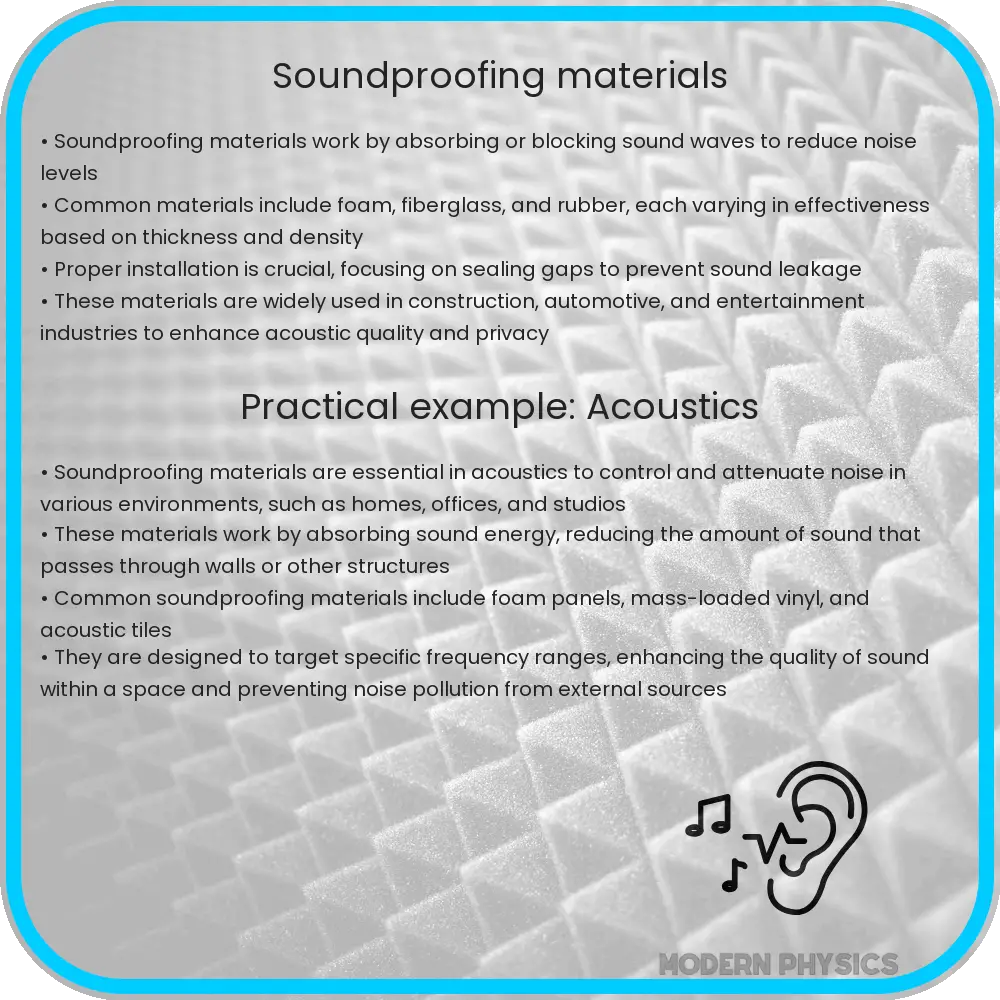
Understanding Soundproofing Materials
Soundproofing plays a crucial role in creating environments that are acoustically comfortable and free from unwanted noise. Whether it’s in residential settings, professional recording studios, or large manufacturing areas, the need for effective soundproofing materials is omnipresent. This article explores the types of soundproofing materials available, focusing on their effectiveness, eco-friendliness, and durability.
Types of Soundproofing Materials
Material choice is critical in soundproofing, impacting both the performance and environmental footprint of the solution. Here, we delve into the most commonly used soundproofing materials, their properties, and applications.
- Mass Loaded Vinyl (MLV): MLV is a flexible, heavy sheet typically used in construction to block sound. Its high mass helps to prevent sound waves from passing through walls, ceilings, and floors.
- Acoustic Foam: This type of foam absorbs sound waves, reducing echo and reverberation in a room. It is often used in recording studios and home theaters.
- Green Glue: An eco-friendly soundproofing compound that is applied between two layers of rigid material to dampen sound. Green Glue is particularly effective at eliminating low-frequency noises.
- Fiberglass Insulation: Known for its thermal insulation properties, fiberglass also works excellently for soundproofing. It absorbs sound energy, making it ideal for use in walls and ceilings.
- Acoustic Panels: Commonly made from compressed mineral wool or foam, these panels are effective at absorbing sound waves and are used to enhance acoustics in a range of environments.
Evaluating Effectiveness
The effectiveness of soundproofing materials is often measured in terms of Sound Transmission Class (STC) and Noise Reduction Coefficient (NRC). STC rates how well a material can prevent sound from passing through, while NRC measures how well a material can absorb sound. Higher values indicate greater effectiveness in blocking or absorbing sound.
Eco-Friendly and Durable Choices
As environmental concerns continue to grow, selecting soundproofing materials that are both durable and eco-friendly becomes more significant. Materials like recycled rubber and certain types of eco-friendly foams offer excellent soundproofing, are sustainable, and contribute less to environmental degradation. Moreover, their durability ensures that they do not need frequent replacement, ultimately reducing waste.
Choosing the right soundproofing material involves considering not only the acoustic needs and effectiveness but also the environmental impact and the longevity of the material. By doing so, one can achieve a balance between functionality, sustainability, and cost-effectiveness.
Installation Considerations
Proper installation is equally important as selecting the right material for effective soundproofing. Incorrect installation can greatly reduce the efficacy of soundproofing materials. It is essential to ensure there are no gaps or weak points where sound can easily penetrate.
- Sealing Gaps: Use acoustical sealants to fill any gaps around windows, doors, and joints. Even small openings can significantly undermine soundproofing effects.
- Layering Techniques: Applying multiple layers of soundproofing materials can enhance their overall effectiveness. For instance, layering MLV with acoustic foam can prevent sound transmission and absorb echoes simultaneously.
- Professional Installation: For complex setups, such as recording studios or industrial applications, professional installation may be necessary to ensure optimal sound isolation.
Cost vs Benefit Analysis
When considering soundproofing, it’s important to weigh the initial investment against the long-term benefits. While higher-quality materials and professional installation might seem costly, they can significantly enhance the quality of life and increase property value. Additionally, considering the productivity enhancements in workplaces and comfort in living spaces can justify the expenses involved.
Innovations in Soundproofing
Advancements in technology are continually shaping the future of soundproofing materials. New innovations, such as soundproofing paints and nanomaterials, are being explored for their potential to offer lightweight, efficient, and less visually obstructive solutions. These developments promise exciting prospects for both commercial and residential applications.
Conclusion
In conclusion, soundproofing is an invaluable investment in both personal and professional spaces. With a variety of materials available, each with different properties and advantages, choosing the right option depends on specific needs, environmental impact, and budget constraints. By carefully selecting and properly installing soundproofing materials, one can significantly enhance the acoustic comfort of any space. Future innovations will continue to improve the performance and ease of application of soundproofing technologies, making them accessible to a broader market and offering solutions that adhere to both aesthetic and functional demands.