
Learn about self-healing concrete, an innovative material designed to automatically repair its own cracks, enhancing durability and reducing maintenance costs.
Introduction to Self-Healing Concrete
Concrete is undeniably one of the most important materials in the field of construction, essential in creating infrastructure that spans from towering skyscrapers to simple residential homes. Despite its widespread use and structural abilities, concrete has an Achilles’ heel: it tends to develop cracks over time due to environmental influences and loading stresses. However, an innovative approach known as self-healing concrete has been developed to address this problem, enhancing durability and efficiency.
What is Self-Healing Concrete?
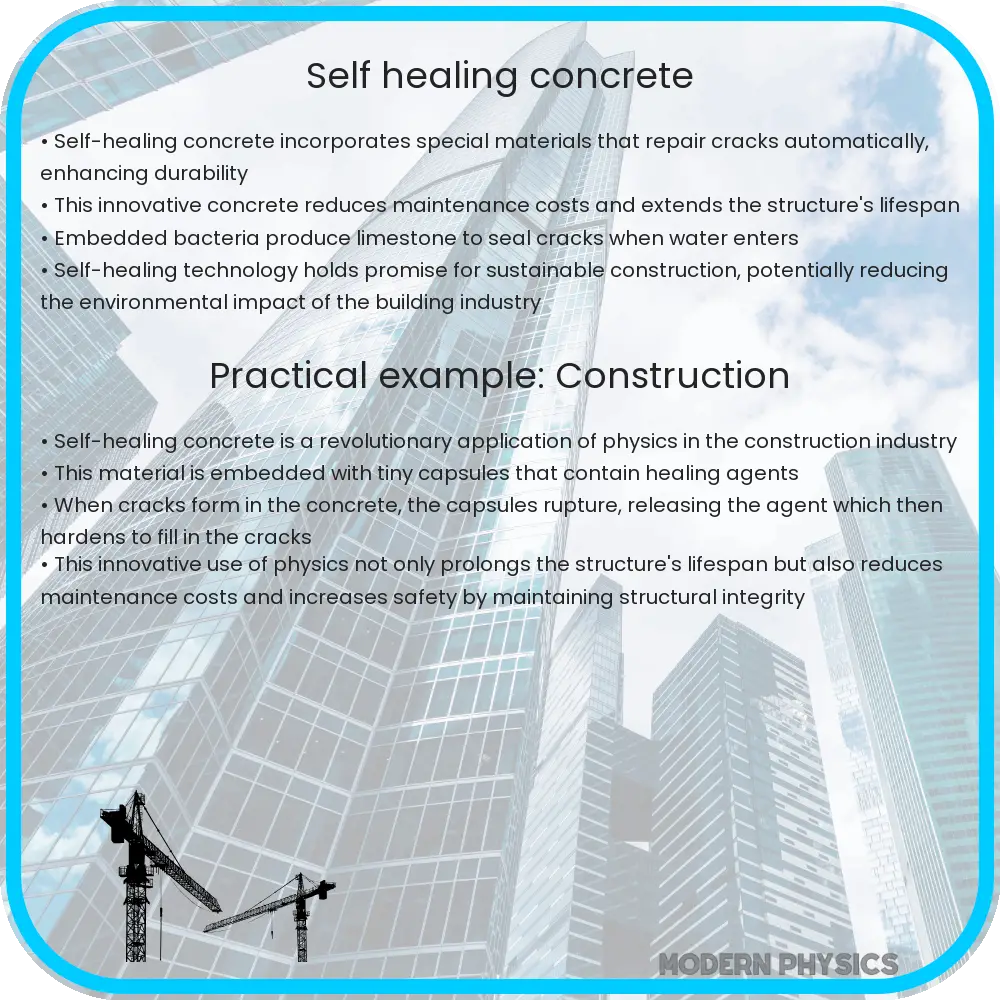
Self-healing concrete is a groundbreaking form of concrete that has the ability to automatically repair its own cracks and imperfections. This capability extends the material’s lifespan, reduces maintenance costs, and increases overall structural integrity. The self-repair mechanism is typically triggered by the presence of water, which acts as a catalyst in the healing process.
How Does Self-Healing Concrete Work?
The healing process of self-healing concrete can occur through various mechanisms, which can broadly be categorized into autogenous and autonomous healing:
- Autogenous Healing: This process typically happens in small cracks (less than 0.2 mm wide) where the crack itself can close up through continued hydration of cement particles or through the formation of calcium carbonate precipitations. This natural process can be enhanced by ensuring the concrete mix has certain additives that promote hydration or crystallization.
- Autonomous Healing: For larger cracks, autogenous healing mechanisms are not always sufficient. Autonomous healing involves embedding healing agents directly into the concrete. These agents are released when a crack forms and subsequently comes into contact with water, initiating a chemical reaction that fills the crack. Commonly used healing agents include bacteria that produce limestone, synthetic polymers, or mineral-based compounds.
Benefits of Self-Healing Concrete
The development and implementation of self-healing concrete come with numerous advantages:
- Durability and Longevity: By having the ability to heal itself, self-healing concrete can considerably extend the lifespan of concrete structures, allowing them to withstand challenging environmental conditions for longer periods.
- Reduction in Maintenance Costs: The self-healing nature reduces the need for frequent repairs and maintenance, leading to significant cost savings over the lifespan of a structure.
- Environmental Impact: Enhancing the longevity of concrete structures means a decrease in new construction demands, resulting in a lower carbon footprint associated with cement production and construction activities.
- Increased Safety: Structures made with self-healing concrete are less likely to suffer from major structural failures due to untreated cracks, thereby enhancing the safety of buildings and infrastructure.
In the following sections, we will delve deeper into the types of self-healing agents used, the challenges faced in developing this innovative concrete, and potential future advances in the field of self-healing materials.
Types of Self-Healing Agents
Self-healing concrete uses various agents to initiate repair processes. These are largely categorised into:
- Bacterial Agents: These are encapsulated bacteria that, when activated by water, produce calcium carbonate, which effectively seals cracks in the concrete.
- Mineral-Based Agents: Agents like sodium silicate react with calcium hydroxide in concrete to form calcium-silicate-hydrate, which can fill and bond the crack surfaces.
- Chemical Polymers: Some self-healing concretes incorporate polymers that expand upon contact with water, filling cracks and restoring structural integrity.
Challenges in Developing Self-Healing Concrete
While self-healing concrete holds great promise, there are several challenges that need to be overcome:
- Cost: The addition of self-healing agents can significantly increase the initial cost of concrete formulation.
- Effectiveness: The effectiveness of the healing agents can be variable, depending on the environmental conditions and the extent of damage.
- Longevity of Healing Agents: Ensuring the long-term viability of embedded agents, particularly biological ones, remains a challenge.
Future Prospects
The future of self-healing concrete looks promising with ongoing research aimed at refining the effectiveness and reducing the costs associated with this innovative material. Breakthroughs in nanotechnology and biotechnology could potentially lead to more efficient and versatile healing agents. Furthermore, integrating digital technologies like sensors within concrete structures could allow for real-time monitoring of their health status, thus optimizing maintenance cycles and further enhancing durability.
Conclusion
Self-healing concrete represents a significant advancement in modern construction materials, offering a sustainable solution that could revolutionize infrastructure development worldwide. By self-repairing, these materials can extend the life of concrete structures, decrease maintenance costs, and improve environmental sustainability. Although there are challenges to be addressed, the ongoing research and development in this field continue to hold great promise for future applications. As the technology matures, it may well become a standard option in concrete construction, contributing to safer, more durable, and cost-efficient infrastructure.
In embracing such innovative materials, we pave the way for not only enhanced structural integrity but also for greener and more sustainable construction practices. The exploration of self-healing concrete is a shining example of how modern engineering continues to evolve, meeting the dual demands of durability and sustainability in our built environment.