
Learn about riblet film, a technology inspired by shark skin that enhances speed and efficiency by reducing drag in fluid dynamics.
Introduction to Riblet Film: A Closer Look at Speed and Efficiency in Fluid Dynamics
The concept of riblet film integrates principles from nature and engineering to solve a common problem in fluid dynamics: drag reduction. In the field of aerodynamics and hydrodynamics, reducing drag is pivotal in enhancing the performance of vehicles and devices moving through fluid environments, whether they be air or water. Riblet film, inspired by the skin of sharks, is designed to streamline this interaction, thus increasing speed and efficiency.
Understanding Drag and its Impact on Movement
Drag is a force that opposes the direction of motion through a fluid (including air). It occurs due to differences in velocity between the moving object and the surrounding fluid, causing friction and turbulence. Excessive drag leads to higher energy consumption as more power is required to maintain speed, making it a critical factor in the design of aircraft, boats, and even efficient cars.
The Role of Riblet Film in Reducing Drag
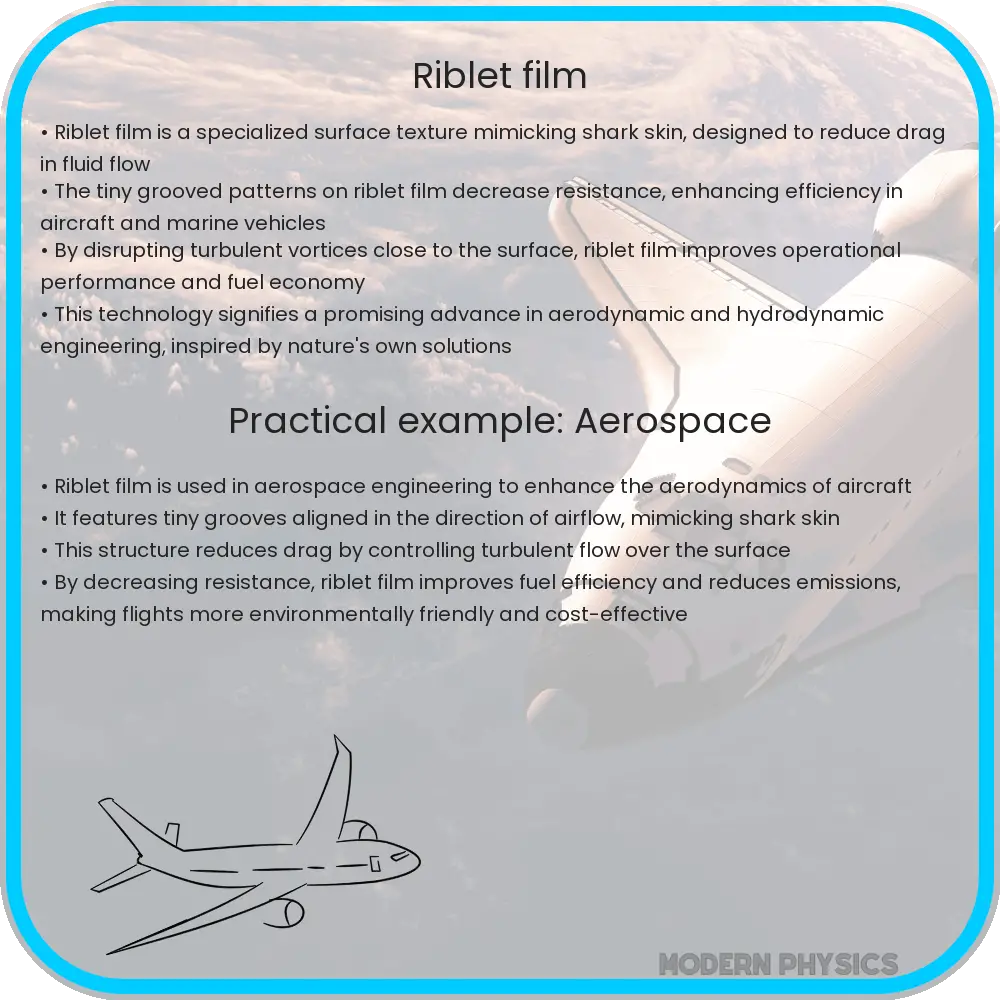
Riblet film mimics the micro-grooved surface pattern found on shark skin. These tiny riblets align with the direction of fluid flow, effectively reducing the turbulence that normally occurs at the boundary layer (the layer of fluid in immediate contact with the surface of the moving object). This reduction in turbulence directly translates into decreased drag.
- Energy Efficiency: By lowering drag, riblet film helps in conserving energy, thus allowing vehicles to perform better using the same amount of fuel or even less.
- Speed Enhancement: Decreased drag naturally improves speed. Vehicles can move faster without additional power output, a crucial advantage in competitive settings like racing or in transportation for reduced travel time.
- Operational Cost Reduction: Lower energy requirements mean less fuel consumption. For commercial operations, this can lead to substantial cost savings over time.
Applications of Riblet Film
The use of riblet film is widespread and varied. In sports, it’s applied to the hulls of competitive rowing boats or the bodies of racing cars to cut down on drag and boost speed. In transportation, commercial airlines apply riblet film technology to the exterior of aircraft for better fuel efficiency. Moreover, its application extends to wind turbines’ blades to facilitate smoother air flow and thus increase efficiency.
The Scientific Basis of Riblet Film Efficiency
The effectiveness of riblet film in reducing drag is supported by extensive research in fluid dynamics. The primary mechanism by which riblet film operates is through the manipulation of the boundary layer flow. When fluid flows over a surface, the grooves of the riblet film reduce the momentum of turbulent whirls (small swirling motions in the fluid), resulting in a smoother flow. This effect can be quantified by examining changes in the Reynolds number, which is a dimensionless number in fluid mechanics used to predict flow patterns in different fluid flow situations.
Future Directions and Challenges in Riblet Film Technology
As riblet film technology continues to develop, researchers are focusing on how to optimize its design and implementation across various industries. One of the key challenges is the durability and maintenance of riblet films, especially in harsh environmental conditions such as those encountered in marine or high-altitude applications. Advances in materials science could lead to more resilient and self-cleaning riblet surfaces, potentially broadening their applicability and effectiveness.
Moreover, customizing the riblet film to suit different types of fluids (with varying densities and viscosities) and flow conditions remains an area ripe for exploration. Tailoring the size and pattern of riblets to sync perfectly with specific applications could unlock even greater reductions in drag and efficiency improvements.
Educational and Commercial Outreach
The potential benefits of riblet film technology also present an opportunity for educational initiatives. By integrating this topic into science and engineering curricula, educators can inspire a new generation of researchers and practitioners equipped to advance this innovative field further. On the commercial side, ongoing collaboration between academia and industry will be essential to translate laboratory findings into practical, marketable solutions that can propel various sectors toward more sustainable practices.
Conclusion
Riblet film represents a fascinating melding of nature-inspired innovation and practical engineering, providing a powerful tool for reducing drag and enhancing the efficiency of objects moving through different fluid environments. Its implications stretch across numerous domains, from enhancing athletic performance in competitive sports to improving the ecological footprint of commercial transportation. By continuing to refine riblet technology and tackle the challenges of its implementation, the future of fluid dynamics looks promisingly smoother and more efficient. For professionals, enthusiasts, or students intrigued by the seamless integration of biology, physics, and design, riblet film technology offers a compelling study and application area, pushing the boundaries of what’s possible in fluid dynamics and beyond.