
Explore how radiosonde telemetry systems track atmospheric conditions to improve weather forecasting and climate research.
Understanding Radiosonde Telemetry Systems
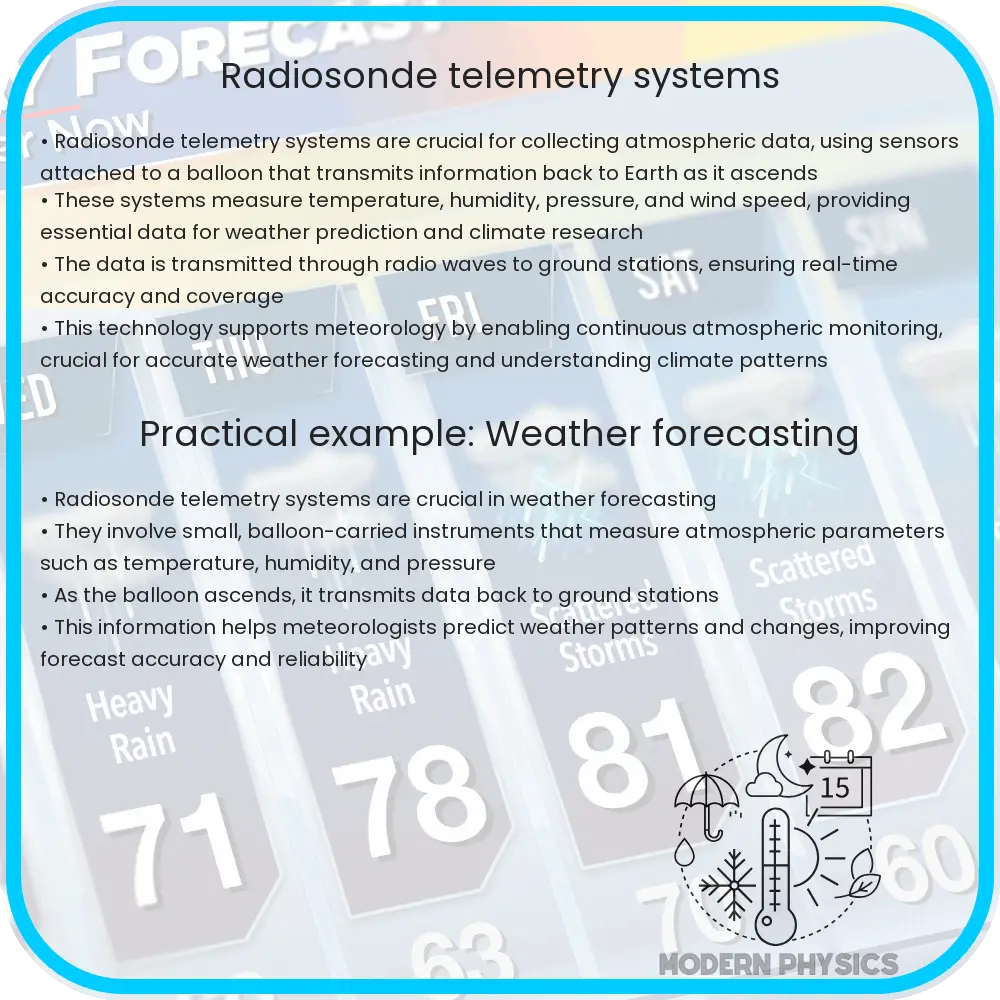
Radiosondes are instruments carried into the atmosphere by a weather balloon, which collect crucial data including atmospheric pressure, temperature, humidity, and wind speeds and directions at different altitudes. This data aids meteorologists in weather forecasting and climate studies. The cornerstone of radiosonde operation lies in its telemetry system — the technology that facilitates the transmission of measurement data from the sondes in near real time to a ground-based receiver.
Data Accuracy of Radiosondes
The accuracy of the data collected by radiosondes is vital for reliable meteorological predictions. Generally, radiosondes are equipped with high-quality sensors that ensure precise measurements. The accuracy of temperature readings, for example, is typically within +0.5 degrees Celsius, and humidity measurements are usually within 5% relative humidity. Barometric sensors used to measure atmospheric pressure can achieve accuracy within 1 hPa, which is particularly important for analyzing and predicting weather patterns at different altitudes.
Moreover, recent advancements in sensor technology and calibration techniques have significantly enhanced the reliability of radiosonde data. Pre-flight calibration checks are standard procedure to ensure sensor accuracy before the launch.
Altitude Range
The altitude range of radiosondes is another critical aspect. Typically, a weather balloon equipped with a radiosonde can reach altitudes as high as 30 to 35 kilometers above the Earth’s surface before the balloon expands and bursts due to decreasing atmospheric pressure. This vast range allows for the collection of atmospheric data across significant vertical profiles, offering insights from near the ground up to the stratosphere.
At different altitudes, radiosondes face varying environmental conditions, such as extreme cold and low pressure, which can influence sensor readings. Developers of these instruments carefully design and test them to ensure consistent performance and accurate data transmission over their entire operational altitude.
Reliability of Radiosonde Telemetry Systems
The reliability of radiosonde telemetry systems depends heavily on the robustness of both the hardware and the signal transmission technology. Commonly, these systems use radio frequencies between 400 MHz to 1,680 MHz, ensuring the transmission of data over long distances without significant loss of signal quality.
Despite the potential for interference from other radio frequency sources and inherent challenges with signals being lost due to meteorological conditions, modern radiosondes employ various techniques to mitigate these issues. These include the use of spread spectrum technology and error-correction algorithms which help maintain the integrity of the data being transmitted to ground stations.
It is also important to note that the reliability of data reception is contingent on maintaining a clear line of sight between the radiosonde and the receiving station. As the balloon ascends and moves with atmospheric currents, maintaining this line of sight can occasionally pose challenges, especially in complex terrains or in the presence of other atmospheric phenomena like heavy storms.
Environmental Impact and Sustainability
Radiosondes, while essential for meteorological research, also raise environmental concerns, particularly regarding the balloon debris and the disposal of spent instruments. The materials used for the balloons and sondes are often not biodegradable, which could contribute to environmental pollution if not managed properly. As such, efforts are being made to develop more sustainable and environmentally friendly radiosondes. These efforts include the use of biodegradable materials for the balloons and enhancing the reusability of the sondes’ components.
Moreover, some programs aim to recover radiosondes to minimize environmental impact. These recovery programs not only help reduce waste but also allow components to be reused in future launches, which can be cost-effective for meteorological services.
Future Trends in Radiosonde Technology
The future of radiosonde technology holds promising advancements for meteorological science. Innovations such as miniaturization of sensors, improvements in battery life, and the integration of GPS technology for better tracking and data accuracy are on the horizon. Additionally, the development of drones and other unmanned aerial vehicles as supplementary data collection platforms could vastly expand the capabilities of atmospheric research while potentially reducing the reliance on traditional balloon-launched sondes.
The integration of artificial intelligence and machine learning technologies is also starting to play a role in how data collected by radiosondes is processed and analyzed. This could lead to faster and more accurate weather predictions by effectively handling and interpreting the vast amounts of data collected from various altitudes.
Conclusion
Radiosondes play a crucial role in atmospheric science by providing valuable data that helps meteorologists forecast weather and study climate patterns. The accuracy, robustness, and wide altitude ranges covered by these instruments make them indispensable tools in the field of meteorology. Despite challenges such as environmental impact and the need for clear line-of-sight communication, ongoing technological advancements and sustainability efforts are continuously improving the effectiveness and reducing the ecological footprint of radiosonde telemetry systems. With forthcoming enhancements in sensor technology, sustainability, and data processing capabilities, radiosondes will undoubtedly continue to be pivotal in our understanding of atmospheric phenomena.