
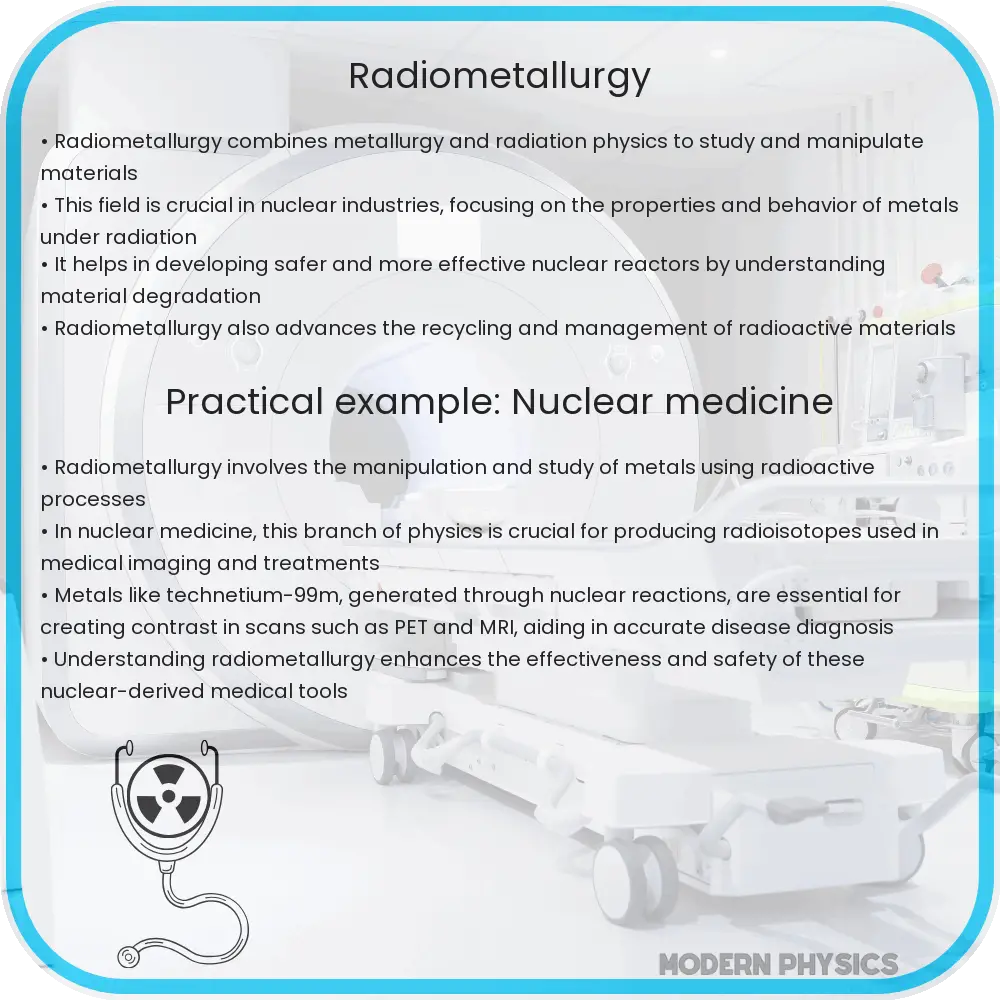
Radiometallurgy integrates physics and chemistry to study and enhance metals in radioactive environments, crucial for nuclear and space sectors.
Introduction to Radiometallurgy
Radiometallurgy is a specialized field of metallurgy that focuses on the use of radioactive processes to study and engineer metallic materials. Emerging from the broader discipline of materials science, radiometallurgy integrates principles from both physics and chemistry to investigate the properties, transformations, and performance of metals under the influence of radioactive environments. This knowledge is crucial for developing materials that are durable and safe in nuclear reactors and other radioactive settings.
Principles of Radiometallurgy
At its core, radiometallurgy involves the study of how radiation interacts with metallic materials. The primary effects of radiation on metals include atomic displacements, changes in phase and microstructure, and the creation of defects such as vacancies and interstitials. These interactions profoundly alter the mechanical and physical properties of metals, affecting their ductility, hardness, tensile strength, and corrosion resistance.
Radioactive processes used in radiometallurgy often involve neutron irradiation, which occurs commonly in nuclear reactors. Neutron radiation can induce transmutations in metals, leading to the formation of new isotopes and altering the material’s properties. For instance, when a metallic element like iron (56Fe) absorbs a neutron, it can become an isotope such as 57Fe, which can have different physical properties.
Industrial Uses of Radiometallurgy
Radiometallurgy has diverse applications across various industries, primarily in the design and development of nuclear reactors, space exploration, and medical technologies. Below are some of the critical industrial uses:
- Nuclear Power Generation: Radiometallurgy is essential in the nuclear power industry, where materials must withstand high levels of radiation for extended periods. The field helps in selecting and treating materials used in building nuclear reactor cores and containment vessels, ensuring they maintain their integrity under harsh operating conditions.
- Spacecraft and Satellite Components: Outer space presents a highly radioactive environment due to cosmic rays and solar radiation. Materials used in spacecraft and satellites are selected and treated using principles of radiometallurgy to endure these conditions, minimizing degradation and extending the life of these space explorers.
- Radioactive Waste Management: Radiometallurgy also plays a role in the development of materials for storing and disposing of radioactive waste. Finding materials capable of containing radioactive waste safely over geological time scales is a significant challenge addressed through this field.
During the development and application of materials in these sectors, radiometallurgists must consider various factors such as the type of radiation, intensity, material susceptibility to radiation damage, and environmental conditions. This comprehensive approach helps in creating materials that are not only effective but also safe for long-term use.
Advancements in Radiometallurgy Techniques
Recent advancements in radiometallurgy involve more sophisticated techniques for assessing and enhancing material performance under radiation. These include advanced imaging methods, real-time monitoring of material behavior under irradiation, and computational models to predict long-term effects. Technologies such as 3D printing are being explored to fabricate materials with specific properties tailored to withstand radiation. These innovations open up new possibilities for safer and more efficient use of materials in radiation-prone environments.
The integration of nanotechnology with radiometallurgy is another exciting development. Nanomaterials often exhibit enhanced properties such as increased strength and improved thermal conductance, which can be advantageous in radioactive settings. Through nano-engineering, materials can be designed to have self-healing capabilities, mitigating the effects of radiation-induced damage.
As we continue to explore and innovate within the realm of radiometallurgy, its applications and techniques are likely to expand, further solidifying its role in the future of technology and industry.
Challenges in Radiometallurgy
Despite the significant progress in the field of radiometallurgy, numerous challenges remain that require continued research and technological innovation. One major issue is the long-term sustainability of radioactive-resistant materials. Over extended periods, even the most robust materials can degrade under constant radiation exposure, leading to safety concerns and increased maintenance costs.
Another challenge is the environmental impact of radiometallurgical processes. The creation and disposal of radioactive materials must be managed meticulously to prevent contamination and ensure public and environmental safety. Furthermore, as the demand for energy increases globally, the pressure to develop more efficient and safer nuclear materials continues to grow.
The complex interactions between various types of radiation and different metals also present an intricate puzzle for scientists. Each radioactive scenario may need a customized material solution, complicating the standardization of practices and technologies in this field.
Future Prospects in Radiometallurgy
The future of radiometallurgy looks promising as researchers explore more sustainable and efficient ways to manipulate and enhance material properties. Ongoing advancements in computational power and analytical techniques will enable more precise and faster material testing and development. These capabilities are essential for both speeding up the innovation cycle and for the more immediate application of findings in real-world scenarios.
Furthermore, international collaboration and information exchange among scientists and engineers working in radiometallurgy can stimulate breakthroughs that lead to better practices and innovative applications. This global effort is crucial, especially in tackling the universal challenges of energy production, environmental protection, and technological development related to radioactive environments.
In conclusion, radiometallurgy stands as a pillar of modern material science, with expansive applications that touch on vital aspects of our daily lives and the global economy. Its strategic role in the development of the next generation of materials for nuclear reactors, space exploration, and beyond, cannot be overstated. As we continue to harness and understand the power of radioactive processes, radiometallurgy will undoubtedly play a pivotal role in shaping a sustainable and technologically advanced future.