
Radiative forcing measures the influence of factors like greenhouse gases on Earth’s atmospheric energy balance, impacting climate change.
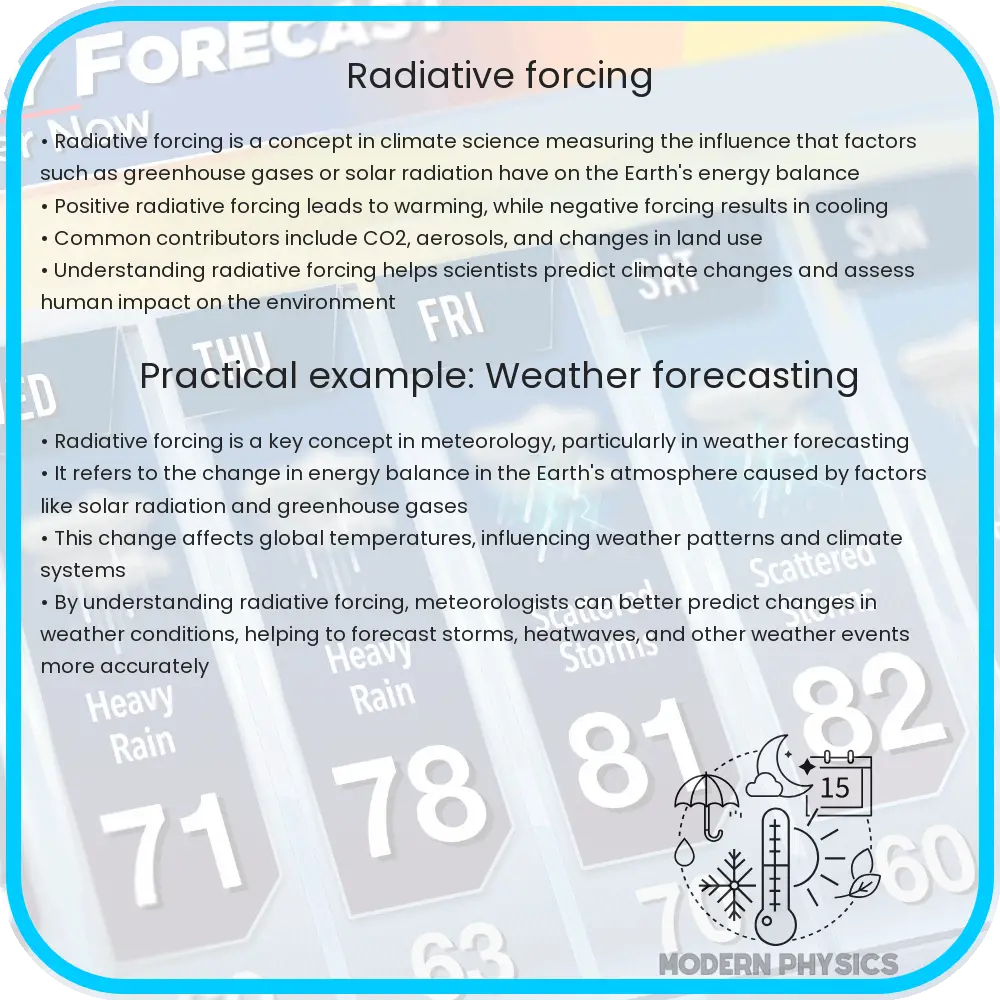
Understanding Radiative Forcing: A Key Player in Climate Impact
Radiative forcing is a concept used in climatology to measure the influence a particular factor has on the energy balance of the Earth’s atmosphere. In simpler terms, it refers to the change in energy in the atmosphere due to factors like greenhouse gas emissions or changes in solar radiation.
How Radiative Forcing Affects the Earth’s Climate
Any alteration to the balance of incoming solar radiation versus outgoing infrared radiation can cause the Earth’s climate system to heat up or cool down. Positive radiative forcing occurs when the Earth absorbs more energy from the sun than it radiates back into space, leading to warming. Conversely, negative radiative forcing happens when the Earth radiates more energy into space than it absorbs, resulting in cooling.
- Greenhouse gases: The release of greenhouse gases like CO2, CH4, and N2O trap more heat in the atmosphere and are a primary driver of positive radiative forcing.
- Albedo changes: Alterations to Earth’s surface, such as melting ice or deforestation, change how much sunlight reflects back into space, affecting the planet’s albedo (reflection coefficient). These changes can also lead to positive or negative radiative forcing.
- Solar Irradiance: The amount of solar energy received by the Earth can vary due to the Sun’s natural cycles, causing fluctuations in radiative forcing.
Quantifying Radiative Forcing
The measure of radiative forcing is typically expressed in watts per square meter (W/m2). This quantification helps scientists assess how different factors influence the Earth’s energy balance. The Intergovernmental Panel on Climate Change (IPCC) uses radiative forcing as a central concept in understanding and reporting on climate dynamics.
- Calculation of Radiative Forcing: The basic formula used for calculating radiative forcing is:
RF = (S/4) * (1-a) * (1 + f)
- S is the solar constant (~1361 W/m2),
- a represents the albedo,
- f is the factor accounting for the effect of greenhouse gases and other atmospheric conditions.
This formula provides a simplified view of the overall impact of various factors on the Earth’s radiative balance, though more complex models are used for detailed predictions.
Recent Trends in Radiative Forcing
Observations indicate that radiative forcing has been increasing due to greater concentrations of greenhouse gases in the atmosphere. Data from climate monitoring agencies shows a consistent increase in radiative forcing, correlating with industrial activities and other human actions that emit these gases.
The current rise in radiative forcing is leading to unprecedented changes in global temperatures, sea levels, and weather patterns, impacting ecosystems and human populations worldwide. These trends underline the critical need for diligent monitoring and robust responses to climate change.
In the next section, we will explore the implications of these trends for global climate predictions and the potential strategies to mitigate the effects of increasing radiative forcing.
Implications for Global Climate Predictions
Understanding the trends in radiative forcing is crucial for predicting global climate changes. By incorporating radiative forcing data into climate models, scientists can create more accurate forecasts about future climate conditions. These models help in predicting how temperatures will evolve, the patterns of precipitation changes, and the impact on sea levels around the world.
Accurate climate predictions are essential for planning future agricultural activities, water management, and preparing for the potential impacts of extreme weather events. They are also critical in policy formulation, where governments rely on scientific evidence to make informed decisions about climate action.
Mitigation Strategies
To combat the effects of increasing radiative forcing, several mitigation strategies can be implemented:
- Reducing greenhouse gas emissions: This can be achieved through enhanced energy efficiency, switching to renewable energy sources, and improving waste management practices.
- Enhancing carbon sinks: Strategies include reforestation, afforestation, and improving soil carbon storage practices to increase the absorption of CO2 from the atmosphere.
- Geoengineering: Although controversial, techniques such as solar radiation management and carbon dioxide removal are being researched as emergency measures to directly alter Earth’s radiative balance or decrease atmospheric CO2.
Action taken to mitigate radiative forcing will not only help in stabilizing global temperatures but also aid in achieving long-term sustainability goals proposed by global agreements such as the Paris Accord.
Conclusion
Radiative forcing plays a pivotal role in shaping the Earth’s climate system. By quantifying how various factors alter the energy balance of the planet, scientists can predict and potentially mitigate adverse climate changes. The increasing trend of radiative forcing due to human activities underscores the urgent need for effective international collaboration in reducing greenhouse gas emissions and exploring sustainable environmental management practices.
Understanding and countering radiative forcing isn’t just about preserving ecosystems but safeguarding the future for next generations. Through concerted global efforts and innovative solutions, we can aim to maintain the delicate balance of our planet’s climate system.
In conclusion, while challenges remain robust, informed actions based on scientific research in radiative forcing will be crucial in navigating the complexities of climate change and ensuring a sustainable future for all.