
Radiation biology examines the impact of ionizing radiation on living organisms, exploring its roles in cancer development, DNA damage, and cancer treatment.
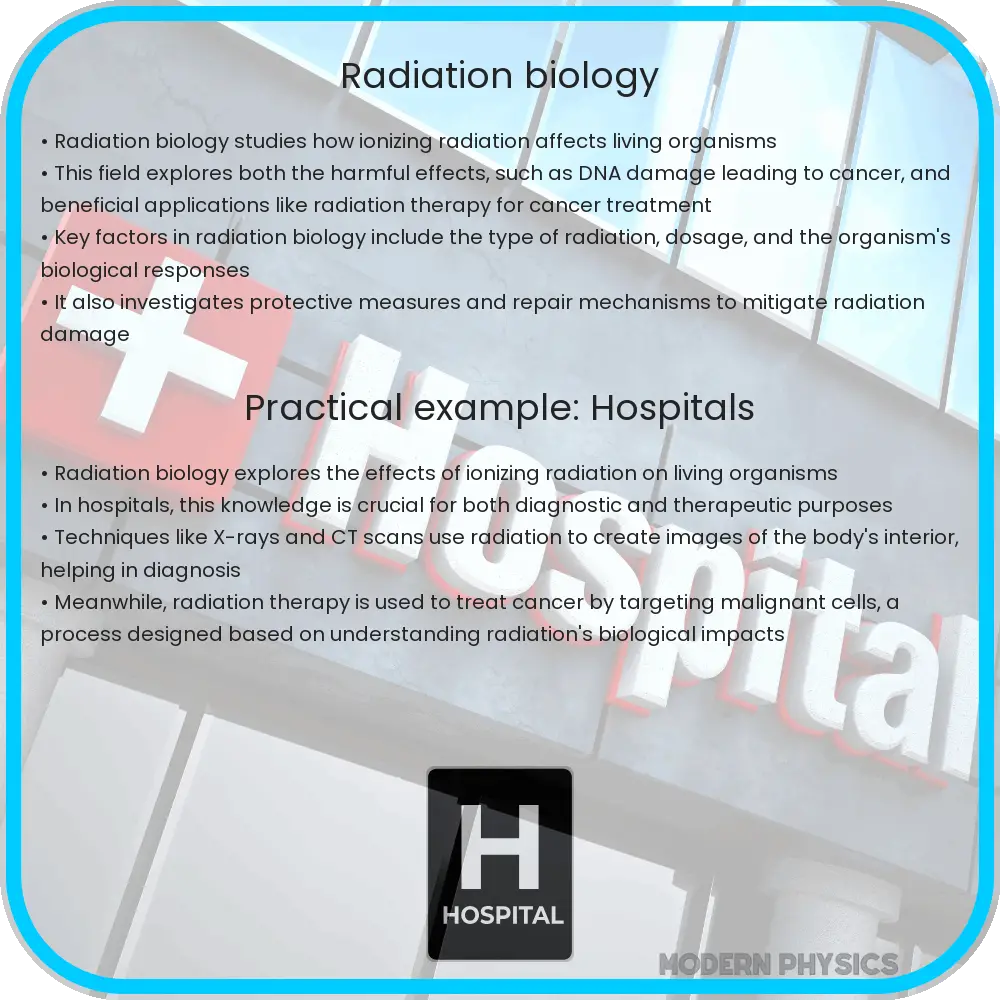
Radiation Biology: Understanding Cancer Risks, DNA Damage, and Therapeutic Potentials
Radiation biology is the study of the effects of ionizing radiation on living organisms. One of its most critical concerns is understanding how radiation can lead to cancer, cause DNA damage, and conversely, how it can be used in cancer therapy. This article explores these aspects to provide a foundation in understanding the dual nature of radiation and its impact on biology.
The Nature of Ionizing Radiation
Ionizing radiation includes particles and electromagnetic waves that have enough energy to remove tightly bound electrons from atoms, thus creating ions. Common sources of ionizing radiation are X-rays, gamma rays, and particles such as alpha and beta particles emitted from radioactive materials. This form of radiation is a pervasive part of our environment, originating from both natural sources like cosmic rays and radon gas, and human-made sources such as nuclear reactors and medical x-rays.
Cancer Risks Associated with Radiation Exposure
Exposure to ionizing radiation can damage living tissue, leading to a series of biological effects including increased cancer risk. When DNA inside cells is exposed to radiation, it can suffer breaks in its strands or have its chemical structure changed. These alterations are called mutations, which can disrupt the normal functioning of genes, leading to uncontrolled cell division and tumor formation.
The risk of developing cancer from radiation exposure is dependent on several factors including:
- The dose of radiation received
- The rate at which the dose was received
- The area of the body exposed
- The age at exposure and the general health of the exposed individual
The linear no-threshold model (LNT) is often used in radiation protection to estimate cancer risks, proposing that the probability of cancer induction and genetic effects increases linearly with the increase in the dose of the radiation, without a threshold. However, some studies suggest that low doses of radiation might have different biological effects compared to high doses, and hence, the model remains a topic of debate in the radiation protection community.
DNA Damage from Radiation
At the molecular level, DNA damage is the primary concern regarding radiation exposure. There are two main types of DNA damage caused by ionizing radiation:
- Direct Action: Radiation interacts directly with the DNA molecule, breaking the chemical bonds. This can result in single-strand breaks (SSBs) or more problematic double-strand breaks (DSBs) which are harder for the cell to repair.
- Indirect Action: Radiation first interacts with water molecules in the cell, leading to the formation of highly reactive free radicals. These radicals can then damage the DNA indirectly.
Both types of damage pose risks for genomic stability and function, potentially leading to mutations that can accumulate and contribute to cancer development if not properly repaired by cellular mechanisms.
The Therapeutic Uses of Radiation in Cancer Treatment
Ironically, while ionizing radiation poses risks for causing cancer, it is also a potent tool in the treatment of the disease. In radiation therapy, controlled doses of radiation are used to target and kill cancer cells. The technique leverages the fact that cancer cells, being typically more rapidly dividing than normal cells surrounding them, are more susceptible to damage by radiation.
Radiotherapy can be delivered externally from a machine outside the body (external beam radiotherapy) or internally, from a radioactive substance placed in close proximity to the cancer tissue (brachytherapy). Radiotherapy is often combined with other treatments such as surgery and chemotherapy to enhance efficacy.
The effectiveness of radiation therapy depends on:
- The type and stage of the cancer
- The sensitivity of the cancer to radiation
- The precision of radiation targeting
- The individual’s overall health
While radiation therapy is a highly effective method for treating many types of cancer, it also comes with risks. Ensuring that the therapy targets only cancer cells and minimizes exposure to healthy tissues is a critical factor in maximizing therapeutic outcomes and minimizing side effects.
Minimizing Risks and Maximizing Benefits
The dual nature of ionizing radiation requires a careful balance between maximizing therapeutic benefits and minimizing potential harms. This balance is at the heart of advancements in radiation biology and therapy. Through ongoing research and technological development, methods to enhance the precision and effectiveness of radiation therapy are continually evolving.
Advancements such as three-dimensional conformal radiotherapy (3D-CRT) and intensity-modulated radiation therapy (IMRT) have significantly improved the targeting accuracy, allowing higher doses of radiation to be delivered to tumors with spare surrounding healthy tissues. These techniques not only improve the efficacy of treatments but also reduce side effects and improve patients’ quality of life.
- Genetic research is also contributing to better understanding of individual susceptibility to radiation-induced cancer, leading to more personalized and effective treatment protocols.
- Preventative measures and monitoring for people exposed to occupational or environmental radiation help to manage and mitigate long-term health risks.
Public Education and Policy
Public education on the risks and benefits of radiation is crucial. It is important for individuals to understand not only the potential hazards associated with excessive exposure to ionizing radiation but also the significant benefits that proper, controlled use of radiation can offer in medical treatment.
Policy makers play a key role in regulating and guiding the safe use of radiation in both medical and industrial applications. Stricter regulations, guided by scientific research findings, can help ensure that radiation use is safe and beneficial, minimizing unnecessary exposure while maximizing its medical and industrial potentials.
Conclusion
Radiation biology plays a pivotal role in both understanding the risks associated with ionizing radiation and harnessing its power for therapeutic use. While the inherent risks of exposure pose significant challenges, the continual advancement in radiation therapy techniques exemplifies the remarkable potential of this energy to fight one of the most daunting health challenges—cancer.
As research progresses and technology evolves, the future of radiation therapy looks promising, offering hope for more effective treatments with fewer side effects. By striking the right balance between risk and benefit, and fostering informed public knowledge and policy, the full potential of radiation in medicine can be realized, leading to greater health outcomes and enhanced quality of life for patients.