
Explore the revolutionary impact of Quantum AI on industries, delving into breakthroughs, use-cases, and ethical implications of this tech fusion.
Quantum Artificial Intelligence: Unveiling the Future
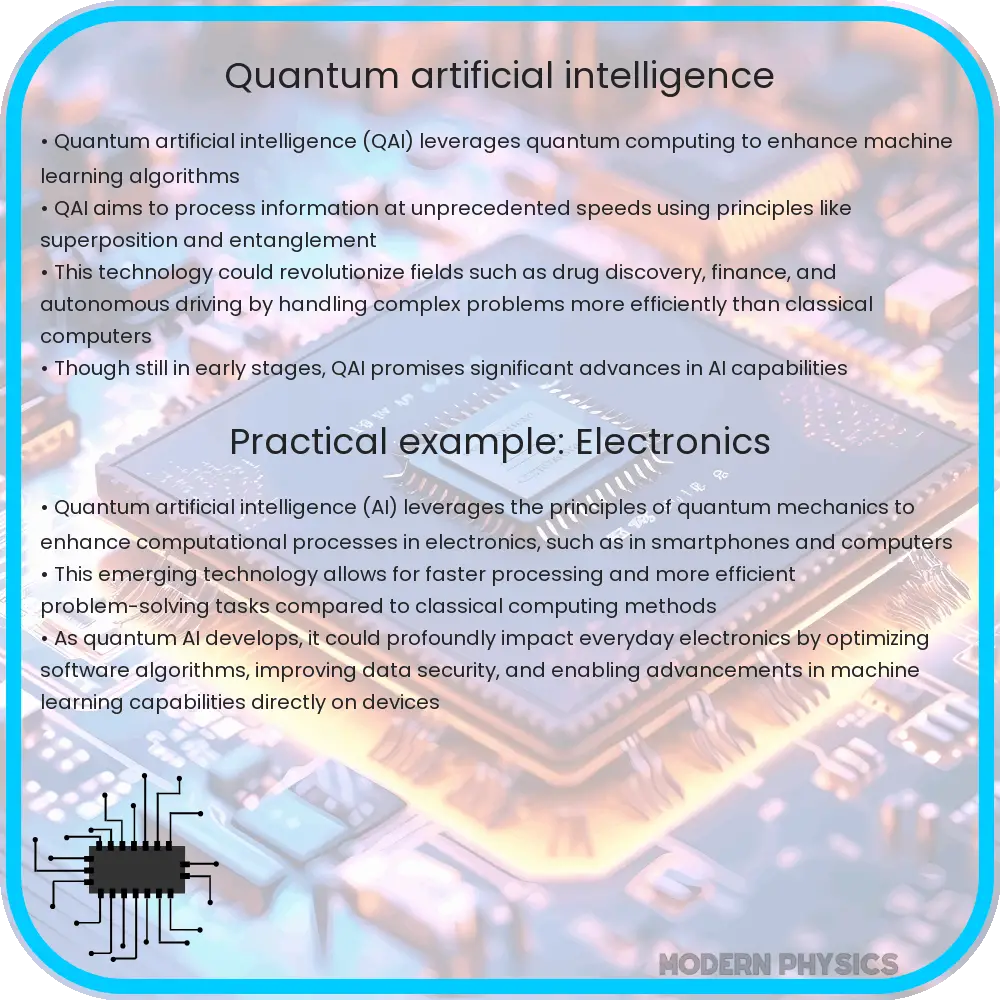
The realm of Artificial Intelligence (AI) has witnessed a revolutionary advancement with the introduction of Quantum Computing, leading to the emergence of Quantum Artificial Intelligence (QAI). This innovative fusion of quantum mechanics and machine learning is poised to redefine the capabilities of AI, offering unprecedented computational power and efficiency. In this article, we explore the breakthroughs, use-cases, and potential impacts of Quantum AI on various sectors.
Breakthroughs in Quantum AI
Quantum AI combines quantum computing principles with AI algorithms, enabling machines to process complex data at speeds unattainable by classical computers. Quantum bits, or qubits, can exist in multiple states simultaneously, allowing quantum computers to perform multiple calculations at once. This quantum superposition, along with quantum entanglement and interference, provides a significant speed advantage in problem-solving.
One of the notable breakthroughs in Quantum AI is the development of quantum algorithms that can efficiently solve complex problems, such as optimization, pattern recognition, and material science simulations. Quantum AI algorithms like the Quantum Approximate Optimization Algorithm (QAOA) and Variational Quantum Eigensolver (VQE) have shown promise in enhancing computational efficiency, potentially solving problems that are currently intractable for classical computers.
Use-Cases of Quantum AI
- Drug Discovery: Quantum AI can significantly accelerate the drug discovery process by simulating molecular interactions at an unprecedented scale and speed. This can lead to the development of new pharmaceuticals and treatment methods in a fraction of the time taken by traditional methods.
- Financial Modeling: In finance, Quantum AI can optimize investment portfolios, predict market trends, and manage risk with greater accuracy, using complex algorithms that analyze vast amounts of financial data.
- Cybersecurity: Quantum AI enhances cybersecurity by developing unbreakable encryption methods, such as Quantum Key Distribution (QKD), safeguarding sensitive data against sophisticated cyber attacks.
Quantum AI’s impact extends beyond these sectors, with potential applications in climate modeling, logistics, and beyond. Its ability to handle large-scale, complex computations makes it a transformative tool in tackling some of the world’s most challenging problems.
Impact of Quantum AI
Quantum AI promises to revolutionize industries by offering solutions that were previously unthinkable. It has the potential to enhance efficiency, reduce operational costs, and drive innovation across various fields. However, the widespread adoption of Quantum AI also raises significant challenges, including ethical considerations, data security concerns, and the need for specialized quantum programming skills.
As we stand on the brink of this quantum leap in AI, it is crucial to understand the balance between its vast potential and the challenges it poses. The next section will delve deeper into the technological intricacies, ethical implications, and future prospects of Quantum Artificial Intelligence.
Technological Intricacies and Ethical Implications
Quantum AI, while promising, is enmeshed in complex technological and ethical considerations. Technologically, the development of stable quantum computers remains a challenge, given their sensitivity to environmental disturbances. This necessitates advancements in quantum error correction and stability. Moreover, integrating quantum computing with AI requires a rethinking of traditional algorithms to exploit quantum mechanics’ advantages fully.
From an ethical standpoint, Quantum AI introduces concerns around privacy and data security, particularly with its potential to break current encryption standards. Furthermore, the democratization of such powerful technology is crucial to prevent monopolistic control and ensure equitable access.
Future Prospects and Preparing for a Quantum AI World
The future of Quantum AI is not just about technological advancements but also preparing for its integration into society. Education and workforce training in quantum computing and AI will be essential. Additionally, creating ethical guidelines and robust security protocols will be paramount to harnessing Quantum AI’s power responsibly.
Industry collaboration and government regulations will play a significant role in shaping the development and deployment of Quantum AI technologies. As Quantum AI continues to evolve, it is imperative for policies and frameworks to evolve alongside to address emerging challenges and opportunities.
Conclusion
Quantum Artificial Intelligence stands at the forefront of a new era in computing and AI. Its potential to solve previously intractable problems and revolutionize various industries is immense. Breakthroughs in quantum algorithms and computing power are paving the way for transformative applications in drug discovery, financial modeling, cybersecurity, and more. However, the journey towards a fully realized Quantum AI future is laced with challenges, both technological and ethical.
As we embrace this exciting yet uncharted territory, it is crucial to foster an environment of collaboration, innovation, and responsible governance. The convergence of quantum computing and AI not only heralds a new age of technological advancement but also poses fundamental questions about the societal impact of such powerful tools. By addressing these challenges head-on and preparing for the quantum future, we can unlock the full potential of Quantum Artificial Intelligence, creating a more efficient, secure, and innovative world.