
Learn about Polyvinylidene Fluoride (PVDF), a thermoplastic fluoropolymer known for its high purity, durability, and chemical resistance.
Introduction to Polyvinylidene Fluoride (PVDF)
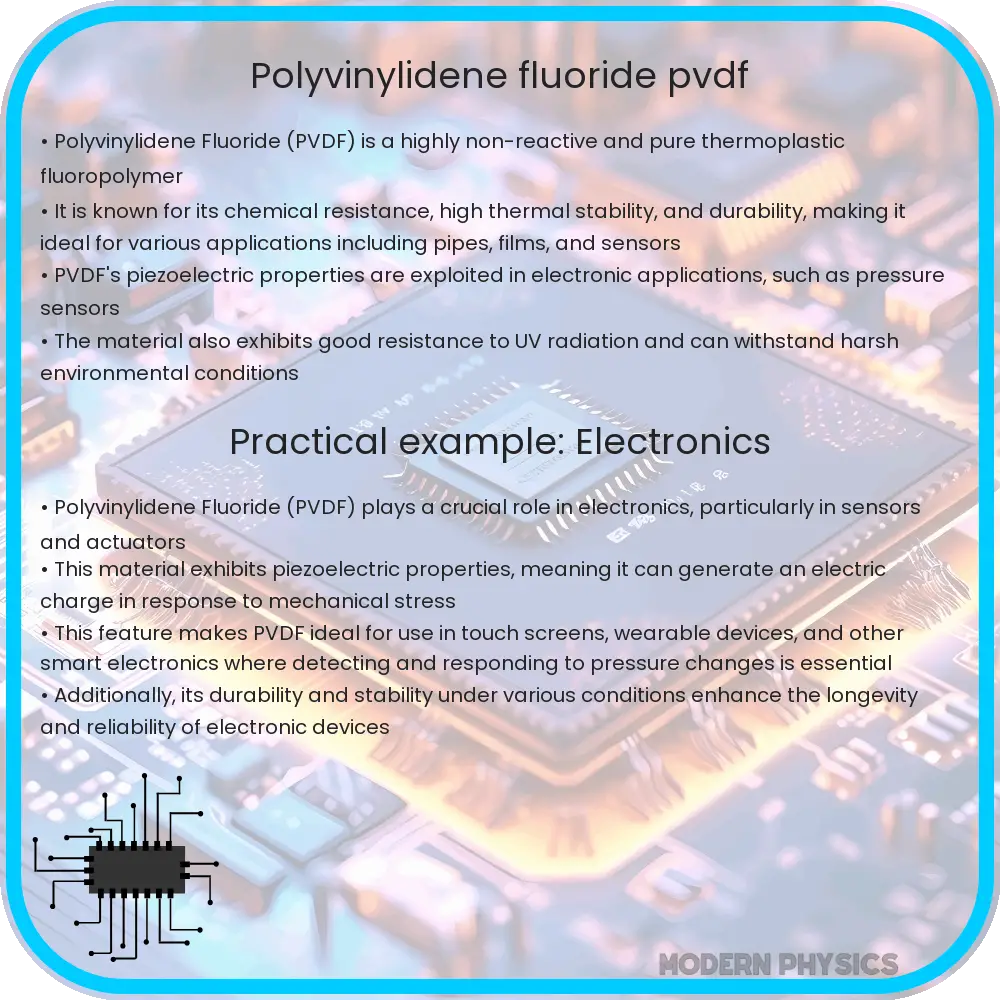
Polyvinylidene Fluoride (PVDF) is a highly non-reactive and pure thermoplastic fluoropolymer produced by the polymerization of vinylidene difluoride. Known for its high purity, durability, and stability under various environmental conditions, PVDF is widely used in applications where high resistance against chemicals and high temperatures are required.
Properties of PVDF
PVDF exhibits several impressive physical and chemical properties that make it an exceptional material for a myriad of applications. Some of the key properties include:
- Chemical Resistance: It is highly resistant to solvents, acids, and bases.
- Thermal Stability: It can withstand temperatures from -40°C to 150°C, making it suitable for use in both extreme cold and hot environments.
- Mechanical Strength: PVDF has good mechanical strength and toughness.
- UV Resistance: It is resistant to UV radiation, which makes it an ideal material for outdoor applications.
- Purity: PVDF is also known for its high purity, which is crucial in applications such as semiconductor manufacturing.
Applications of PVDF
The unique properties of PVDF make it suitable for various specialized applications. These include:
- Piping Systems: Due to its resistance to corrosion and high temperature, PVDF is often used in chemical processing industries for pipes and fittings.
- Membranes: PVDF membranes are used in medical applications and water purification due to their excellent hydrophobic properties and ability to repel water.
- Wiring Insulation: In the electronics industry, PVDF is used for insulating wires because of its high thermal and chemical stability.
- Coatings: PVDF coatings are applied on metal sheets and composites used in building facades for their durability and resistance to degradation from environmental exposure.
Thermal and Electrical Properties
PVDF is not only recognized for its chemical resilience but also for its thermal and electrical characteristics:
- Thermal Conductivity: The thermal conductivity of PVDF is relatively low, which makes it a good insulator.
- Dielectric Strength: PVDF has high dielectric strength, which is beneficial in applications requiring good insulation capabilities.
In the next section, we will explore more specialized uses of PVDF, particularly focusing on its role in innovative technologies and sustainable solutions.
Advanced and Sustainable Uses of PVDF
As an adaptable material, PVDF has found uses in more advanced and environmentally sustainable technologies:
- Solar Panels: PVDF is utilized in the backsheet layer of solar panels. Its UV resistance and thermal stability enhance the durability and performance of solar modules in harsh environmental conditions.
- Lithium-ion Batteries: In the field of renewable energy, PVDF serves as a binder in the electrodes of lithium-ion batteries. This improves the structural integrity and performance of the batteries, being crucial for electric vehicles and portable electronics.
- Biomedical Applications: Due to its inert and pure nature, PVDF is also used in the biomedical field for applications like vascular grafts and permanent implants, which require biocompatibility and chemical resistance.
Environmental Impact and Recycling
PVDF is not only praised for its performance but also for its impact on the environment. It is considered to be a more environmentally friendly plastic compared to other fluoropolymers, owing to its longer lifecycle and potential for recycling:
- Reduced Environmental Footprint: PVDF products are durable and can help reduce waste as they do not require frequent replacement.
- Recycling: While recycling PVDF can be challenging, efforts are underway to develop methods to break down and repurpose this material, thereby promoting a circular economy in its applications.
Understanding the recycling processes and promoting the reusability of PVDF can enable industries to minimize the environmental impact significantly.
Conclusion
Polyvinylidene Fluoride (PVDF) stands out as a superior material across various industries due to its remarkable chemical and physical properties which include high chemical resistance, thermal stability, and mechanical strength. From chemical processing to advanced energy solutions, PVDF’s versatility makes it a preferred choice in high-performance applications. Its role in sustainable technologies and the potential for recycling further highlights its importance in fostering eco-friendly industrial practices. As technology and environmental needs evolve, PVDF is expected to continue to play a pivotal role in new and innovative applications, contributing significantly to modern engineering solutions.