
Explore the transformative power of photothermal effects, from precision in medical therapies to innovative applications in energy and environmental remediation.
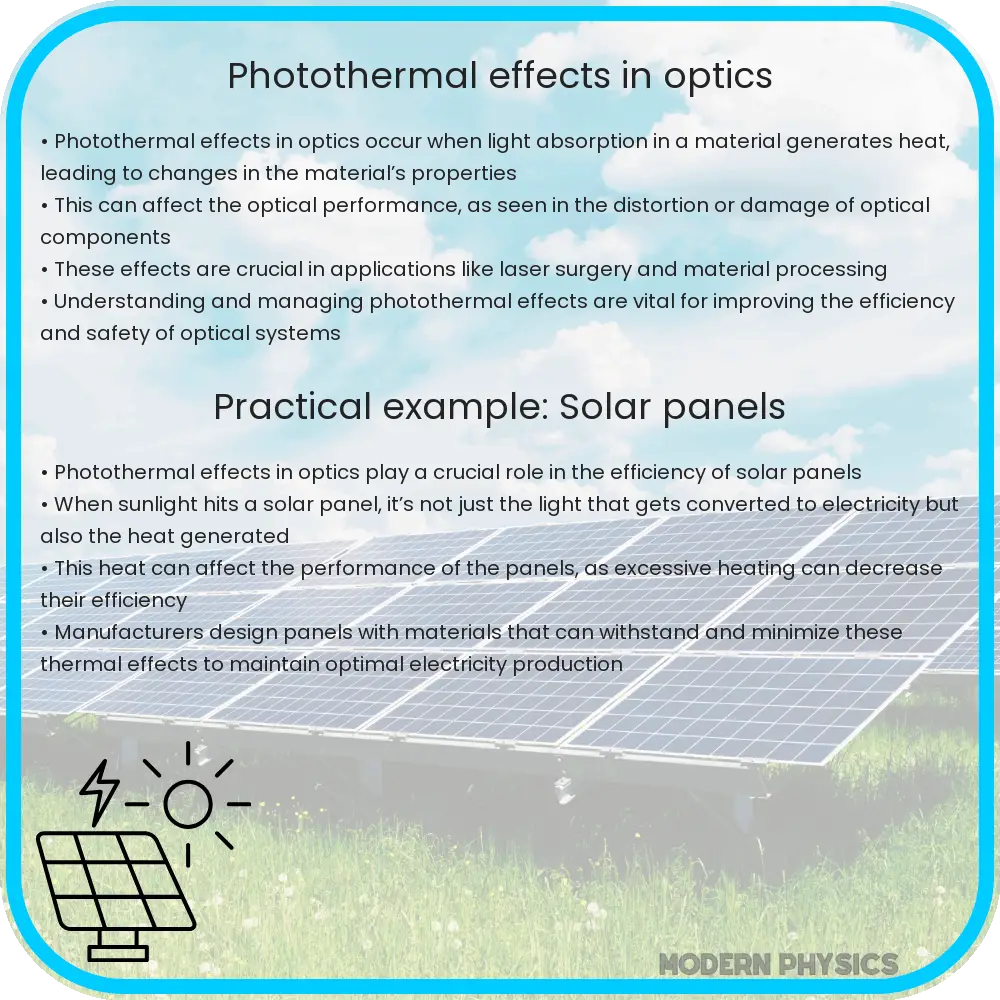
Understanding Photothermal Effects
Photothermal effects refer to the phenomena where light energy is converted into thermal energy upon absorption by a material. This fundamental principle finds its roots in the interaction between electromagnetic radiation and matter, leading to a wide array of applications across various fields. By harnessing the precise control of light, from its intensity to wavelength, scientists and engineers can induce targeted thermal effects in materials, opening doors to innovative technologies and solutions.
Precision and Control in Photothermal Processes
The precision and control of photothermal effects are paramount, especially in applications requiring meticulous energy delivery. Advanced materials with tailored optical properties enable selective absorption of specific light wavelengths, thereby optimizing the conversion efficiency from light to heat. This selectivity allows for precise thermal management, minimizing collateral damage to surrounding areas, a critical consideration in medical therapies and material processing.
Applications of Photothermal Effects
- Medical Therapies: In oncology, photothermal therapy (PTT) utilizes nanoparticles that preferentially accumulate in tumor cells. Upon irradiation with near-infrared light (NIR), these particles generate heat, effectively killing cancer cells without harming healthy tissue.
- Energy Conversion: Photothermal effects are harnessed in solar thermal collectors, where absorbed sunlight is converted into heat, driving heat engines or heating fluids for residential and industrial applications.
- Environmental Remediation: Photothermal processes can degrade pollutants or trigger reactions to detoxify water and air, showcasing the environmental applications of this technology.
Analysis and Characterization
To optimize the efficiency and efficacy of photothermal applications, a comprehensive analysis of the material’s optical and thermal properties is essential. Techniques such as spectrophotometry and thermal imaging are employed to characterize the absorption spectrum and thermal conductivity of materials. Furthermore, computational models play a crucial role in predicting the photothermal behavior, allowing for the fine-tuning of parameters for specific applications.
Understanding the underlying mechanisms and optimizing the parameters for specific applications are key to harnessing the full potential of photothermal effects. The interplay between light and matter opens up a plethora of possibilities, from medical treatments to environmental protection, highlighting the versatility and importance of this technology.
Challenges and Future Directions
Despite the promising applications of photothermal effects, challenges remain in terms of material stability, system efficiency, and precise control. The development of new materials with higher photothermal conversion efficiencies and stability under repeated light exposure is an area of active research. Additionally, improving the specificity of photothermal agents for targeted therapy in medical applications continues to be a focal point. Overcoming these challenges requires interdisciplinary collaboration, combining insights from materials science, chemistry, physics, and engineering.
Innovative Materials and Techniques
Recent advances in nanotechnology and materials science have led to the development of innovative materials such as graphene, gold nanoparticles, and quantum dots, each offering unique advantages in terms of light absorption, thermal conductivity, and biocompatibility. Furthermore, cutting-edge techniques in laser engineering and optical manipulation enable unprecedented precision in delivering photothermal effects, paving the way for more effective and safer applications.
Conclusion
The exploration of photothermal effects offers a window into the intricate interactions between light and matter, revealing a landscape rich with potential for innovation. From revolutionizing cancer treatment to advancing renewable energy technologies, the applications of photothermal effects are as diverse as they are impactful. As research continues to push the boundaries of what’s possible, we can anticipate the emergence of more efficient, precise, and sustainable solutions across various domains. The journey of harnessing photothermal effects is a testament to the power of scientific inquiry and technological advancement, promising a brighter future powered by the very essence of light itself.