
Learn about nuclear medicine, a branch of medicine using radioactive substances to diagnose and treat diseases, providing detailed physiological insights.
What is Nuclear Medicine?
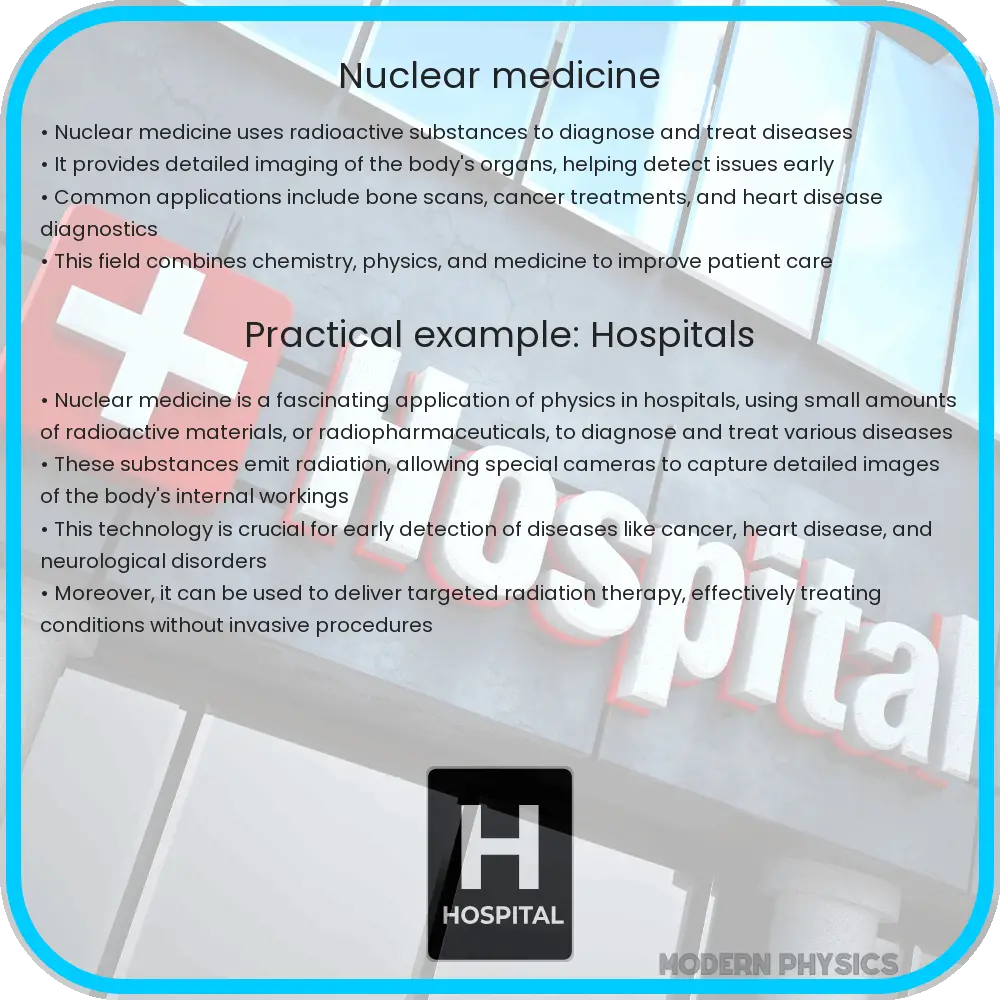
Nuclear medicine is a specialized branch of medicine that uses small amounts of radioactive substances, known as radiopharmaceuticals or radiotracers, to diagnose and treat various diseases. Unlike diagnostic methods that merely show anatomy and structure, nuclear medicine provides detailed information about how the body is functioning and its chemical processes. This capability makes it invaluable for the early detection, diagnosis, and effective treatment of many diseases.
How Does Nuclear Medicine Work?
Nuclear medicine procedures rely on the administration of radiopharmaceuticals, specifically designed to target certain organs, bones, or tissues. When these radiotracers are introduced into the body, typically by injection, inhalation, or swallowing, they emit gamma rays. These emissions are detected by a special camera, such as a gamma camera, PET (positron emission tomography) scanner, or SPECT (single-photon emission computed tomography) scanner. The images obtained provide unique information including the extent of a disease process and the function of an organ, which is often crucial for early detection and treatment.
Common Uses of Nuclear Medicine in Health Care
- Diagnostic Imaging: This is the most common use of nuclear medicine. It is utilized to diagnose or evaluate brain disorders, heart disease, cancer, bone pain, and thyroid disease, among other conditions.
- Therapy: Certain radioactive isotopes can be used to treat diseases, notably specific types of cancers and thyroid disorders. For example, radioactive iodine (I-131) is commonly used in the treatment of hyperthyroidism and thyroid cancer.
- Research: Nuclear medicine also plays a crucial role in medical research, helping scientists and doctors to better understand how the body works and how diseases affect it.
Safety in Nuclear Medicine
Despite involving radioactive materials, nuclear medicine procedures are considered safe when done appropriately. The amount of radiation a patient receives is carefully controlled to be as low as reasonably achievable (ALARA principle). Furthermore, the radiotracers decay (lose their radioactivity) within a short time. The benefits of accurate diagnosis and effective treatment generally outweigh the risks associated with the small amounts of radiation.
Advantages of Nuclear Medicine
Nuclear medicine offers distinct advantages over other diagnostic imaging techniques. These include:
- Sensitivity to Changes: Nuclear imaging can detect disease in its earliest stages by showing physiological changes, long before they would be visible through other diagnostic tests.
- Targeted Approach: Since radiotracers specifically target the area under study, they provide very detailed images of the organ’s structure and function.
- Comprehensive Insight: It combines information about both structure and function, giving a more complete picture of a health condition.
The Future of Nuclear Medicine
The field of nuclear medicine is evolving rapidly with continuous improvements in technology and radiopharmaceuticals. Future advancements are likely to lead to more precise and targeted imaging and treatments, further enhancing its role in personalized medicine. Innovations such as the development of new tracers that can precisely target and illuminate more kinds of cells, or improvements in imaging technology, promise to improve diagnosis and treatment outcomes significantly.
Challenges Ahead
Despite the promising future, there are challenges that remain to be addressed in nuclear medicine. These include issues related to the cost and availability of radioactive materials, regulatory and safety considerations, and the need for specialized training for healthcare professionals. Additionally, there is a constant need for balancing the effective treatment possibilities against the potential risks of radiation exposure to patients and medical staff.
Environmental Impact
Another important consideration is the environmental impact of radioactive waste from nuclear medicine. Although the levels of radioactive waste are generally low, ensuring safe and effective disposal and minimizing any long-term environmental consequences is crucial. Ongoing research and strict regulatory frameworks help manage these impacts, making sure that nuclear medicine remains a safe and valuable tool in the battle against disease.
Conclusion
Nuclear medicine represents a vital area in modern medical science, offering unique insights into the functioning and health of various bodily systems. Through the use of radiopharmaceuticals and advanced imaging techniques, it provides critical information that is often unattainable through other diagnostic methods. While there are challenges, including safety and environmental concerns, the meticulous controls and continuous advancements in the field help mitigate these issues and push the boundaries of medical science. As the technology and applications of nuclear medicine continue to evolve, it will remain an indispensable tool in diagnosing, treating, and researching complex diseases, improving the quality of life for patients around the world.