
Learn about Nitinol, a nickel-titanium alloy known for its shape memory and superelasticity, widely used in medical devices.
Understanding Nitinol and Its Uses in Medical Devices
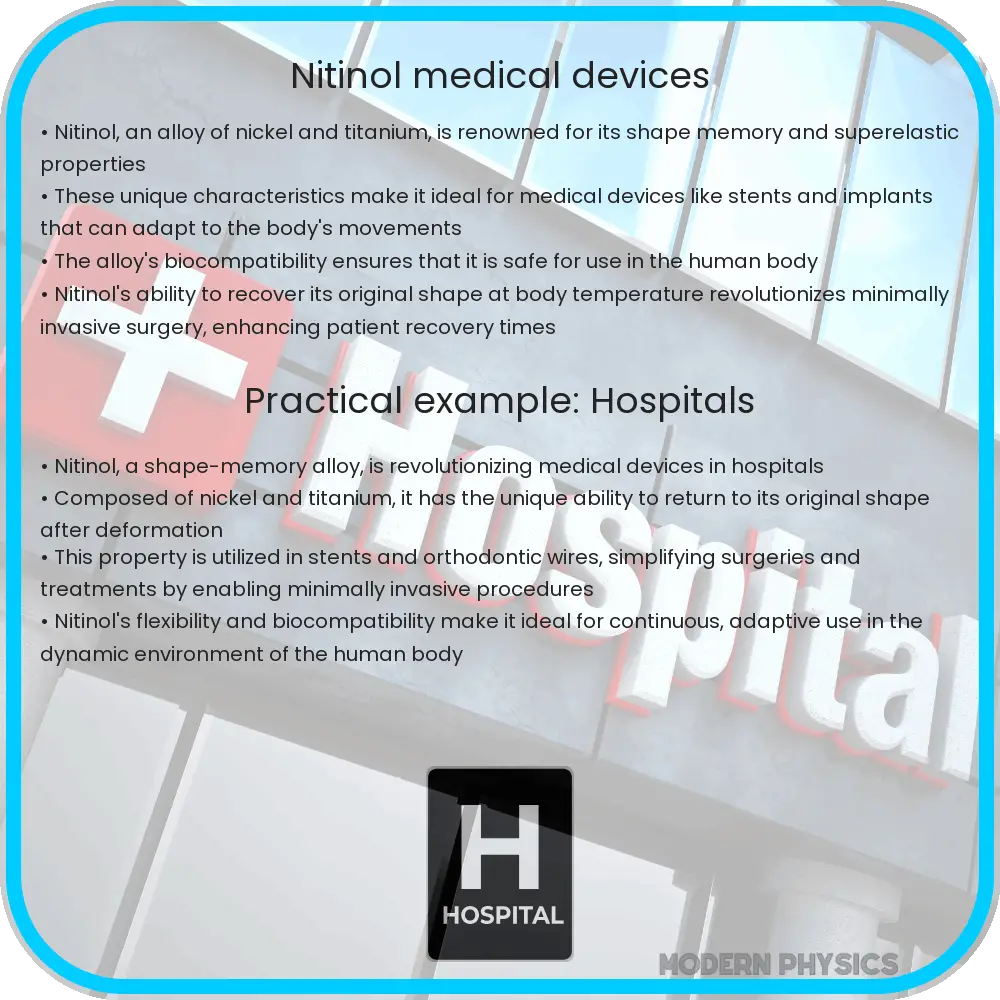
Nitinol, an alloy of nickel and titanium, stands out in the medical device industry due to its unique properties of shape memory and superelasticity. These distinctive characteristics make it especially valuable in developing various medical devices, ranging from stents to orthodontic wires. This article explores the durability, flexibility, and biocompatibility of Nitinol, illustrating why it is a preferred material in medical technology.
Nitinol’s Unique Properties
One of the most fascinating aspects of Nitinol is its shape memory effect. This property allows the material to return to its original shape after being deformed, simply by being exposed to a specific temperature. This is particularly useful in applications like stents, where the device can be deployed in a compact form and then expand to its required shape once it is inside the body.
Furthermore, Nitinol exhibits a property known as superelasticity. This means that the alloy can undergo significant deformation but still return to its original form at body temperature, without any permanent deformation. This property is crucial for devices that need to withstand various mechanical stresses during insertion and in situ.
Durability of Nitinol Devices
Nitinol’s resistance to fatigue — the ability to withstand repeated stress without failure — is a key factor in its durability. Medical devices, particularly those that are movement-intensive like heart valves and vascular stents, benefit greatly from Nitinol’s robust fatigue strength. This durability ensures that devices operate effectively for the required duration in the human body, which can be crucial for patient health and recovery.
Flexibility and Adaptability
The flexibility of Nitinol is essential for minimally invasive medical procedures. Its ability to be manufactured into extremely fine wires and then manipulated into complex shapes allows for its widespread use in less accessible areas of the body. This flexibility significantly reduces the need for large incisions, leading to quicker patient recovery times and reduced risk of infection.
Biocompatibility of Nitinol
Biocompatibility refers to how well a material is accepted by the human body. Nitinol is highly biocompatible, which reduces the risk of rejection and inflammation. Moreover, the corrosion resistance of Nitinol ensures that it does not degrade or release harmful ions into the body, maintaining its integrity and functionality over time.
- Low risk of corrosion and ion release
- High tolerance by human tissue
- Reduced inflammatory response compared to other materials
However, it is important to note that individuals with nickel allergies may experience reactions to Nitinol. Despite this, the overall incidence of such reactions is generally low, considering the alloy’s widespread use in medical settings.
Applications of Nitinol in Medicine
The applications of Nitinol in medical devices are varied and growing with technological advancements. Here are a few prominent uses:
- Stents: Used in cardiovascular and peripheral vascular conditions, Nitinol stents can adapt to the body’s movements and flow dynamics, providing support without compromising the natural movement of blood vessels.
- Orthodontic Wires: These wires maintain gentle and consistent pressure on teeth, moving them slowly to the desired position. The wire’s ability to return to its original shape after deformation reduces the need for frequent adjustments.
- Surgical Tools: Instruments made of Nitinol are used in minimally invasive surgery, offering precision and flexibility that enhance the surgeon’s capabilities.
Through these applications, Nitinol’s special properties contribute to its superiority in the medical field, marking it as a material of choice for innovations aimed at enhancing patient care and treatment outcomes.
Recent Innovations and Future Prospects
As research continues, the potential uses of Nitinol in medical technology constantly expand. Innovative applications such as implantable devices for drug delivery and shape-memory surgical sutures that can self-tighten in response to body temperature changes are being explored. These advancements could revolutionize patient care, providing more personalized and effective treatment options.
Future research is also focusing on enhancing the alloy’s properties, such as increasing fatigue resistance and reducing nickel content to improve biocompatibility for patients with sensitivities. By addressing these challenges, Nitinol’s applications could broaden, potentially replacing other materials in high-stress medical environments.
Conclusion
Nitinol’s remarkable properties of shape memory and superelasticity, combined with its durability, flexibility, and biocompatibility, make it an invaluable material in the medical device industry. From stents that adapt to the body’s dynamics to orthodontic wires that maintain consistent pressure, Nitinol is proving to be indispensable in numerous medical applications. Furthermore, ongoing research and innovative applications promise to enhance the capabilities of Nitinol, ensuring its continued role in advancing medical technology and improving patient outcomes. In the evolving landscape of healthcare, Nitinol stands out as a key material that bridges the gap between current needs and future possibilities.