
Innovative Nanoparticle Drug Delivery Systems enhance medication efficacy and reduce side effects by targeting drugs directly to affected cells.
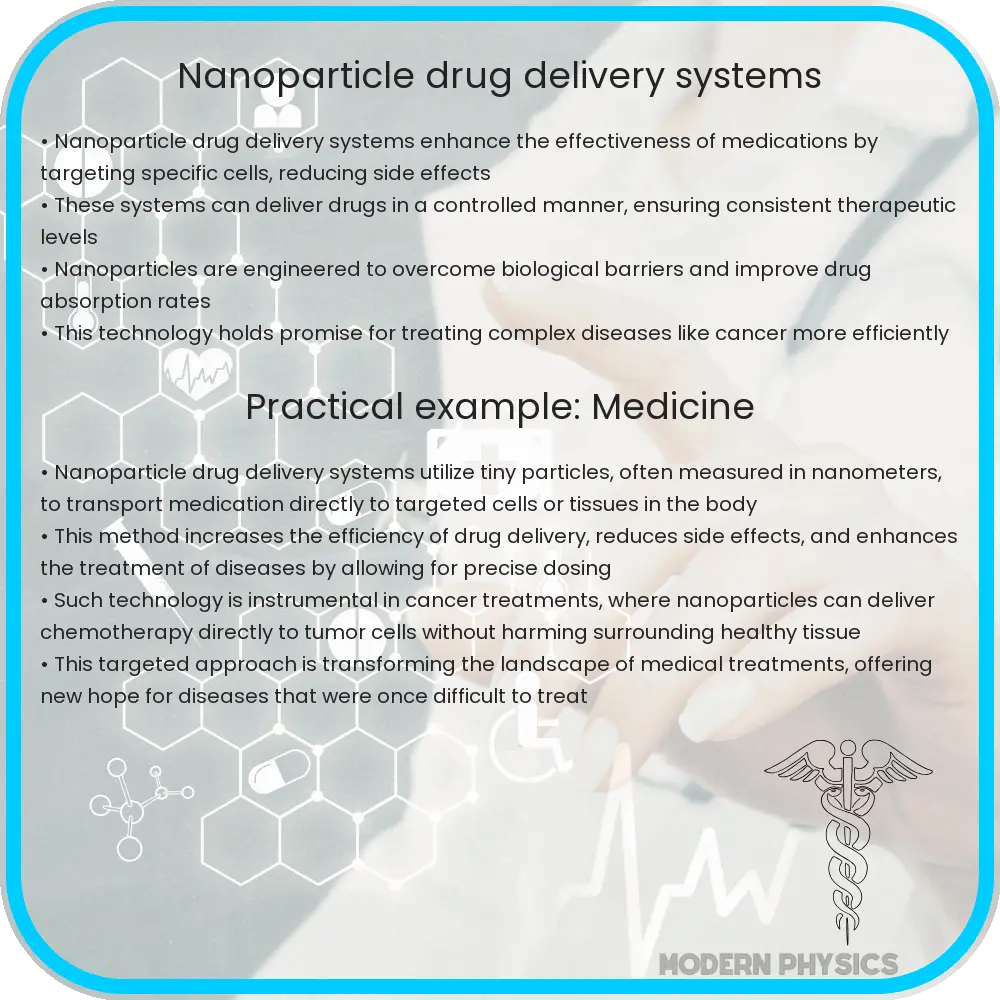
Nanoparticle Drug Delivery: Targeted, Efficient, and Safe
The realm of medical treatment is swiftly advancing with the integration of nanotechnology, particularly through the development of nanoparticle drug delivery systems. This cutting-edge approach leverages extremely small particles to administer medication directly to affected cells, thereby increasing effectiveness and reducing side-effects. This article explores the fundamentals of nanoparticle drug delivery, its advantages, and the impact it could potentially have on medical science.
What Are Nanoparticles?
Nanoparticles are microscopic particles with dimensions measured in nanometers—typically less than 100 nanometers across (for perspective, a human hair is about 75,000 nanometers wide). At this scale, these particles exhibit unique properties that can be utilized in various fields, including drug delivery.
Principles of Nanoparticle Drug Delivery
The key advantage of using nanoparticles for drug delivery is their size and surface characteristics, which can be engineered to optimize the delivery of medicine to specific parts of the body. Here’s how they work:
- Targeted Delivery: Nanoparticles can be designed to seek out and bind to specific types of cells, such as cancer cells. This targeting is achieved through the attachment of ligands – molecules that bind to other specific molecules – to the surface of the nanoparticles, enabling them to adhere to and enter the target cells.
- Controlled Release: Drugs can be encapsulated within nanoparticles, which protect the drugs from being degraded within the body before they reach their target. The drugs can then be released over a controlled period, depending on the design of the nanoparticle, which can be influenced by temperature, pH, or other conditions of the environment within the body.
- Reduced Side Effects: By directing drugs specifically to their site of action and reducing exposure to non-target tissues, nanoparticles can significantly decrease the side effects associated with many medications.
The design of nanoparticle drug delivery systems involves complex chemistry and material science, as well as a deep understanding of biological interactions. It’s an interdisciplinary endeavor that requires knowledge from physics, chemistry, biology, and engineering to achieve precise and safe drug delivery mechanisms.
Materials Used in Nanoparticles
Different materials can be used to construct nanoparticles, each with specific characteristics and benefits. These materials include:
- Liposomes: Spherical vesicles composed of cholesterol and naturally occurring phospholipids, which can carry both hydrophilic (water-soluble) and lipophilic (fat-soluble) drugs.
- Metallic Nanoparticles: Made from metals like gold or silver, these nanoparticles take advantage of the metals’ unique properties, such as their ability to absorb and reflect light, for treatments like photothermal therapy in cancer.
- Polymeric Nanoparticles: These are made from biodegradable polymers and are particularly useful for the controlled release of drugs, as they break down over time within the body, releasing the encapsulated drug in a controlled manner.
Each type of nanoparticle offers distinct advantages and can be tailored for specific types of treatments. The choice of materials substantially affects the efficiency and safety of the drug delivery system.
Applications in Medicine
Nanoparticle drug delivery systems have already started redefining the approaches to treatment and diagnosis in medicine. They are particularly transformative in the treatment of cancers, where traditional chemotherapy can be highly toxic to healthy tissues. Nanoparticles provide a smarter way to deliver drugs effectively while minimizing damage to healthy cells.
In addition to cancer, these systems are being explored for their potential in treating a wide array of diseases, from infectious diseases to chronic disorders like diabetes, and even in vaccine delivery. The flexibility and adaptability of nanoparticles make them formidable tools in the quest to tailor treatment strategies to the needs of individual patients, potentially ushering in an era of personalized medicine.
Challenges and Future Prospects
Despite the promising advantages of nanoparticle drug delivery systems, there are several challenges that need to be addressed:
- Regulatory Hurdles: Every new drug delivery system must undergo rigorous testing for safety and effectiveness before it receives approval. The complex nature of nanoparticles adds layers of difficulty in predicting their behavior in the body, thereby complicating the regulatory process.
- Manufacturing Consistency: Producing nanoparticles with uniform size and properties in large quantities is challenging. Consistency is crucial to ensure that every batch of nanoparticles behaves the same way in the body, which is vital for both safety and effectiveness.
- Cost: The production and development of nanoparticle-based medications currently involve high costs due to the sophisticated technology and materials required. This could limit accessibility, especially in low-resource settings.
- Long-term Effects: Since nanoparticles are a relatively new technology, the long-term effects in the body are not fully understood yet. Continued research is essential to ensure that these particles do not pose unforeseen risks over time.
However, the future looks promising. Ongoing advancements in technology and better understanding of biological systems are likely to overcome current limitations. Increasing collaboration between researchers in material science, engineering, pharmaceuticals, and biotechnology is speeding up the development of more sophisticated and safer drug delivery systems.
Conclusion
Nanoparticle drug delivery systems represent a significant leap forward in the way we administer medications. By enabling targeted therapy, these systems can potentially reduce the side effects and increase the effectiveness of treatments. While challenges such as manufacturing consistency, regulatory approval, and long-term safety continue to be addressed, the benefits they offer make nanoparticles a key area of interest in medical research and development.
As the field continues to evolve, it could play a crucial role in the shift towards personalized medicine, where treatments are specifically tailored to individual patients. This not only promises to improve treatment outcomes but also opens up new frontiers in the fight against numerous diseases. The blend of nanotechnology and medicine is still in its early stages, but its potential to revolutionize healthcare is immense.