
Explore the precision and innovation of MEMS in electrostatics, their applications in various industries, and future technological advancements.
Understanding MEMS in Electrostatics: Harnessing Precision and Efficiency
Micro-Electro-Mechanical Systems (MEMS) represent a pivotal advancement in the field of electrostatics, merging the realms of electrical engineering and microfabrication. This technology has revolutionized various industries, from automotive to healthcare, by offering unprecedented precision and efficiency in the control and manipulation of small-scale mechanical systems.
The Core Principles of MEMS in Electrostatics
At the heart of MEMS technology lies the principle of electrostatics—the branch of physics that deals with the study of stationary electric charges. MEMS devices leverage electrostatic forces to create motion or generate mechanical work. This is typically achieved through the interaction of electrostatic fields with conductive microstructures. The fundamental components of these systems include microscale sensors, actuators, and structures, all integrated into a miniature package.
MEMS Sensors: Enhancing Precision and Responsiveness
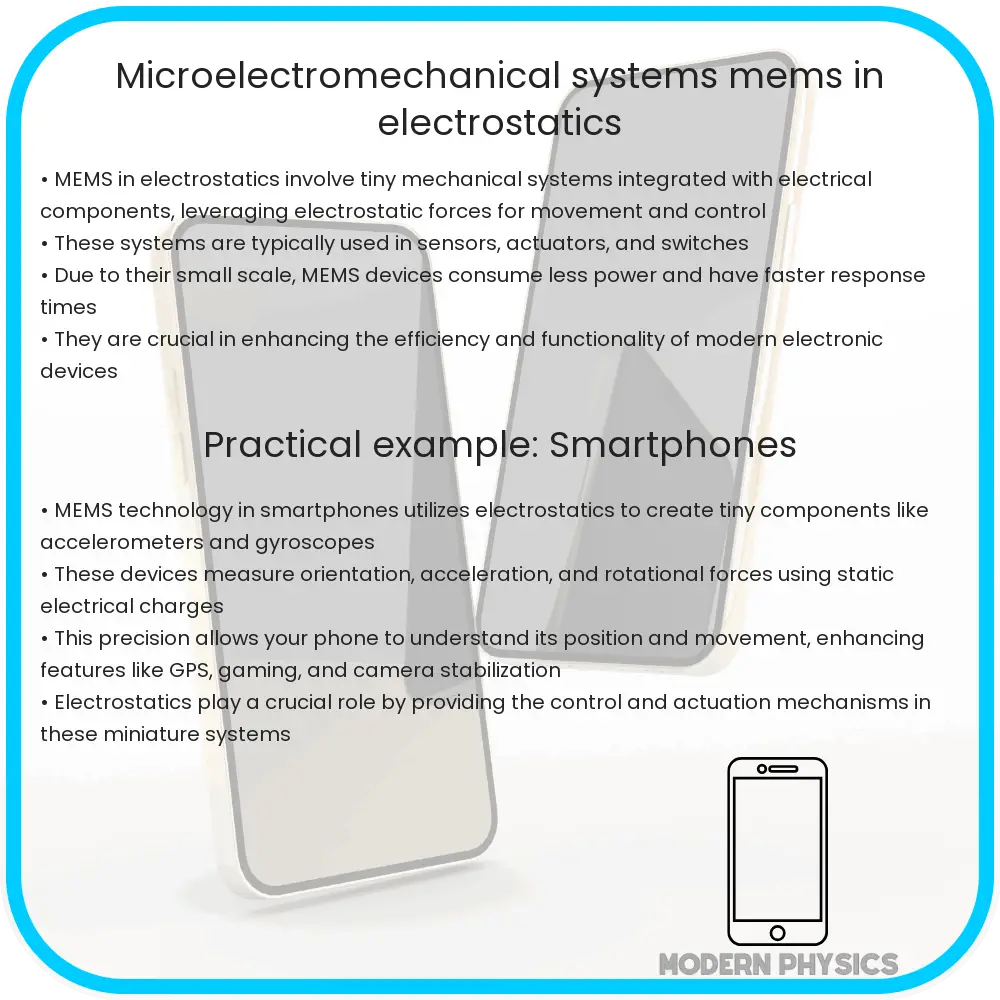
MEMS sensors are integral for precision measurement in various applications. These sensors, capable of detecting changes in the environment with high accuracy, are extensively used in accelerometers, gyroscopes, and pressure sensors. The electrostatic principles enable these sensors to respond swiftly and accurately to external stimuli, making them ideal for applications requiring high sensitivity and rapid response, such as in smartphones and automotive safety systems.
MEMS Actuators: Pioneering Efficient Mechanical Control
MEMS actuators, on the other hand, utilize electrostatic forces to perform mechanical actions. These actuators are often employed in optical systems, such as micro-mirrors for laser beam steering and variable optical attenuators. The electrostatic actuation provides a means for precise control, ensuring that movements are smooth, accurate, and consume minimal power. This efficiency is paramount in applications like microfluidics and lab-on-a-chip devices, where precise fluid manipulation is crucial.
Innovations and Applications of MEMS in Various Fields
MEMS technology has found applications across a wide spectrum of fields. In the automotive industry, MEMS sensors contribute to enhanced vehicle stability and safety. In healthcare, these devices enable advanced diagnostic and therapeutic tools, such as implantable drug delivery systems and miniature endoscopes. The integration of MEMS into consumer electronics has also been transformative, leading to more responsive and energy-efficient devices.
Furthermore, the adaptability of MEMS in electrostatics makes it a prime candidate for future technological innovations. As the demand for smaller, more efficient, and precise devices grows, MEMS stands at the forefront of meeting these challenges.
Advancements in MEMS Technology: Towards a Smarter Future
The ongoing advancements in MEMS technology continue to push the boundaries of what’s possible in miniaturization and efficiency. Researchers are developing novel materials and fabrication techniques to enhance the performance and durability of MEMS devices. For instance, the use of piezoelectric materials in MEMS actuators is gaining traction due to their ability to generate larger forces and displacements compared to traditional electrostatic methods.
Challenges and Future Prospects in MEMS Development
Despite the significant progress, challenges remain in the widespread adoption of MEMS in electrostatics. One major challenge lies in the complex fabrication processes, which require high precision and can be costly. Additionally, ensuring the reliability and long-term stability of MEMS devices, especially in harsh environments, continues to be a critical area of research. Addressing these challenges is key to unlocking the full potential of MEMS technology.
Integrating MEMS with Emerging Technologies
The integration of MEMS with emerging technologies such as the Internet of Things (IoT) and artificial intelligence (AI) presents exciting opportunities. In the realm of IoT, MEMS sensors can play a pivotal role in enabling smart devices to interact with their environment more effectively. Similarly, the combination of MEMS and AI can lead to intelligent systems capable of making autonomous decisions based on real-time data collected by MEMS sensors.
Environmental Impact and Sustainability Considerations
As MEMS technology evolves, considerations of environmental impact and sustainability become increasingly important. The industry is moving towards eco-friendly materials and processes to minimize the ecological footprint of MEMS fabrication and disposal. This shift not only addresses environmental concerns but also aligns with global sustainability goals.
Conclusion: The Transformative Impact of MEMS in Electrostatics
In conclusion, MEMS technology in electrostatics stands as a testament to human ingenuity and the relentless pursuit of innovation. By combining precision engineering with the principles of electrostatics, MEMS devices have opened up new horizons in various fields, from healthcare to consumer electronics. The future of MEMS is bright, with ongoing research and development promising even more sophisticated and sustainable solutions. As this technology continues to evolve, it will undoubtedly play a crucial role in shaping the technological landscape of the future, driving efficiency, precision, and innovation across multiple industries.