
Explore the crucial role of metronomes in music, mastering tempo, rhythm, and dynamics for improved precision and ensemble synchronization.
Understanding the Metronome: A Guide to Precision, Tempo Control, and Dynamics
The metronome, an indispensable tool for musicians, serves as a standard for maintaining consistent tempo and enhancing musical expression. This article delves into the intricacies of the metronome, focusing on its pivotal role in developing precision, mastering tempo control, and understanding dynamics in music.
The Role of the Metronome in Music Precision
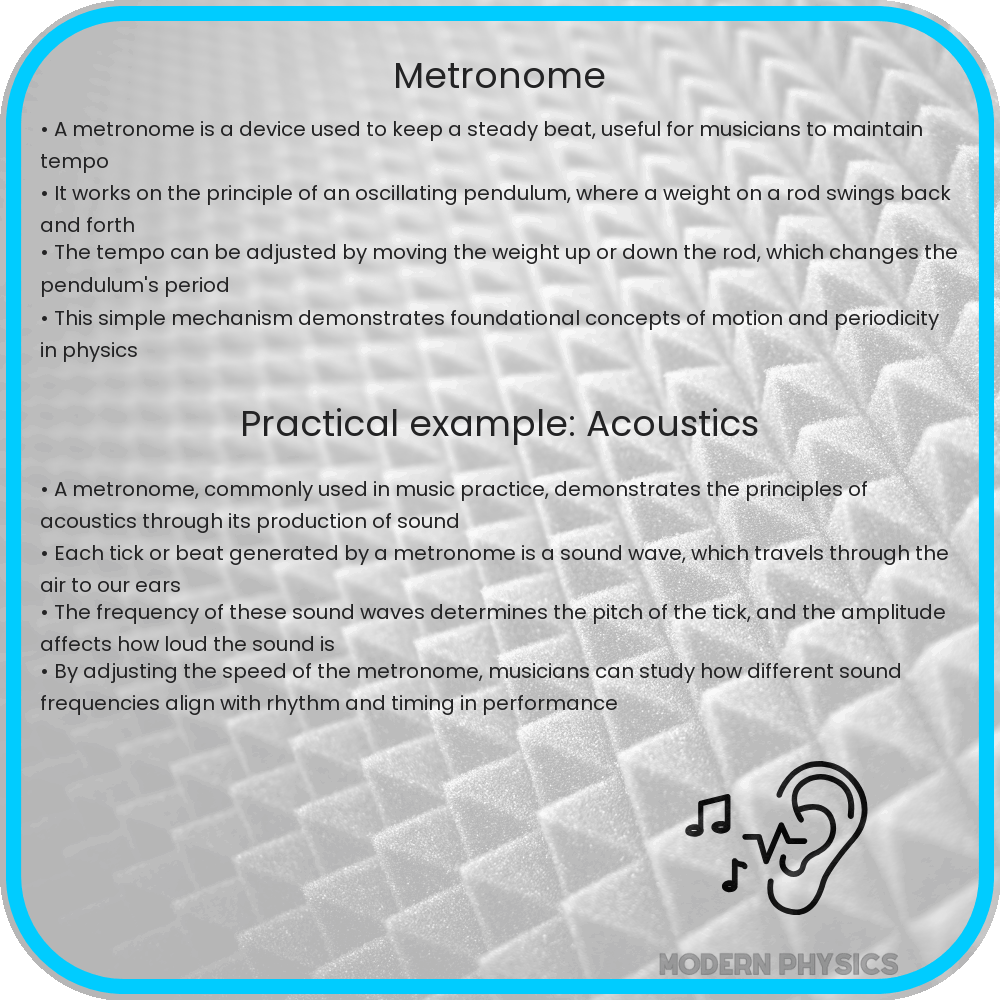
At its core, a metronome is a device used to mark time at a selected rate by giving a regular tick sound at a set number of beats per minute (BPM). This consistent beat is crucial for musicians to develop timing accuracy, an essential element in music. By practicing with a metronome, musicians can align their sense of timing with the standard tempo, ensuring that their performance is rhythmically precise.
Mastering Tempo Control
Tempo control is vital for musical interpretation and performance. The metronome helps musicians understand and adhere to various tempo markings found in music, such as Allegro (fast), Andante (moderate), or Lento (slow). By adjusting the BPM on the metronome, musicians can practice at different speeds, gradually increasing the tempo to master more complex pieces or slowing it down to focus on challenging sections.
Enhancing Musical Dynamics
Dynamics in music refer to the volume of a sound or note. The metronome aids in understanding the relationship between tempo and dynamics. For instance, a faster tempo might require a more energetic dynamic, while a slower tempo could align with softer, more expressive playing. By practicing with a metronome, musicians can learn to maintain a consistent tempo while varying dynamics, an essential skill for expressive musical performance.
Conclusion
In summary, the metronome is a powerful tool for musicians, facilitating the development of precision, tempo control, and dynamics. Its regular ticking sound serves as a reliable guide for maintaining consistent tempo, allowing musicians to focus on other aspects of their performance. As a result, the metronome is an essential tool for both beginner and professional musicians alike, contributing significantly to their musical growth and expertise.
Advanced Techniques in Metronome Use
Advanced musicians often use metronomes for more than just basic tempo keeping. Techniques such as setting the metronome to beat on the off-beats or using it to simulate complex time signatures can further refine a musician’s rhythm and timing skills. This advanced practice helps in developing a more nuanced sense of rhythm, essential for genres that rely heavily on syncopation and irregular time signatures.
Integrating the Metronome in Ensemble Play
In ensemble settings, the metronome plays a vital role in ensuring group cohesion. By practicing with a metronome, each musician develops a consistent internal tempo, leading to a more synchronized group performance. It’s especially beneficial in orchestras and bands where timing precision is critical for the harmonic and rhythmic alignment of multiple instruments.
Technological Advancements in Metronomes
Modern technology has significantly enhanced metronome functionality. Digital metronomes and metronome apps offer features like variable time signatures, visual aids, and programmable beats. This technological evolution makes the metronome more adaptable and useful for a wide range of musical styles and practice scenarios.
Overcoming the Challenges of Metronome Practice
While beneficial, practicing with a metronome can be challenging. It requires discipline and patience, especially when working through difficult passages or complex rhythms. Musicians must balance metronome use with other practice methods to develop a comprehensive understanding of musical timing and expression.
Conclusion
The metronome, a timeless tool in the musician’s arsenal, is invaluable for mastering precision, tempo control, and dynamics. Its role extends beyond basic tempo keeping, aiding in the development of advanced rhythmic skills and ensemble synchronization. With the advent of digital technology, the metronome has become more versatile, catering to the evolving needs of musicians across genres. Despite its challenges, regular practice with a metronome is essential for any musician seeking to enhance their timing accuracy and overall musicality. Ultimately, the metronome is not just a tool for keeping time; it’s a cornerstone for musical growth and excellence.