
Understanding loudness in sound, focusing on its psychological and physical aspects, including factors like frequency and duration impacting perception.
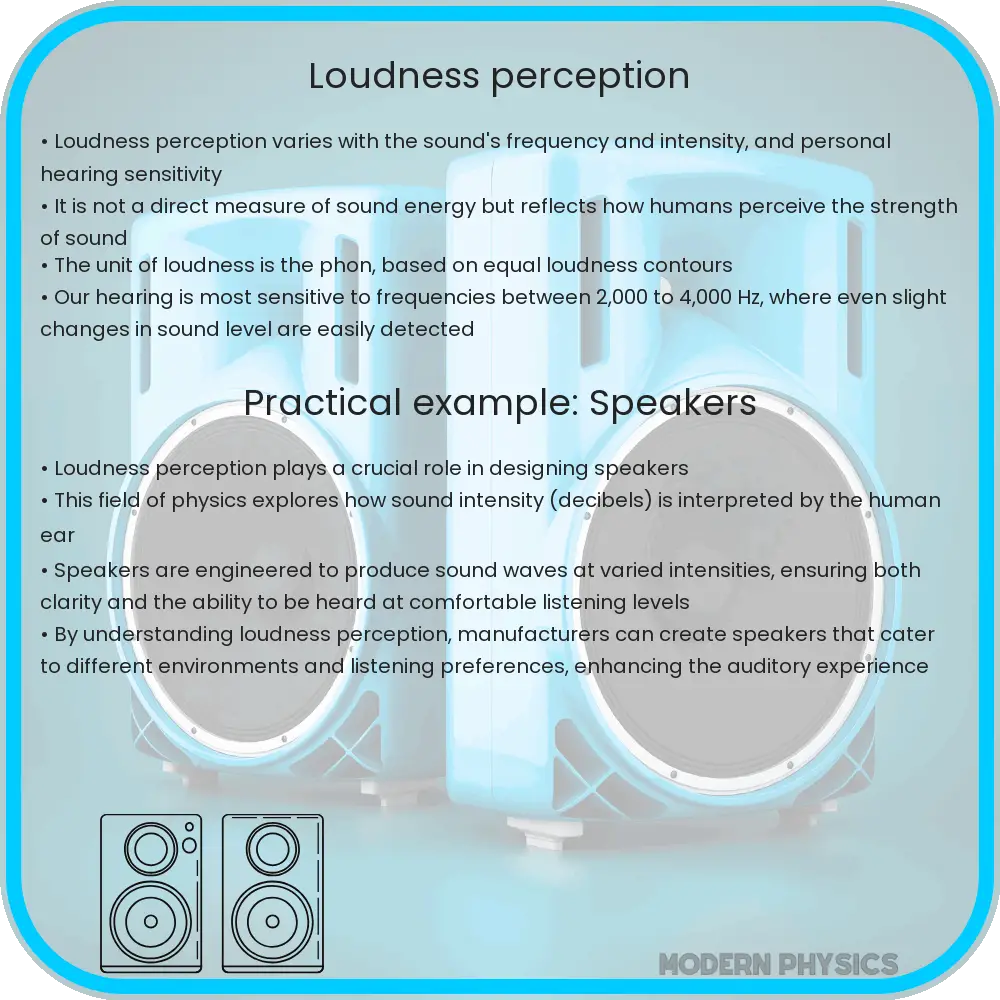
Introduction to Loudness Perception
Loudness is a fundamental concept in both acoustics and psychology, reflecting how we perceive the intensity of sounds. Unlike physical measurements of sound pressure, loudness is subjective, varying from person to person. It is influenced by several factors including the sound’s frequency, duration, and the physical characteristics of the listener’s auditory system. Understanding loudness not only helps in appreciating everyday sound experiences but also aids in the development of technologies like hearing aids, audio devices, and sound control in public spaces.
Acoustic Foundations of Loudness
At its core, the perception of loudness begins with the physical properties of sound. Sound travels through the air as waves, characterized by their amplitude and frequency. Amplitude, or the height of the sound wave, directly correlates with the sound pressure level, measured in decibels (dB). However, the relationship between sound pressure and perceived loudness is not straightforward. This disparity is where the field of psychoacoustics comes into play.
Psychoacoustics: Understanding Sound Perception
Psychoacoustics is the study of how humans perceive sound. One of the key discoveries in this field is that the human ear does not respond equally to all frequencies. The ear is most sensitive to sounds in the frequency range of 2,000 to 5,000 Hz, which interestingly aligns with the frequency range of human speech. Sounds outside this range require higher sound pressure levels to achieve the same perceived loudness. This frequency dependency of loudness perception is encapsulated in Fletcher-Munson curves, also known as equal-loudness contours.
- Equal-Loudness Contours: Developed by researchers Fletcher and Munson, these curves illustrate the varying sound pressure levels required to produce a similar loudness perception across different frequencies. They serve as a critical tool for understanding human hearing and designing audio equipment and spaces that cater to natural hearing sensitivities.
Loudness Measurement Techniques
Quantifying loudness involves both objective measurements and subjective assessments. The objective approach typically involves using instruments to measure sound pressure levels in decibels. However, these measurements do not fully capture the human experience of loudness.
- Phons and Sones: To bridge the gap between physical measurements and perceived loudness, units like phons and sones are used. The phon is a unit that matches loudness to the decibel scale at 1000 Hz. A sound measured at 60 phons is perceived to be as loud as a 60 dB tone at 1000 Hz. The sone, on the other hand, is a unit that provides a linear scale of loudness. One sone is equivalent to the loudness of a 40 phon tone, and loudness doubles with each doubling of sone value.
These tools and concepts provide insights into how sound is perceived, allowing engineers and psychologists to better understand and manipulate the auditory experience.
Real-World Applications of Loudness Knowledge
Understanding and manipulating loudness has practical applications in various fields including audio engineering, healthcare, and environmental science. For instance, in audio engineering, knowledge of loudness is crucial for optimizing sound quality in recordings and live performances, ensuring clarity and comfort for listeners. In healthcare, audiologists use this understanding to design hearing aids and other assistive listening devices that compensate for impairments in loudness perception.
- Audio Engineering: Sound engineers adjust frequencies and amplitudes in recording and playback devices to match the human ear’s loudness sensitivity, enhancing the audio experience without increasing overall sound pressure levels excessively.
- Healthcare Devices: In designing hearing aids, the understanding of sensitive frequency ranges and loudness perception allows manufacturers to create more effective, user-friendly devices that enhance speech comprehension for the hearing-impaired.
- Noise Control: Urban planners and environmentalists utilize knowledge of loudness to design cityscapes that minimize noise pollution, creating quieter, healthier urban environments.
Challenges in Loudness Perception Research
Despite advancements in the field, challenges remain in loudness perception research. Individual differences in auditory processing mean that there is no one-size-fits-all approach to measuring or managing loudness. Moreover, the subjective nature of loudness makes it difficult to quantify precisely in clinical and industrial settings.
Researchers continue to explore the complexities of the auditory system and the psychological aspects of sound perception. Ongoing studies aim to refine our understanding of loudness, especially in complex acoustical environments, and to develop new technologies and strategies for managing acoustic experiences in increasingly noisy worlds.
Conclusion
The journey from a sound wave’s creation to its perception as loudness is a complex interplay of physics and psychology. By breaking down this process, we have a better appreciation of how humans interact with their sonic environment and can create technologies and spaces that improve our daily listening experiences. The study of loudness not only enhances individual auditory experiences but also addresses broader issues like hearing health and noise pollution, making it a field of great practical importance. As we continue to uncover more about how we perceive sound, we can look forward to innovations that make our acoustic environments more harmonious and beneficial to all.