
Explore the impact of light pollution on the environment and health, understand its types, and learn strategies for reducing it to preserve our night skies.
Understanding Light Pollution
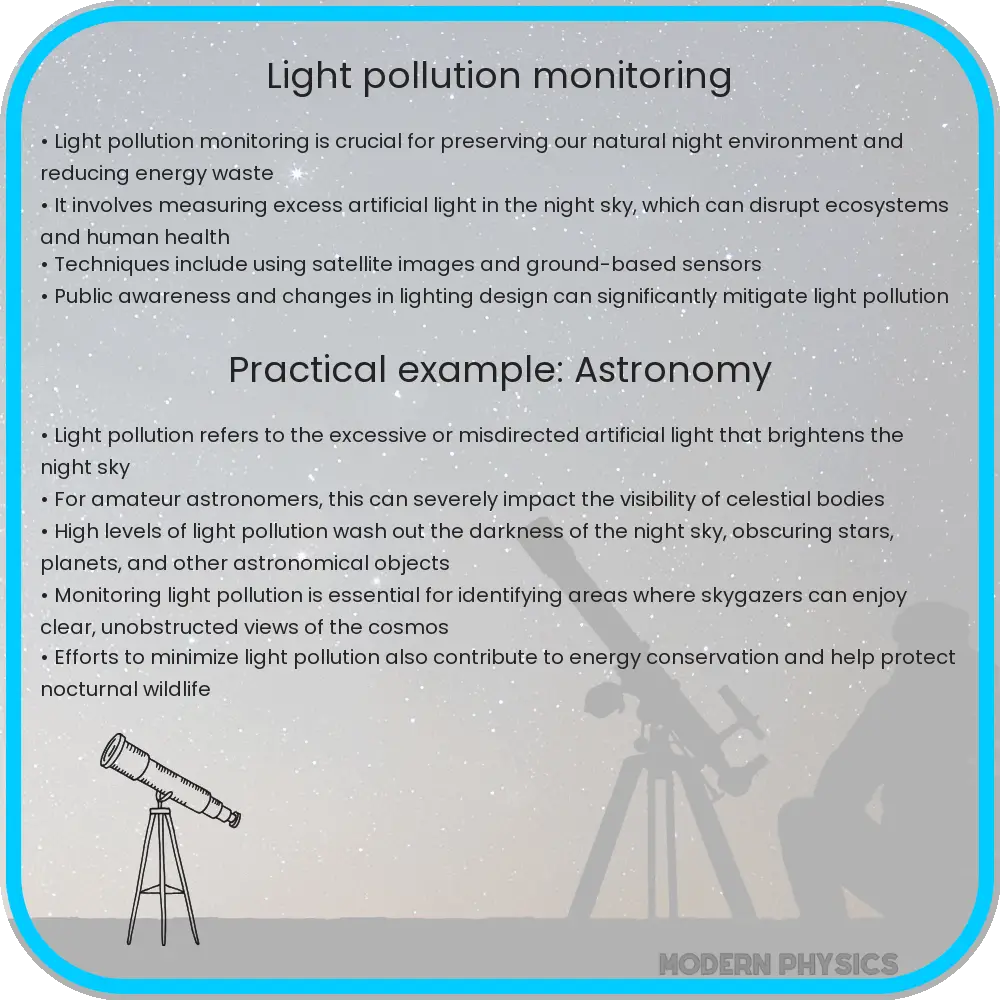
Light pollution is an often overlooked environmental problem that affects our planet’s ecosystems and human health. It refers to the excessive, misdirected, or intrusive artificial light produced by urbanization. Not only does it obscure our view of the stars, but it also disrupts wildlife behavior, wastes energy, and has adverse health effects on humans. Monitoring and controlling light pollution is crucial for preserving our night skies and ensuring the well-being of all living creatures.
Types of Light Pollution
Light pollution is categorized into four main types: glare, skyglow, light trespass, and clutter. Glare is excessive brightness that causes visual discomfort, while skyglow is the bright halo that appears over populated areas, obscuring the stars. Light trespass occurs when unwanted artificial light enters one’s property, and clutter refers to the excessive grouping of lights, often seen in over-lit urban areas.
Monitoring Light Pollution
Monitoring light pollution involves measuring the light emitted from various sources and assessing its impact on the environment. Researchers and citizen scientists use tools like sky quality meters, digital cameras, and satellite images to collect data on light pollution levels. This information helps identify pollution hotspots and measure progress in reducing unnecessary outdoor lighting.
Preserving Night Skies through Research
Research in the field of light pollution aims to understand its effects on humans and wildlife and to develop strategies to mitigate those impacts. Scientists study how artificial night lighting affects species’ reproduction, migration, and feeding habits. They also investigate the health impacts on humans, including disrupted sleep patterns and increased risks of chronic illnesses. This research is crucial for developing lighting guidelines and policies that minimize environmental impact while providing adequate illumination for human activities.
Preserving our night skies requires collaborative efforts from researchers, policymakers, businesses, and the general public. By understanding the sources and effects of light pollution, we can take steps to reduce unnecessary lighting, promote responsible outdoor lighting practices, and protect our natural night-time environment.
Strategies for Reducing Light Pollution
Reducing light pollution involves both community action and individual responsibility. Cities and towns can adopt lighting ordinances that regulate the intensity and direction of outdoor lights. Installing full cutoff fixtures that direct light downward can prevent light from spilling upwards and outwards, where it is not needed. Additionally, using lights only when necessary, choosing warmer-colored lights, and reducing the wattage of outdoor bulbs can significantly cut down on light pollution.
The Role of Technology in Combating Light Pollution
Advancements in lighting technology, such as LED lights and motion sensors, offer promising solutions for reducing light pollution. LEDs, when used correctly, can be more energy-efficient and less intrusive than traditional lighting options. Motion sensors ensure lights are only on when needed, reducing unnecessary light output. Moreover, smart lighting systems can be programmed to dim or turn off at certain times, further minimizing light spill.
Community Involvement and Education
Community involvement is crucial for successful light pollution reduction initiatives. Educational programs can raise awareness about the negative effects of light pollution and teach citizens how to make more environmentally friendly lighting choices. Local stargazing events, for example, can rekindle an appreciation for the night sky and motivate communities to strive for darker skies. Moreover, citizen science projects, such as globe at night, allow individuals to contribute to light pollution research and monitoring efforts.
Conclusion
Light pollution is a pervasive problem with far-reaching effects on the environment, wildlife, and human health. However, with informed choices, technological advancements, and community engagement, it is possible to reduce light pollution and preserve our night skies. By understanding the sources and impacts of light pollution, implementing responsible lighting practices, and fostering global awareness and cooperation, we can protect our natural heritage for future generations. Let us embrace the dark sky movement and work towards a brighter future by keeping our skies dark.