
Explore the importance of light curtains in enhancing industrial safety with insights on their operation, benefits, installation, and emerging trends.
Introduction to Light Curtains for Safety Systems
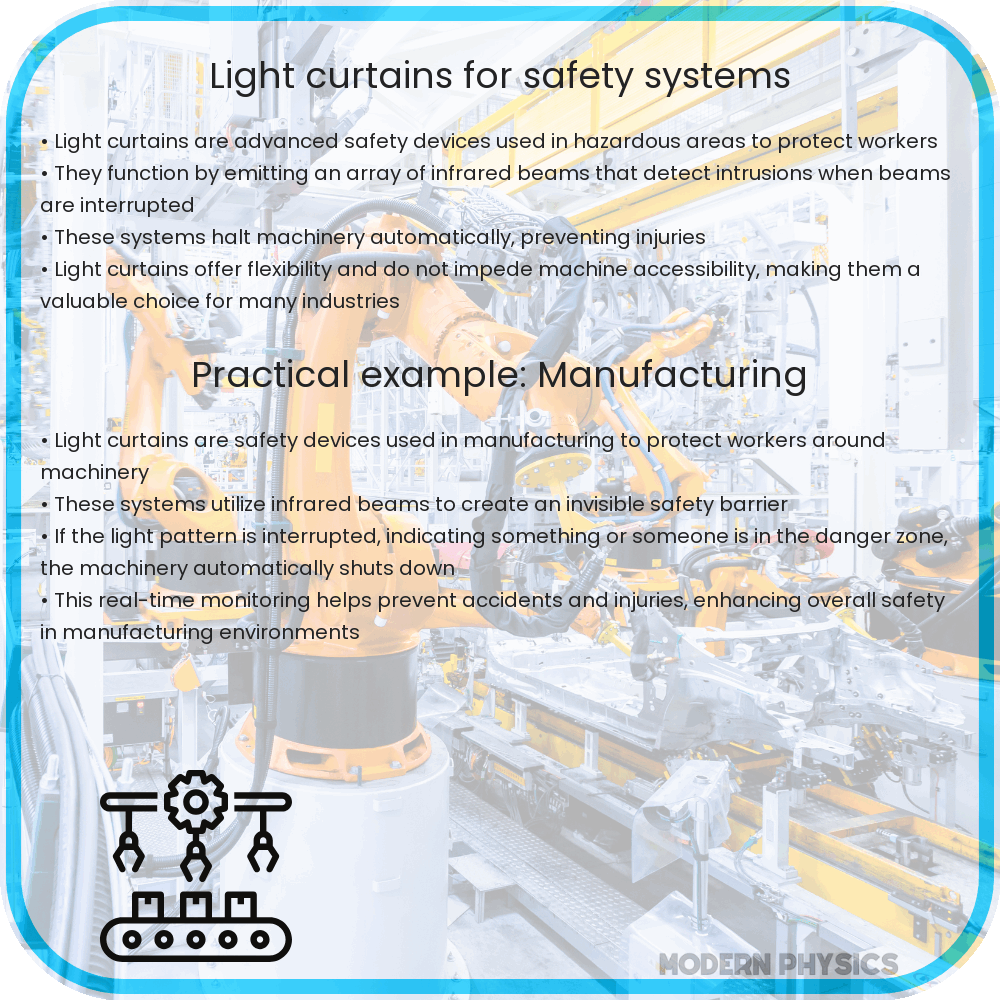
Light curtains are an integral component of modern safety systems, offering a blend of reliability, precision, and efficient optics. They serve as non-intrusive safety barriers that detect and prevent access into hazardous areas, ensuring the protection of personnel in various industrial settings. Through the use of infrared light beams, light curtains create an invisible safety screen that, when interrupted, triggers an immediate response to halt potentially dangerous equipment or machinery.
How Light Curtains Work
At the core of a light curtain’s functionality is its sophisticated optics system, consisting of a series of emitter and receiver pairs. The emitter sends a continuous beam of light to the receiver, which is then analyzed to ensure alignment. If an object, person, or part of a person breaks the beam, the light curtain detects this interruption and sends a signal to the control system. This action can lead to the machinery being stopped, thereby preventing injury or damage.
Advantages of Using Light Curtains
- Enhanced Safety: Light curtains offer a high level of protection for personnel, significantly reducing the risk of accidents and injuries in the workplace.
- Operational Efficiency: These devices allow for the seamless operation of machinery without the need for physical guards or barriers, which can hinder productivity.
- Flexibility: Light curtains can be easily integrated into a variety of industrial environments, adaptable to different machinery and workspace layouts.
- Maintenance and Cost Efficiency: With no moving parts, light curtains require minimal maintenance and offer a cost-effective safety solution over the long term.
Key Features of Reliable Light Curtains
When selecting a light curtain for a safety system, it’s crucial to consider several key features to ensure reliability and effectiveness. These include:
- Resolution: The ability to detect objects of varying sizes, including small parts that could present safety hazards.
- Response Time: A rapid reaction time is essential to promptly stop machinery before an accident occurs.
- Robustness and Durability: High-quality materials and construction that can withstand harsh industrial environments and frequent use.
- Compliance with Safety Standards: Certification to international safety standards, such as ISO 13849-1 or IEC 61496, ensures that the light curtains meet global regulatory requirements.
Integration and Installation Considerations
Proper integration and installation of light curtains are paramount to maximizing their effectiveness and reliability. It involves careful planning and adherence to best practices, including:
- Alignment and Positioning: Correct alignment of the emitter and receiver units is critical for optimal operation. They must be positioned to adequately cover the hazardous area without any blind spots.
- Height and Range: The height of the light curtain and its sensing range should match the specific safety requirements of the application, ensuring comprehensive protection.
- Environmental Factors: Consideration of environmental conditions such as ambient light, temperature, and the presence of dust or moisture is essential to prevent false trips or system malfunctions.
- Compatibility with Machinery: Ensuring that the light curtain is compatible with the control system of the machinery it is intended to protect is crucial for seamless integration.
Emerging Trends in Light Curtain Technology
Advancements in technology are continuously enhancing the capabilities of light curtains, making them even more reliable, precise, and efficient. Some notable trends include:
- Smart Diagnostics: Modern light curtains are equipped with advanced diagnostics capabilities, enabling real-time monitoring and troubleshooting to minimize downtime.
- Wireless Connectivity: The integration of wireless technology allows for easier installation and flexibility in positioning, as well as remote monitoring and control.
- Increased Resolution and Range: Improvements in optics and sensor technology have led to light curtains with higher resolution and longer ranges, capable of detecting smaller objects and covering larger areas.
- Enhanced Safety Features: Additional safety features, such as muting and blanking, allow for more complex safety scenarios, accommodating the presence of materials while still protecting personnel.
Conclusion
Light curtains stand as a cornerstone of modern industrial safety, blending advanced optics, precision, and efficiency to protect personnel from harm. Their non-intrusive design, coupled with the ability to seamlessly integrate into various operational environments, makes them an invaluable tool for ensuring workplace safety. As technology advances, the capabilities of light curtains are expected to expand, offering even greater levels of protection and flexibility. For any organization looking to enhance safety measures, investing in high-quality, reliable light curtains is a step towards fostering a safer, more productive working environment.