
Discover how lenticular lenses revolutionize clarity, precision, and 3D effects, enhancing visual experiences in technology and advertising.
Lenticular Lenses: Revolutionizing Visual Experience
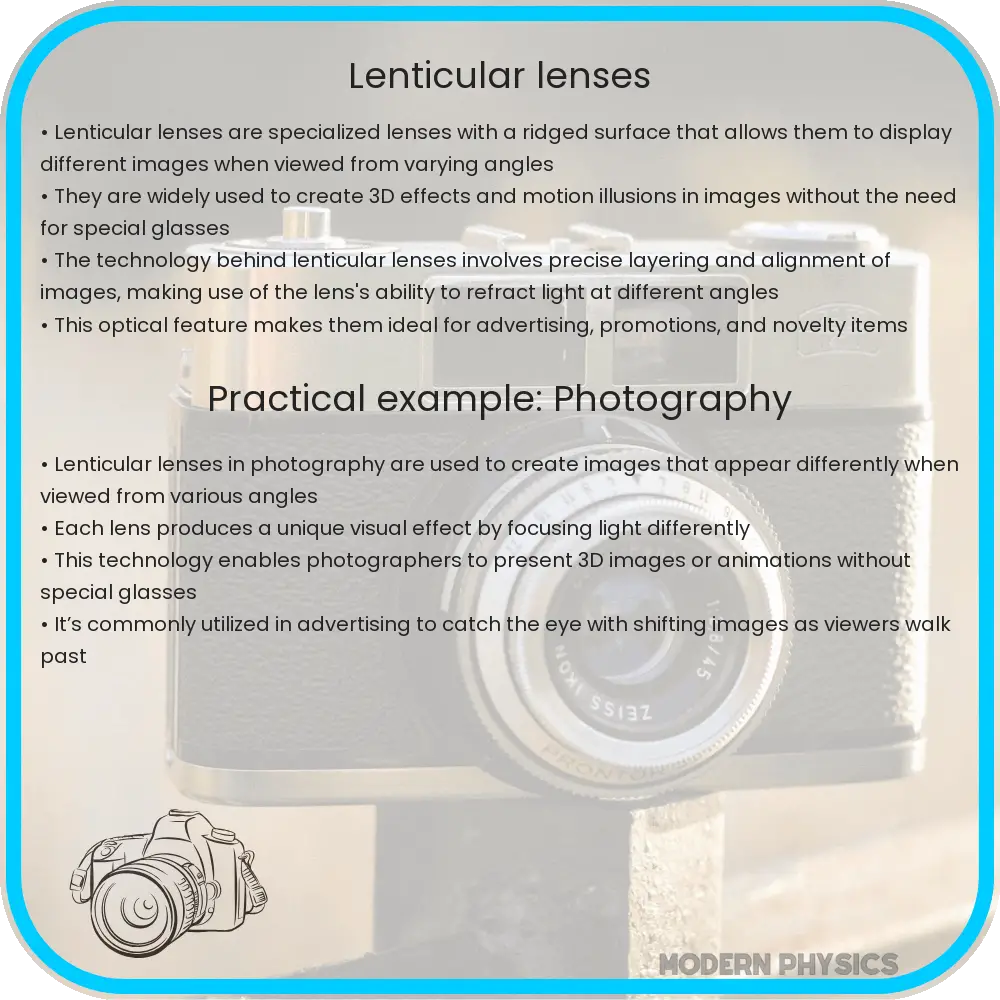
Lenticular lenses represent a significant leap in optical technology, offering enhanced clarity, precision, and the unique ability to produce striking 3D effects without the need for special glasses. These lenses manipulate light in such a way that images appear differently when viewed from various angles, making them ideal for a range of applications, from advertising to novelty items and even advanced medical devices.
Understanding the Basics
At their core, lenticular lenses consist of a series of magnifying lenses, or lenticules, molded into a transparent material. This arrangement allows for the display of different images or effects when viewed from different angles. The principle behind this fascinating optical phenomenon lies in the lenticules’ ability to refract light in specific directions, thereby presenting parts of multiple images depending on the viewer’s perspective.
Clarity and Precision in Imaging
One of the standout features of lenticular lenses is their ability to enhance clarity and precision. By carefully controlling the light that reaches the viewer’s eyes, these lenses can produce images with incredible depth and realism. This precision is especially valuable in applications where image quality is paramount, such as in detailed visual displays or high-quality prints.
Creating 3D Effects
The magic of lenticular technology shines in its ability to create vivid 3D effects. By layering two or more images together and covering them with a lenticular lens sheet, the images are segmented and directed in such a way that the viewer perceives a sense of depth. This 3D illusion is achieved without the need for special eyewear, making it an accessible and captivating experience for all audiences.
Applications and Uses
Lenticular lenses find applications in a diverse range of fields. In advertising, they are used to create dynamic visuals that grab attention as people move past. Novelty items, such as postcards and bookmarks, utilize lenticular images to add an element of surprise or interactivity. Furthermore, in the medical field, these lenses aid in the development of advanced imaging systems that require precise depth perception and clarity.
Lenticular Lenses: A Fusion of Clarity, Precision, and Captivating 3D Effects
Lenticular lenses stand at the forefront of optical technology, offering a unique blend of clarity, precision, and the ability to create mesmerizing 3D effects without the need for special glasses. This technology, which has been around since the early 20th century, has evolved significantly, finding applications in various fields ranging from advertising and packaging to the development of advanced optical instruments.
Understanding Lenticular Lens Technology
At its core, lenticular lens technology involves the use of a series of linear lenslets molded or embossed onto a transparent material, such as plastic or acrylic. These lenslets can be designed to focus light in a specific way, which allows for the display of different images or effects when viewed from varying angles. The precision in the alignment and manufacturing of these lenses is paramount to achieving the desired visual outcome, whether it be a 3D effect, animation, or a change in the image.
Applications and Advantages
- Advertising and Marketing: Lenticular printing has revolutionized the way products are advertised, offering dynamic visuals that grab attention more effectively than traditional 2D images.
- Educational Tools: They are used in educational materials to illustrate concepts in science and mathematics with a depth and realism that flat images cannot match.
- Optical Instruments: Advanced applications include their use in optical instruments where precision and clarity are crucial, such as in telescopes and microscopes.
Conclusion
The innovation and versatility of lenticular lenses have cemented their place in both the commercial and scientific worlds. From providing advertisers with a powerful tool to engage consumers to enhancing the educational experience with interactive visuals, these lenses offer a unique blend of functionality and visual appeal. Moreover, their role in optical instruments underscores the importance of precision and clarity in professional settings. As technology continues to advance, the potential applications for lenticular lenses are bound to expand, promising even more exciting developments in the realm of visual display and optical engineering.