
Discover how laser rangefinders revolutionize precision and range measurement, featuring the latest in optics technology for unparalleled accuracy.
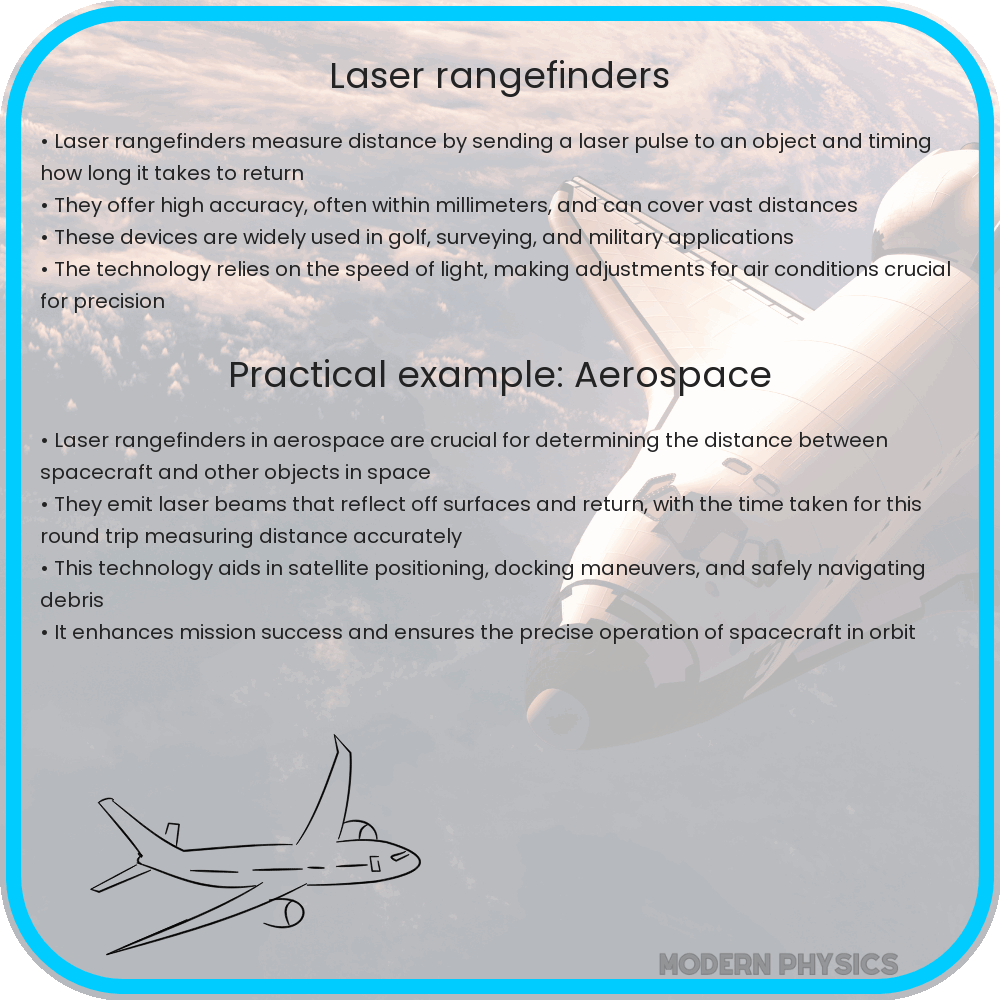
Laser Rangefinders: An Overview of Precision, Range, and Optics Technology
Laser rangefinders have revolutionized the way we measure distances, offering unparalleled accuracy and efficiency in various fields such as surveying, golfing, hunting, and even in military applications. This technology relies on the basic principle of time-of-flight measurement, where a laser beam is emitted towards a target, and the time it takes for the reflection to return is measured. The distance is then calculated using the speed of light, making laser rangefinders incredibly precise.
Understanding the Precision of Laser Rangefinders
The precision of laser rangefinders is influenced by several factors, including the quality of the optics, the stability of the laser beam, and the processing power of the device. High-quality optics are crucial for focusing the laser beam accurately and for capturing the returned light efficiently. The stability of the laser beam affects the consistency of the measurements, and advanced processing algorithms can reduce errors and improve accuracy. Modern laser rangefinders can achieve precision within a few millimeters, making them indispensable tools for precise measurements.
The Range Capabilities of Laser Rangefinders
The range of a laser rangefinder is determined by the power of the laser, the sensitivity of the sensor, and the environmental conditions. Most consumer-grade rangefinders can measure distances up to 400 meters, while specialized military models can reach targets several kilometers away. Environmental factors such as fog, rain, and bright sunlight can affect the performance of the rangefinder, but advancements in technology are continuously improving their effectiveness in various conditions.
Optics Technology in Laser Rangefinders
The optics technology in laser rangefinders is not just about the lenses used to focus the laser beam. It also encompasses the design of the rangefinder’s internal optical path and the coatings on the lenses that enhance the transmission and reception of the laser signal. Anti-reflective coatings are particularly important for reducing loss of signal strength and ensuring that as much light as possible is collected by the sensor. The quality of the optics directly impacts the device’s accuracy and range, highlighting the importance of advanced optical technologies in the development of laser rangefinders.
Understanding Laser Rangefinders: Precision, Range, and Optics Technology
Laser rangefinders have become indispensable tools in various fields such as surveying, golf, hunting, and military applications due to their precision, extended range capabilities, and the advanced optics technology they employ. These devices use a simple yet sophisticated method to measure distances: they emit laser beams towards a target, and the time it takes for the reflection to return is calculated to determine the distance. This process, reliant on the speed of light, ensures highly accurate measurements.
Key Components and Their Roles
The core components of a laser rangefinder include the laser emitter, the receiver, and the processing unit. The laser emitter sends a narrow beam towards the target, which is then partially reflected back and captured by the receiver. The processing unit, using the time-of-flight principle, calculates the distance based on the speed of light (approximately 299,792,458 meters per second) and the time elapsed. This calculation typically involves the formula d = (c × t) / 2, where d is the distance, c is the speed of light, and t is the time taken for the round trip of the laser beam.
Advancements in Optics Technology
Modern rangefinders leverage cutting-edge optics technology to enhance accuracy and range. High-quality lenses and prisms improve the laser beam’s focus, enabling precise targeting over long distances. Coatings on optics components reduce reflection and increase the amount of light transmitted, further improving the device’s performance in various environmental conditions. Additionally, advanced processing algorithms compensate for atmospheric conditions, angle of incline, and other factors that could affect accuracy.
Conclusion
Laser rangefinders represent a fusion of precision engineering, advanced optics, and sophisticated processing algorithms. They offer unmatched accuracy and reliability for distance measurement, catering to a wide array of professional and recreational applications. As technology advances, we can expect further improvements in range, precision, and functionality, making these tools even more versatile and indispensable. Understanding the principles and technologies behind laser rangefinders not only helps users make informed choices but also appreciates the remarkable capabilities these devices offer.