
Laser annealing is a materials science technique that enhances material properties through controlled, precise laser-induced heating without melting.
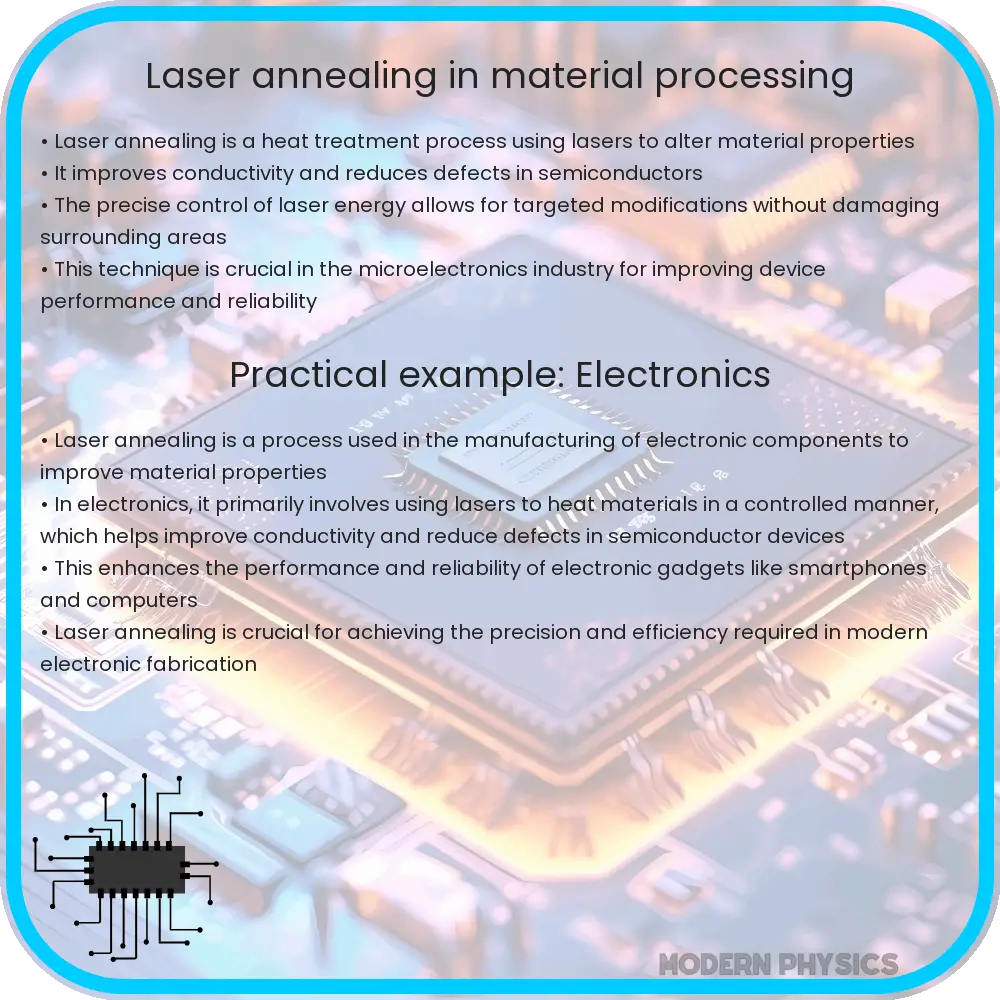
Laser Annealing: Harnessing Precision and Efficiency in Material Enhancement
Laser annealing is a transformative process used in materials science to modify the properties of a material through controlled heating. This technique employs a laser to deliver a precise amount of energy to the material’s surface, causing changes in its structure without melting. The primary goal of laser annealing is to improve material properties such as electrical conductivity, stress relief, and hardness, making it a critical tool in industries ranging from semiconductor manufacturing to metal fabrication.
The Basics of Laser Annealing
Laser annealing involves the use of a high-intensity laser beam that can be adjusted to specific wavelengths and intensities depending on the material and desired outcome. The process is generally divided into two key stages:
- Heating: The laser beam is precisely targeted to the area of the material that needs modification. The energy from the laser heats the material to a temperature that is typically below its melting point but high enough to induce changes in its microstructure.
- Cooling: After the laser is removed, the material cools down. This cooling process must be controlled to ensure that the desired properties are achieved. The rate of cooling can affect the material’s final structure and performance.
The ability to control the laser’s parameters allows engineers to achieve high precision in the annealing process, making it possible to alter specific areas of a component without affecting the whole structure.
Applications of Laser Annealing
Laser annealing finds applications across various sectors:
- Semiconductor Industry: In semiconductor fabrication, laser annealing is used to activate dopants, which are impurities added to semiconductor materials to alter their electrical properties. This is critical in the manufacturing of electronic devices such as transistors and integrated circuits.
- Metal Processing: In the metal industry, laser annealing helps relieve stresses induced during manufacturing, thereby increasing the ductility and reducing the risk of cracking in metal parts.
- Solar Panels: For solar cells, laser annealing enhances the electrical efficiency by repairing defects in the crystalline structure of silicon layers.
Advantages of Laser Annealing
Key benefits of using laser annealing include:
- Precision: The ability to precisely target which parts of a material need modification allows for minimal alteration to the overall structure, preserving vital properties while enhancing others.
- Efficiency: Laser annealing is much faster compared to traditional thermal treatments, significantly reducing processing times.
- Flexibility: The parameters of the laser (like power, wavelength, and duration) can be quickly adjusted to suit different materials and applications, providing a versatile tool for materials engineering.
Moreover, laser annealing supports the trend towards miniaturization and complex geometries in components, especially in high-tech sectors like electronics and aerospace. This capability is critical for developing devices with higher performance and reliability.
Challenges and Considerations in Laser Annealing
Despite its many advantages, laser annealing does come with some challenges that must be carefully managed:
- Thermal Management: Precise control of the heating and cooling rates is crucial. Overheating can lead to damage or unwanted alterations in the material structure.
- Equipment Cost: The initial setup cost for laser annealing equipment can be high, making it less accessible for smaller operations or emerging businesses.
- Technical Expertise: Successful implementation of laser annealing requires a deep understanding of both the equipment and the materials being treated. Skilled professionals are necessary to optimize the process and achieve the desired outcomes.
These challenges require ongoing research and development to enhance the efficiency and accessibility of laser annealing technologies.
Future Prospects of Laser Annealing
As technology progresses, the potential for laser annealing continues to expand. Future developments might include:
- Integration with Automation: Combining laser annealing with automated systems for real-time monitoring and adjustments can further enhance precision and reduce human error.
- Environmentally Friendly Processes: Advances in laser technology may lead to more energy-efficient and environmentally friendly processes, aligning with global sustainability goals.
- New Material Applications: Research into new materials and composites could open up additional applications for laser annealing, especially in industries like biotechnology and nanotechnology.
Continual improvements in laser technology and a deeper understanding of material science will drive the evolution and wider adoption of laser annealing methods.
Conclusion
Laser annealing represents a significant leap forward in materials engineering, offering high precision, efficiency, and flexibility. With its ability to precisely modify the microstructure of materials without compromising the overall integrity, laser annealing is essential for advancing modern manufacturing and technological applications. While there are challenges to overcome, particularly in terms of cost and technical expertise, the future of laser annealing looks promising with potential for greater integration with automation and sustainable practices. As we continue to innovate and understand materials better, laser annealing will likely become even more pivotal in shaping the future of technology and industry.