
Explore the concept of galactic shear rate, its impact on galaxy dynamics, star formation, and the universe’s structure, and how it shapes our cosmic understanding.
Understanding Galactic Shear Rate
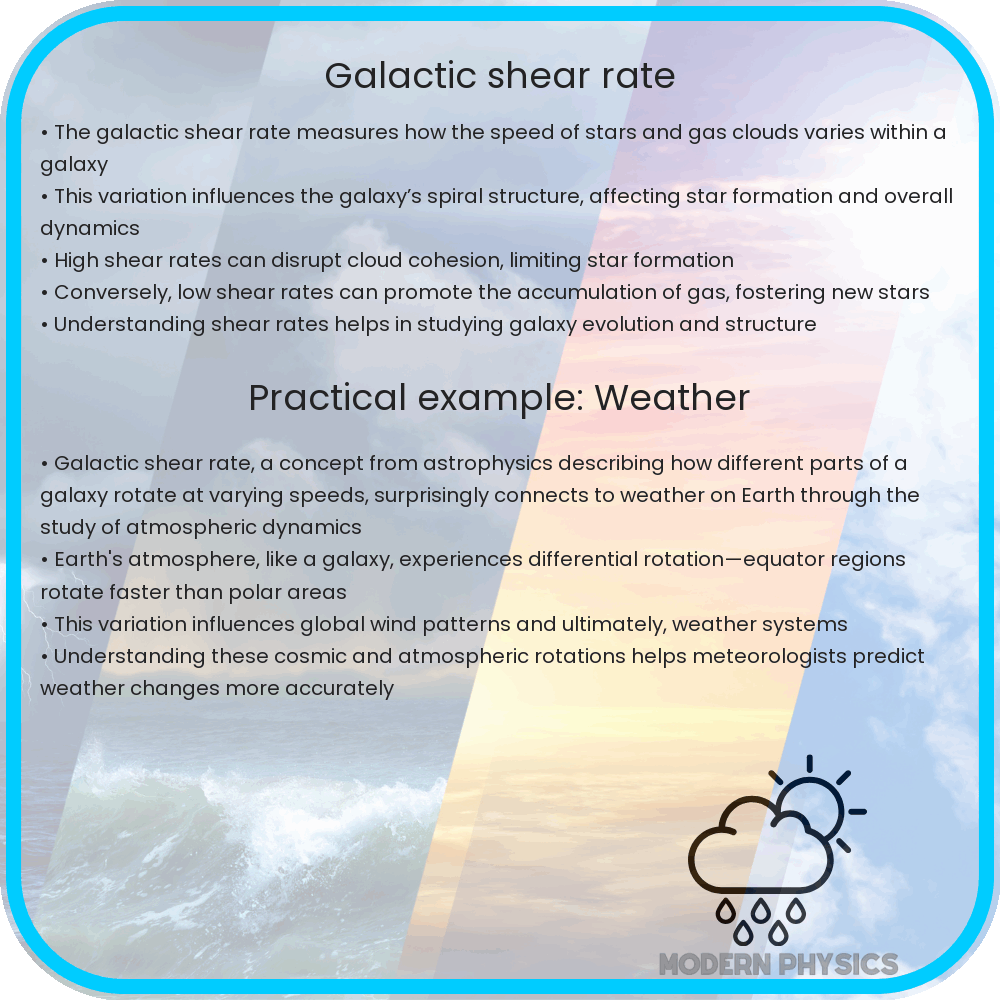
The concept of galactic shear rate is pivotal in the study of astrophysics and galaxy formation, offering insights into the dynamic processes that shape the universe. This rate measures the variation in angular velocity with respect to the radial distance from the center of a galaxy. Essentially, it quantifies how different parts of a galaxy rotate around its axis at varying speeds, a phenomenon that significantly impacts the structure and evolution of galaxies.
The Dynamics of Galactic Shear
Galactic shear arises due to the differential rotation of galaxies, particularly evident in spiral galaxies where the inner regions rotate faster than the outer zones. This differential rotation is driven by the distribution of mass within the galaxy and the gravitational forces at play. Understanding the shear rate is crucial for astronomers to decipher the spiral structure, star formation rates, and overall dynamics of galaxies. The shear rate is often expressed using the Oort constants, A and B, which describe the local rate of rotation and shear in the Milky Way.
Impact of Galactic Shear on Star Formation
One of the most significant impacts of galactic shear is observed in the process of star formation. High shear rates can inhibit star formation by dispersing the molecular clouds needed to form stars, leading to less densely packed stellar regions. Conversely, low shear rates facilitate the aggregation of gas and dust, promoting more vigorous star formation. This delicate balance influences the distribution and characteristics of stars within various galactic environments.
Analytical Approaches to Galactic Shear
To analyze the shear rate, astronomers employ various observational and theoretical approaches. These include studying the velocity fields of stars and gas in galaxies, applying computational models to simulate galactic dynamics, and observing the morphology of spiral arms. By integrating data from radio, optical, and infrared observations, researchers can map the shear rates across different galaxies, enhancing our understanding of their complex dynamics.
Moreover, the analysis of galactic shear extends beyond individual galaxies. It plays a crucial role in the large-scale structure of the universe, influencing galaxy clustering and the distribution of dark matter. By examining the shear rate, astrophysicists can gain valuable insights into the cosmic web and the forces that shape the cosmos.
Galactic Shear and Cosmic Evolution
The study of galactic shear extends into the realm of cosmic evolution, offering a window into the past and future dynamics of the universe. By understanding how galaxies rotate and evolve, scientists can infer the historical interactions and mergers that have shaped them over billions of years. This knowledge contributes to our understanding of the cosmic web — the large-scale structure of the universe made up of voids, filaments, and clusters of galaxies.
Technological Advancements and Future Research
Advancements in telescope technology and computational simulations are pushing the boundaries of what we can learn about galactic shear. Next-generation telescopes, both ground-based and in space, are providing unprecedented views of the universe, while sophisticated computer models allow for detailed simulations of galactic dynamics. These tools are helping to refine our understanding of the shear rates and their implications for galaxy formation and evolution.
Future research aims to unravel the complex interplay between galactic shear, dark matter distribution, and cosmic expansion. As astronomers gather more detailed observational data, they will be better equipped to understand the underlying physics driving these cosmic phenomena. This research not only enlightens us about our own galaxy but also about the fundamental processes governing the universe at large.
Conclusion
Galactic shear rate is a fundamental aspect of astrophysics that has profound implications for our understanding of the universe. It influences the structure and evolution of galaxies, impacts the rate of star formation, and plays a significant role in the large-scale structure of the cosmos. As technological advancements continue to enhance our observational and computational capabilities, our comprehension of galactic dynamics and their underlying principles will undoubtedly deepen. Through the lens of galactic shear, we are decoding the cosmic history and charting the future of the universe, one rotation at a time.