
Explore the mysteries and impact of galactic fountains on the evolution of galaxies, including their formation, cycle, and influence on star formation and chemical diversity.
Understanding the Galactic Fountain
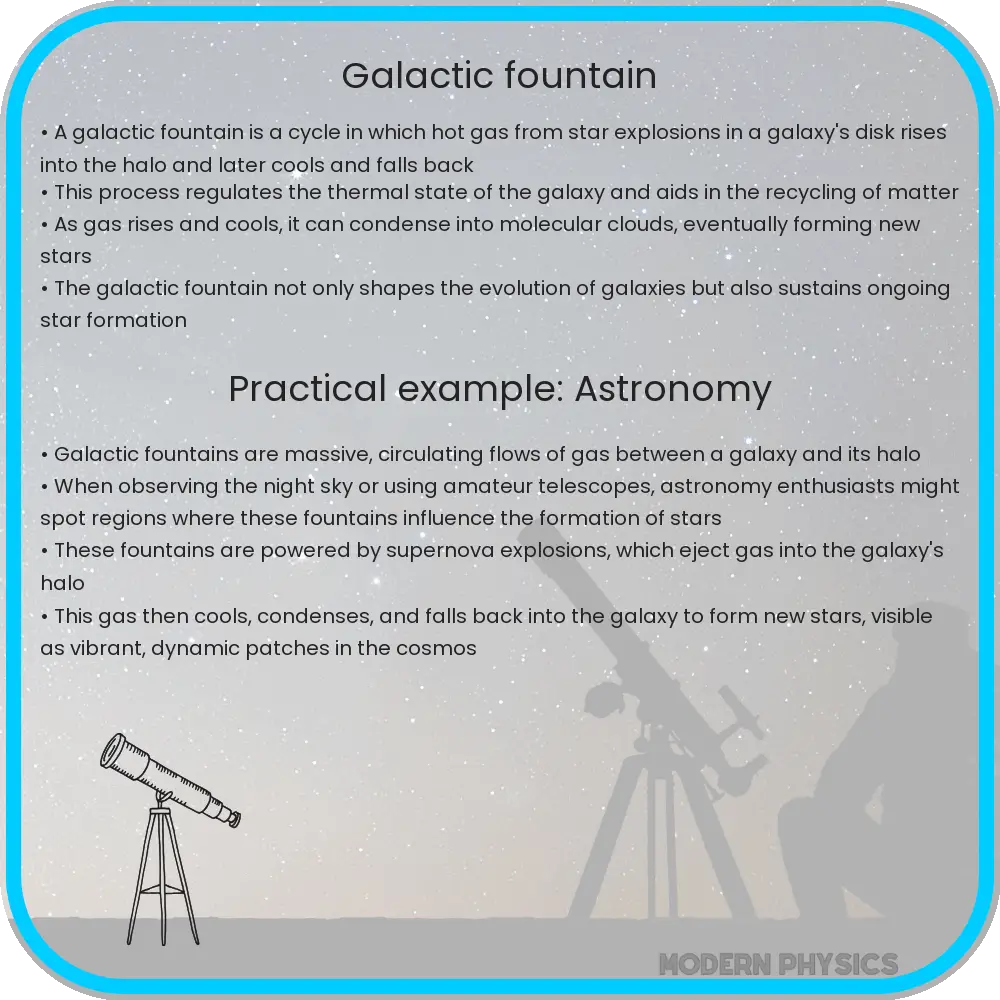
The concept of a galactic fountain presents an intriguing phenomenon in the study of astrophysics, offering insights into the lifecycle of galaxies and their interstellar medium (ISM). This process illustrates the dynamic exchange of gas between different parts of a galaxy, particularly between the disk and halo regions.
Formation of Galactic Fountains
Galactic fountains are initiated by stellar events, such as supernovae or intense stellar winds from massive stars. These events release vast amounts of energy, heating up surrounding gas to millions of degrees, causing it to expand rapidly and eject into the galaxy’s halo in a process akin to a fountain. This hot gas rises until its density becomes comparable to the ambient medium, whereupon it starts to cool and condense into clouds.
As these gas clouds cool, they lose pressure support and begin to fall back toward the galaxy’s disk under the influence of gravity, completing the cycle. This circulation of gas is fundamental to understanding the complex interplay between different galactic components and is crucial for the ongoing star formation and chemical evolution of galaxies.
Impact on Galactic Evolution
The galactic fountain mechanism has significant implications for the evolution of galaxies. By recycling gas from the galactic disk to the halo and back, it enriches the interstellar medium with heavy elements synthesized in stars and supernova explosions. This process of enrichment contributes to the chemical diversity observed within galaxies.
Moreover, the cooling flows associated with galactic fountains are thought to trigger new star formation as the falling gas accumulates and condenses in the disk. This self-regulating cycle of star formation and feedback mechanisms plays a crucial role in shaping the physical and chemical properties of galaxies over cosmic timeframes.
Mysteries Surrounding Galactic Fountains
Despite the extensive study, several mysteries continue to surround galactic fountains. One of the primary questions involves the exact mechanisms through which the gas cools and condenses after being ejected into the halo. The cooling process is not entirely understood and is a subject of ongoing research. Additionally, the role of dark matter in influencing the dynamics of galactic fountains remains a topic of debate among astronomers.
Another enigmatic aspect is the efficiency of the mass transfer between the disk and halo. The balance between the gas ejected into the halo and the material that falls back to the disk is crucial for understanding the long-term evolution of galaxies. The interaction between the ejected gas and the pre-existing halo medium also poses significant questions regarding the mixing and distribution of elements.
Technological Advancements and Future Research
Advances in telescopic technology and computer simulations are shedding new light on the complexities of galactic fountains. Observatories equipped with high-resolution spectroscopy and large-scale computational models are enabling astronomers to trace the movement of gas and its thermal and chemical properties more accurately. These tools are crucial for unraveling the mysteries of galactic fountains and understanding their impact on galaxy formation and evolution.
Future research aims to integrate observations from different wavelengths and improve simulation techniques to create a more comprehensive picture of galactic fountains. This integrated approach is expected to address the current challenges and deepen our understanding of the processes that drive the evolution of galaxies.
Conclusion
The study of galactic fountains encompasses the dynamic and cyclic nature of galaxies, highlighting the intricate connections between star formation, the interstellar medium, and galactic evolution. While significant progress has been made in understanding these processes, many questions remain, driving forward the field of astrophysics. As technology advances and our knowledge expands, the mysteries of galactic fountains continue to unfold, offering profound insights into the workings of the universe.