
Explore the significance of galactic chemical gradients, their patterns, evolution, and impact on galaxy formation, star development, and planet creation.
Understanding Galactic Chemical Gradients
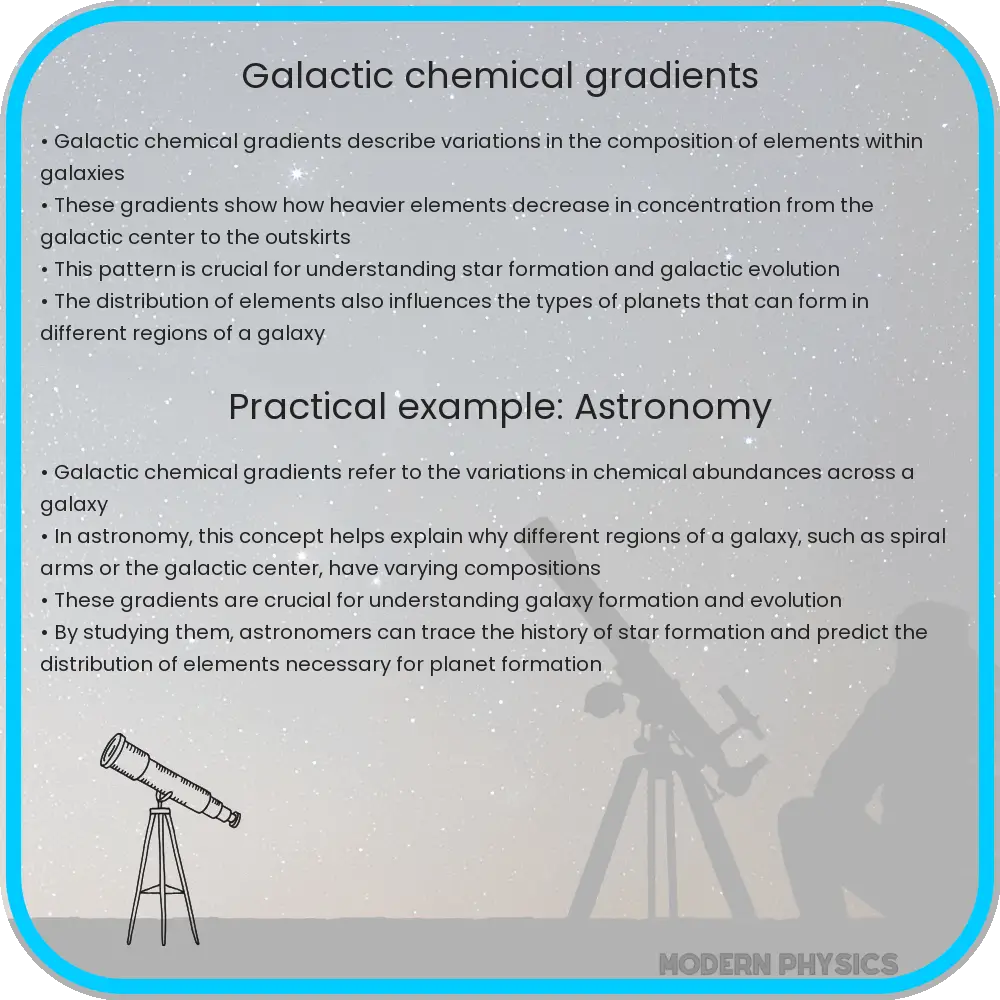
The study of galactic chemical gradients offers crucial insights into the formation, evolution, and structure of galaxies. These gradients refer to the variations in the abundances of chemical elements observed across different regions of a galaxy. They play a pivotal role in our understanding of the cosmic cycle of matter and the processes that drive galactic evolution.
Patterns of Galactic Chemical Abundances
One of the most significant patterns observed within galaxies is the radial gradient of metallicity, which typically shows a decrease in the abundance of heavy elements (metals) from the galactic center to the outskirts. This pattern is commonly interpreted as a result of the varying rates of star formation and history across the galaxy. In the denser central regions, where star formation has been more vigorous, a greater number of stars have evolved and exploded as supernovae, enriching the interstellar medium with heavy elements.
- Age-Metallicity Relation: This concept suggests that older stars, typically found in the galactic halo, exhibit lower metallicity than their younger counterparts in the disk and bulge, reflecting the progressive enrichment of the galaxy over time.
- Radial Metallicity Gradient: The change in metallicity observed from a galaxy’s center to its periphery helps astronomers trace the history of star formation and understand the internal processes of galactic evolution.
Evolution of Chemical Gradients
The chemical composition of galaxies is not static but evolves over time through processes such as star formation, supernova explosions, and the accretion of intergalactic material. The gradients we observe today are the result of billions of years of galactic evolution. By studying these gradients, scientists can reconstruct the star formation history and the movement of gases within galaxies.
The evolution of chemical gradients is influenced by several factors, including:
- Star Formation Rate: Areas with higher star formation rates tend to have higher metallicities due to the increased production of heavy elements by supernovae.
- Gas Accretion: The infall of gas from the intergalactic medium can dilute the metallicity of the interstellar medium, affecting the chemical gradients.
- Galactic Winds: Outflows driven by supernova explosions can remove metal-enriched gas from galaxies, altering the distribution of elements.
Impact of Galactic Chemical Gradients
The chemical gradients within galaxies have profound implications for the formation of stellar populations and planetary systems. Regions with higher metallicities are more conducive to the formation of planets, as there is a greater abundance of the heavy elements necessary to form planetary cores. Consequently, understanding galactic chemical gradients helps astronomers predict where in a galaxy conditions might be ripe for planet formation and the potential for life.
Moreover, these gradients influence the overall dynamics and stability of galaxies. The distribution of metals affects the cooling rate of the interstellar medium, which in turn influences the rate of star formation and the structural evolution of the galaxy. By analyzing these chemical patterns, scientists can gain insights into the life cycles of galaxies and the interplay between their various components.
Concluding Thoughts on Galactic Chemical Gradients
Galactic chemical gradients are fundamental to our understanding of the universe’s history and structure. They provide a snapshot of the ongoing processes that shape galaxies and influence the development of stars and planets. The study of these gradients not only sheds light on the past events that have led to the current state of the cosmos but also aids in predicting future changes within galaxies.
As observational techniques and theoretical models continue to improve, our understanding of galactic chemical gradients will become increasingly refined. This will allow astronomers to construct more accurate models of galactic evolution and to better understand the complex interrelations between stars, planets, and galaxies. Ultimately, the study of galactic chemical gradients is a key piece in the puzzle of the cosmos, offering insights into the grand, interconnected processes that govern the universe.