
Explore the phenomenon of galactic cannibalism, where larger galaxies absorb smaller ones, reshaping the cosmos and revealing the forces driving galactic evolution.
Understanding Galactic Cannibalism
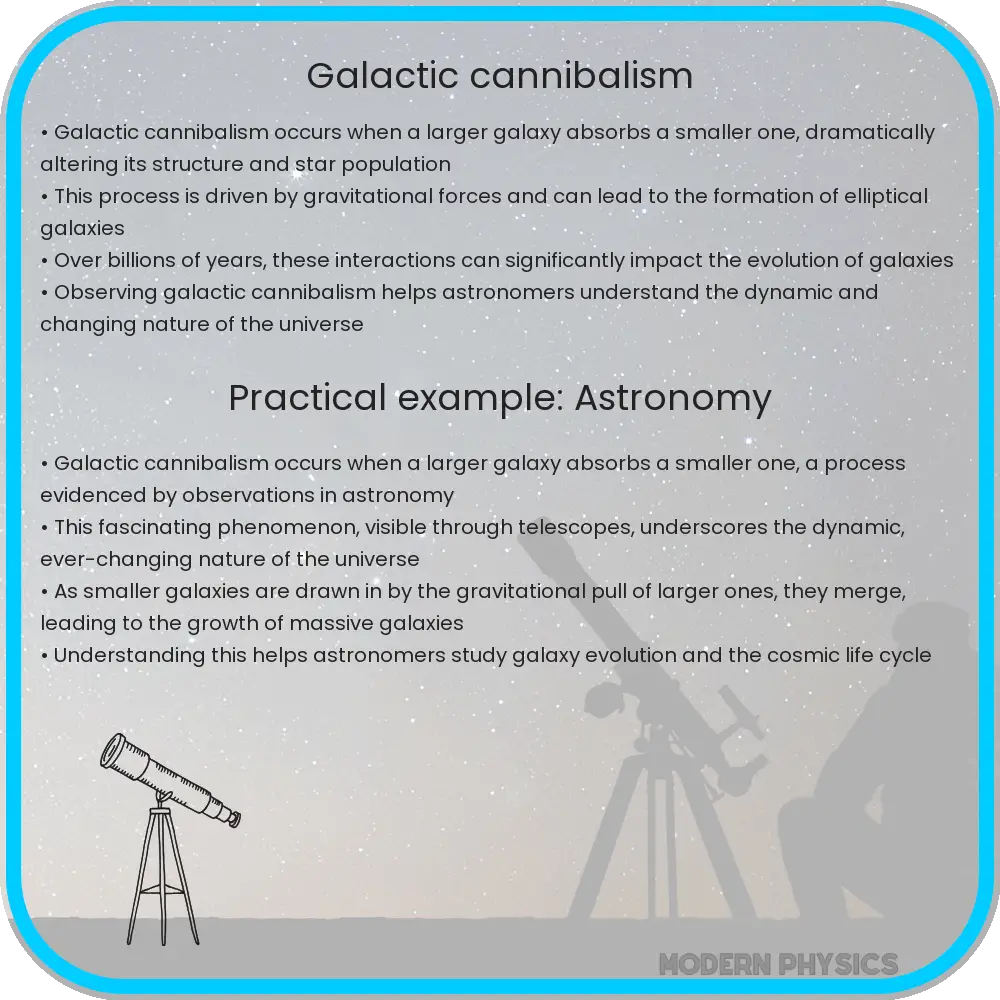
Galactic cannibalism refers to the process by which a larger galaxy, through gravitational forces, merges with and absorbs a smaller one. This cosmic phenomenon is a fundamental component of the hierarchical evolution of the universe, shaping the structure and dynamics of galaxies over billions of years. It offers insights into the mysterious and majestic nature of our cosmos, contributing significantly to our understanding of galactic formation and evolution.
The Cosmic Ballet of Gravity
At the heart of galactic cannibalism lies gravity, the invisible force that orchestrates the cosmic dance of galaxies across the universe. When galaxies pass close enough to each other, their mutual gravitational attractions can pull them together in a dramatic display of cosmic dynamics. This interaction can distort their shapes, pulling streams of stars and gas from the smaller galaxy to the larger, a phenomenon often referred to as “tidal stripping. Over time, the smaller galaxy becomes increasingly distorted and eventually merges into the larger, altering its structure and star formation rates.
Stellar Signatures of Past Mergers
Evidence of galactic cannibalism is imprinted in the structure and stellar populations of galaxies. Astronomers can identify past mergers by examining the distribution and composition of stars within a galaxy. Older, redder stars typically inhabit the central regions, while younger, bluer stars, indicative of recent star formation, are found in the outer areas. Anomalies in this distribution can suggest past merger events. Additionally, the presence of tidal tails – long streams of stars and gas extending into space – serves as a telltale sign of gravitational interactions between galaxies.
The Role of Dark Matter
Dark matter, the invisible substance that makes up most of the universe’s mass, plays a crucial role in galactic cannibalism. It acts as a scaffold around which galaxies form and evolve. During mergers, the dark matter halos that envelop galaxies interact, influencing the dynamics of the collision and the ultimate shape of the resulting galaxy. Understanding the interplay between dark matter and visible matter during these events is key to unlocking the secrets of galaxy formation and evolution.
Evolutionary Implications of Galactic Cannibalism
Galactic cannibalism is not merely a destructive process but also a driving force of evolution in the universe. As galaxies merge, they undergo significant transformations. These include new patterns of star formation, alterations in their chemical compositions, and changes in their morphologies. For example, the merger of two spiral galaxies can lead to the formation of an elliptical galaxy, significantly altering the galactic landscape. This evolutionary process contributes to the diversity of galaxy shapes and types observed in the universe today.
Technological Advancements and Observations
The study of galactic cannibalism has been propelled forward by technological advancements in astronomy. Telescopes equipped with advanced optics and imaging capabilities, both ground-based and in space, have allowed astronomers to peer deeper into the cosmos and uncover the remnants of galactic mergers billions of light-years away. The detailed observations provided by these instruments offer invaluable data for understanding the complex dynamics of galactic cannibalism and its impact on the evolution of the universe.
The Future of Galactic Studies
The ongoing advancements in computational astrophysics have opened new avenues for exploring galactic cannibalism. Simulations can now model the intricate gravitational interactions between galaxies with unprecedented detail, providing insights into the future of our Milky Way as it continues to interact with its neighbors, including the Andromeda galaxy. These simulations are essential for predicting the outcomes of galactic mergers and understanding the future landscape of the cosmos.
Conclusion
Galactic cannibalism is a captivating phenomenon that highlights the dynamic and ever-changing nature of the universe. It underscores the fundamental role of gravity in shaping the cosmic landscape, from individual galaxies to the large-scale structure of the universe. By studying these celestial events, astronomers can gain deeper insights into the processes that drive galactic evolution and the complex interplay between dark and visible matter. As we continue to advance our observational and computational capabilities, our understanding of the universe’s history and its future will undoubtedly expand, unveiling the mysteries of the cosmos one galaxy at a time.