
Explore the efficiency, precision, and control of exothermic process calorimetry, its applications, and advancements in various industries.
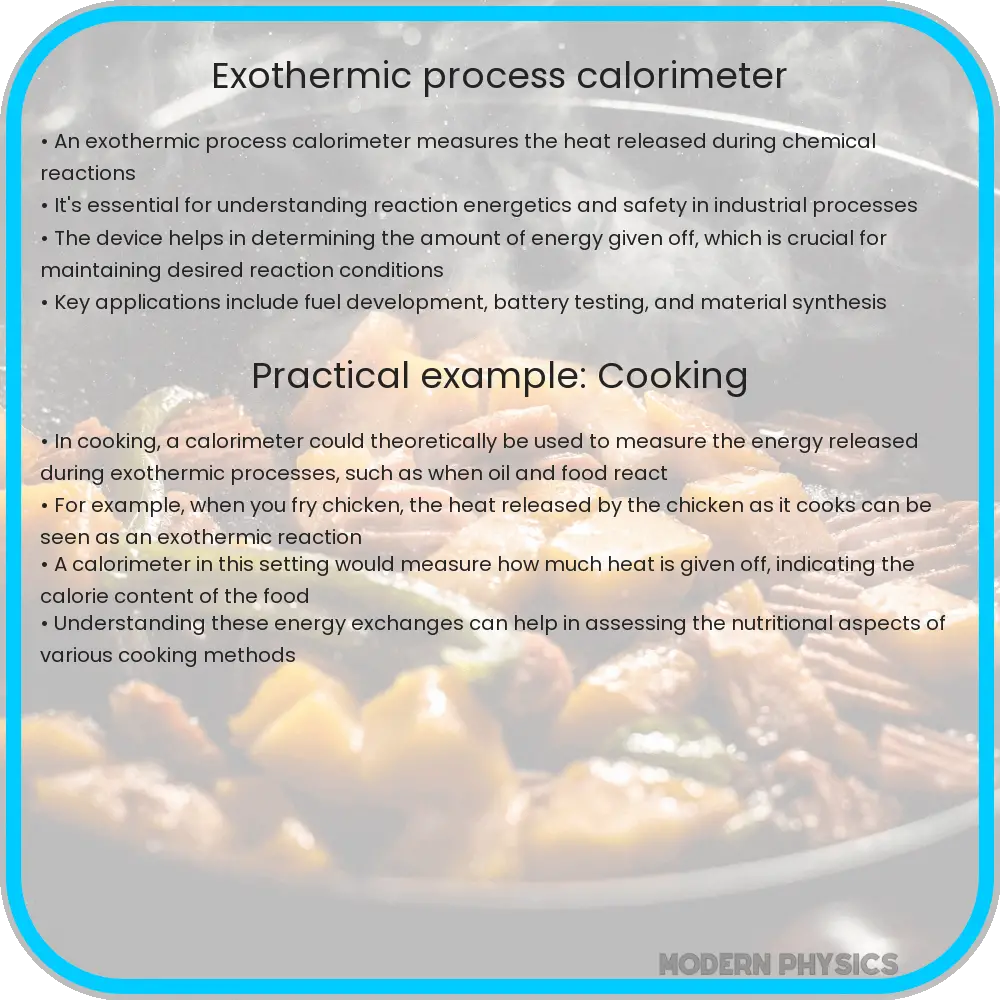
Understanding Exothermic Processes in Calorimetry
Exothermic processes are fundamental in the field of chemistry and thermodynamics, playing a crucial role in various scientific and industrial applications. A calorimeter, a device used to measure the heat of chemical reactions or physical changes, is pivotal in studying these exothermic processes. This article delves into the intricacies of exothermic processes in calorimetry, highlighting their efficiency, precision, and control.
The Principle of Exothermic Reactions
An exothermic reaction is a chemical process that releases energy in the form of heat, light, or sound. The general formula for an exothermic reaction can be represented as:
Reactants → Products + Energy
In this process, the total energy of the products is less than that of the reactants, indicating the release of energy to the surroundings. This release of energy is what calorimeters are designed to measure accurately.
Calorimetry: Measuring Heat Transfer
Calorimetry is the science of measuring the heat of chemical reactions or physical changes. A calorimeter measures the amount of heat absorbed or released during these processes. The efficiency of a calorimeter depends on its ability to isolate the system and prevent energy exchange with the environment.
Types of Calorimeters
There are various types of calorimeters, each suited for different kinds of exothermic processes:
- Bomb Calorimeter: Ideal for combustion reactions, it measures the heat of combustion of a substance.
- Coffee Cup Calorimeter: Common in educational settings, suitable for solution-based reactions at constant pressure.
- Differential Scanning Calorimeter: Measures heat flow associated with phase transitions and chemical reactions.
Efficiency, Precision, and Control in Calorimetry
The efficiency of a calorimeter is gauged by its ability to accurately measure the energy changes without losing heat to the surroundings. Precision in calorimetry is achieved through meticulous calibration and control of experimental conditions. Advanced calorimeters are equipped with precise temperature sensors and controls to ensure accurate measurements.
Control in calorimetry involves maintaining a stable environment and accurately replicating experimental conditions. This is crucial for achieving reliable and reproducible results, especially in complex exothermic reactions.
Calorimeters play a vital role in industries such as pharmaceuticals, materials science, and energy. Understanding the heat release in exothermic processes aids in optimizing reactions for maximum efficiency and safety.
In the next section, we will explore applications of exothermic calorimetry in real-world scenarios and delve into the technical advancements that enhance the precision and control of these measurements.
Applications and Technical Advancements in Exothermic Calorimetry
The practical applications of exothermic calorimetry are vast and varied. In the pharmaceutical industry, it helps in understanding the thermodynamics of drug interactions and stability. In materials science, calorimetry is used to study the thermal properties of new materials, aiding in the development of more efficient and sustainable products. The energy sector benefits from calorimetry in optimizing fuel combustion processes, enhancing energy production while minimizing environmental impact.
Advancements in Calorimetric Techniques
Technological advancements have significantly enhanced the capabilities of calorimeters. Modern instruments offer greater sensitivity, allowing for the detection of minute heat changes. Automation and computer integration have led to more precise control and data analysis, providing deeper insights into exothermic processes. Innovations like microcalorimetry enable the study of small-scale reactions, crucial in biochemical and nanotechnology research.
Ensuring Accuracy and Reliability
To ensure accuracy and reliability in calorimetric measurements, rigorous calibration procedures are essential. Calibration involves using standard materials with known heat capacities to adjust the calorimeter’s readings. This step is crucial for obtaining valid results, especially when dealing with highly sensitive exothermic reactions.
Environmental and Safety Considerations
Exothermic processes, while beneficial, can pose risks due to the high amounts of energy released. In industrial settings, understanding these reactions through calorimetry is vital for maintaining safety standards. Additionally, calorimetry plays a role in environmental conservation by helping to design processes that minimize energy waste and reduce carbon footprints.
Conclusion
In conclusion, exothermic process calorimetry stands as a cornerstone in the scientific understanding and industrial application of heat-related phenomena. Its efficiency, precision, and control are critical for accurately measuring and analyzing the energy dynamics of chemical reactions. With continuous technological advancements, calorimetry is evolving, offering more sophisticated and sensitive methods to study exothermic processes. These advancements not only enhance our understanding of the fundamental aspects of thermodynamics but also drive innovation across various sectors, including pharmaceuticals, materials science, and energy. As we continue to explore the complexities of heat and energy, the role of calorimetry remains indispensable, ensuring safety, efficiency, and sustainability in our endeavors to harness the power of exothermic reactions.