
Explore the efficiency of Electrostatic Air Cleaners: quiet operation, low maintenance, and how they improve indoor air quality in homes and offices.
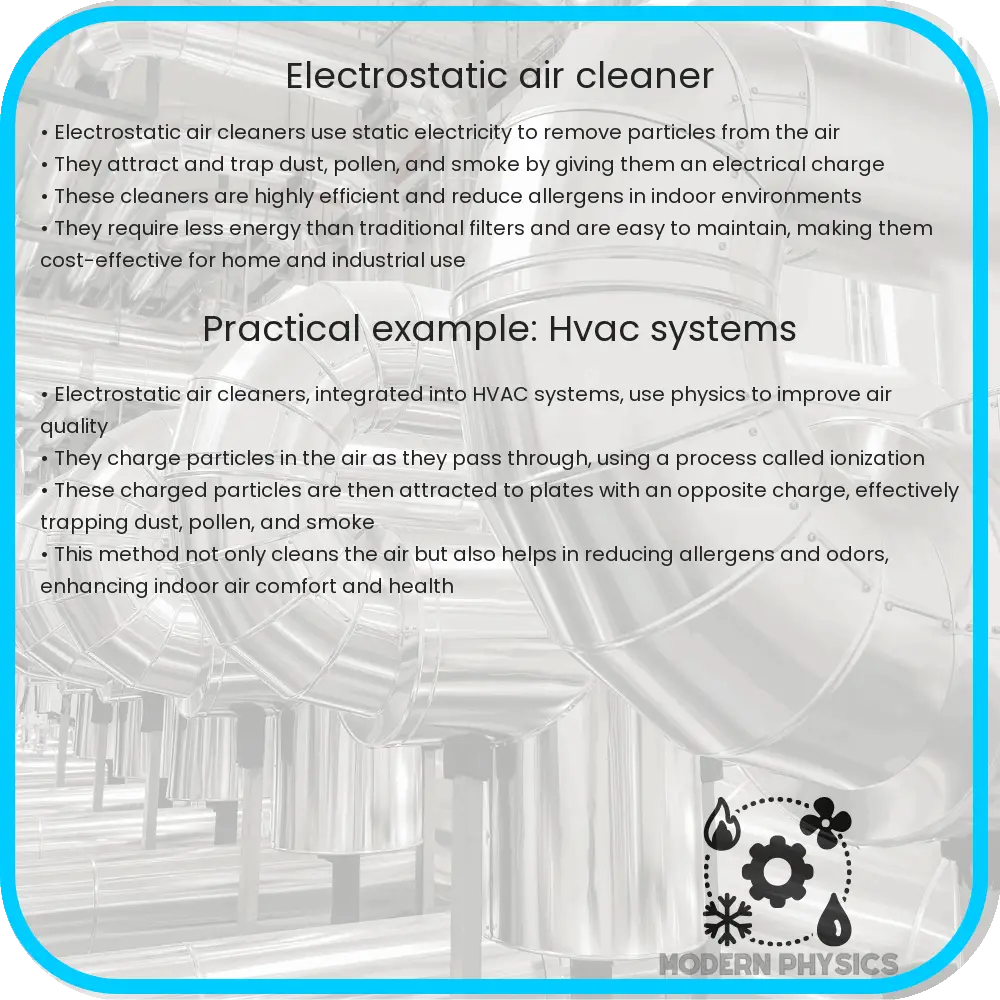
Understanding Electrostatic Air Cleaners
Electrostatic air cleaners have emerged as a popular solution in improving indoor air quality. These devices use a unique method to capture and remove particles from the air, making them an efficient, quiet, and low-maintenance option for homeowners and businesses alike.
How Electrostatic Air Cleaners Work
At the heart of an electrostatic air cleaner is the principle of electrostatic precipitation. This process begins as air passes through an ionizing section, where particles in the air gain an electrical charge. These charged particles are then attracted to oppositely charged collector plates, effectively removing them from the air stream.
Components of Electrostatic Air Cleaners
Key components of these systems include:
- Pre-filter: Captures larger particles, extending the life of the ionizing wires and collector plates.
- Ionizing Wires: Charge the particles in the air.
- Collector Plates: Attract and hold the charged particles.
- Post-filter: Ensures even cleaner air output.
Advantages of Electrostatic Air Cleaners
Electrostatic air cleaners offer several benefits:
- Efficiency: Capable of capturing particles as small as 0.1 microns, including pollen, dust, and smoke.
- Quiet Operation: Lacking moving parts like fans, these units operate more quietly than conventional air purifiers.
- Low Maintenance: With washable filters, they require less frequent replacements.
- Cost-Effectiveness: Reduced maintenance and no need for regular filter replacements make them a cost-effective option in the long run.
Considerations for Choosing an Electrostatic Air Cleaner
When selecting an electrostatic air cleaner, consider:
- Room Size: Ensure the unit is appropriately sized for the area where it will be used.
- Maintenance Requirements: While low-maintenance, periodic cleaning of collector plates and ionizing wires is necessary.
- Airflow: Adequate airflow is crucial for optimal performance.
In summary, electrostatic air cleaners provide an effective, quiet, and economical solution for maintaining indoor air quality. Their ability to trap a wide range of particles, coupled with low operational and maintenance costs, makes them an attractive option for both residential and commercial settings.
Installation and Operation of Electrostatic Air Cleaners
Installing an electrostatic air cleaner is generally straightforward. Most units are designed for ease of integration into existing HVAC systems or as standalone units. It’s important to follow the manufacturer’s guidelines for installation to ensure optimal performance and safety.
Environmental Impact and Energy Efficiency
Electrostatic air cleaners are also favored for their environmental benefits. They produce less waste since their filters are washable and reusable, unlike disposable filters in traditional air purifiers. Additionally, many models are energy-efficient, further reducing their environmental footprint and operating costs.
Health Benefits
By removing airborne contaminants, electrostatic air cleaners can significantly improve indoor air quality. This is particularly beneficial for individuals with allergies, asthma, or other respiratory conditions. The reduction of pollutants like dust, pollen, and smoke contributes to a healthier living or working environment.
Limitations and Considerations
While electrostatic air cleaners are highly effective, they do have limitations. For example, they may not be as effective against gases and odors as other types of air purifiers. Additionally, if not cleaned regularly, the efficiency of the unit can decrease, and it can emit ozone, a potential irritant for some individuals.
Maintenance Tips
Maintenance is relatively simple but crucial. Regularly cleaning the collector plates and ionizing wires is essential to maintain efficiency and prevent ozone production. It’s also important to periodically check and replace any pre-filters or post-filters, depending on the model.
Conclusion
Electrostatic air cleaners stand out as an innovative solution to indoor air pollution. Their unique way of capturing and removing airborne particles makes them highly efficient and effective. With the advantages of quiet operation, low maintenance, and cost-effectiveness, they are an excellent choice for enhancing air quality in both residential and commercial environments. However, it’s important to consider their limitations and ensure regular maintenance for optimal performance. By doing so, electrostatic air cleaners can significantly contribute to a healthier, cleaner indoor atmosphere.