
Learn about electrochemical gas sensors and their critical role in monitoring gas concentrations, focusing on their operation, precision, and stability.
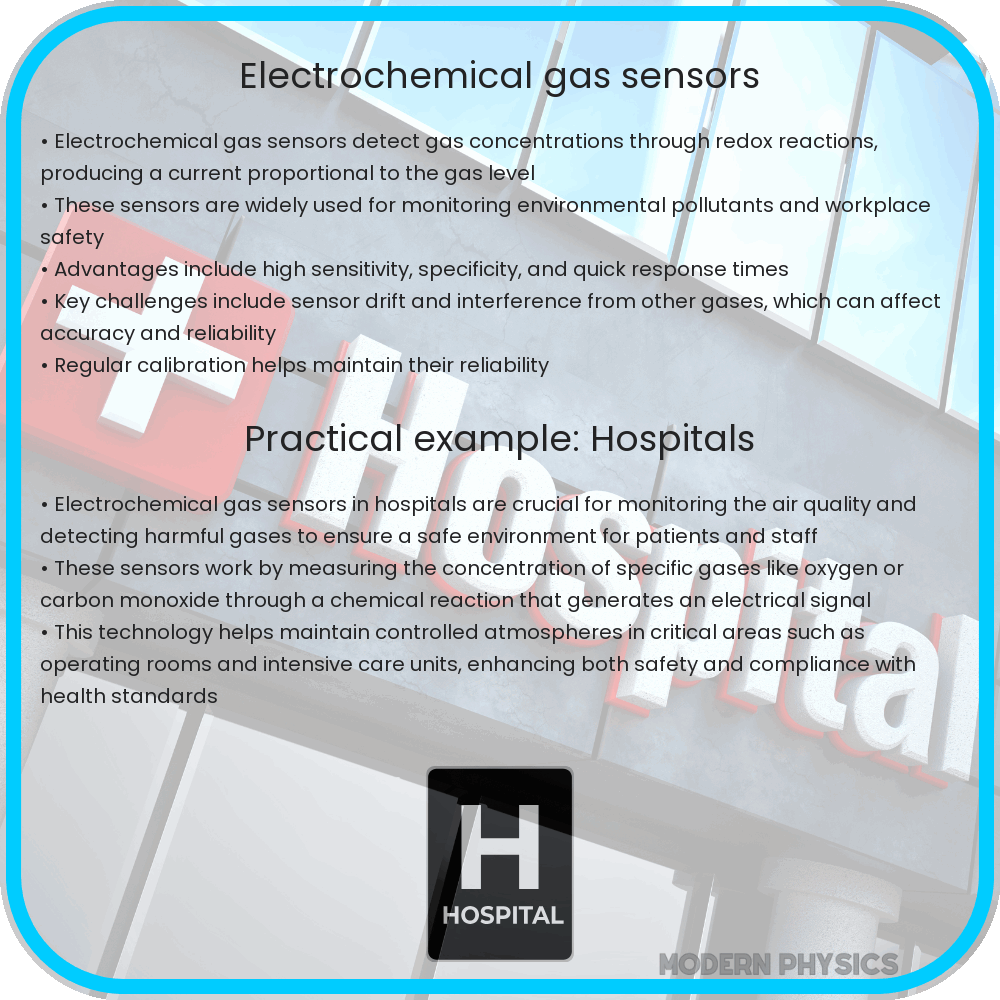
Understanding Electrochemical Gas Sensors: Precision, Response, and Stability
Electrochemical gas sensors are vital tools in monitoring environmental pollution, ensuring workplace safety, and controlling emissions in industrial processes. These sensors function based on the electrochemical reduction or oxidation of a target gas at an electrode interface, converting its concentration directly to an electrical signal. This article provides a fundamental overview of how electrochemical gas sensors operate, focusing on their precision, response times, and stability.
Principles of Operation
At the core of an electrochemical gas sensor is a cell comprising three main components: the working electrode, the counter electrode, and the reference electrode. These are immersed in an electrolyte solution that facilitates ion transfer. When gas molecules enter the sensor, they react either at the working electrode, producing an electrical current proportional to their concentration. The sensor’s design ensures that the reaction is limited by the diffusion of the target gas to the surface of the electrode, which enhances the linearity and repeatability of the sensor’s output.
Precision in Electrochemical Gas Sensors
Precision in electrochemical gas sensors is highly influenced by the quality and preparation of the electrodes and the purity of the electrolyte. High-quality materials ensure that the sensor’s output is consistent when exposed to the same concentration of gas under similar conditions. Furthermore, precision is also affected by how well the sensor maintains its calibration over time and its ability to resist changes due to environmental factors such as temperature and humidity.
Response and Recovery Times
The response time of an electrochemical gas sensor is defined as the time it takes for the sensor to reach 90% of its final steady state signal after the gas concentration has changed abruptly. The recovery time is similarly defined but occurs when the gas is removed. These times are critical for applications where rapid detection of gas concentration changes is essential, such as leak detection in chemical plants.
- Factors affecting response time: The diffusion rate of gas to the electrode, the reaction speed at the electrode surface, and the physical and chemical properties of the electrolyte.
- Improving response time: Enhancing the porosity of the electrode material, optimizing the electrode structure, and refining the electrolyte composition can significantly improve the sensor’s response time.
Stability of Electrochemical Gas Sensors
Stability is a crucial aspect, particularly for applications requiring long-term continuous monitoring. For electrochemical gas sensors, stability involves maintaining accuracy and precision over prolonged periods. Several factors can influence the stability, including the degradation of electrodes, contamination or evaporation of the electrolyte, and mechanical integrity of the sensor housing.
- Techniques to Enhance Stability: Using corrosion-resistant materials for electrodes, ensuring a hermetically sealed sensor design, and including features that compensate for environmental variability.
- Regular Calibration: To mitigate issues of long-term drift, regular calibration against known standard gases is necessary. This helps maintain the accuracy of the sensor throughout its service life.
Electrochemical gas sensors, with their ability to offer real-time monitoring of various gases, play a crucial role in many sectors. Understanding how these sensors work, their response behaviors, and stability under different conditions can help in optimizing their use in specific applications, ensuring safety and efficiency.
Environmental Impact and Safety Considerations
Electrochemical gas sensors not only contribute to industrial and safety applications but also play a significant role in addressing environmental concerns. By detecting harmful gases such as carbon monoxide and nitrogen oxides, these sensors help in monitoring air quality and in the implementation of environmental regulations. Effective monitoring can lead to better-informed decisions about industrial practices and urban planning, ultimately contributing to sustainable development.
- Reducing Environmental Footprint: Precise measurement and control of emissions can minimize environmental impacts from industries.
- Enhancing Public Safety: In urban areas, monitoring exhaust gases and industrial emissions can prevent health issues related to poor air quality.
Futuristic Trends in Electrochemical Gas Sensing Technology
Advancements in materials science and digital technology are set to transform the landscape of electrochemical gas sensing. Emerging trends include the integration of nanotechnology for better sensor performance and the incorporation of IoT (Internet of Things) for smarter, interconnected gas detection systems. These innovations promise enhanced sensitivity, selectivity, and real-time data processing capabilities.
- Nanomaterials: Utilizing nanomaterials can improve the responsiveness and efficiency of sensors by increasing the reactive surface area of the electrodes.
- Internet of Things: IoT-enabled sensors can facilitate the remote monitoring of gas levels, providing instant access to data through cloud computing, thus enhancing the response strategy during gas leak emergencies.
Conclusion
Electrochemical gas sensors are indispensable in the modern world, being pivotal in safeguarding health and safety while minimizing environmental impacts. Understanding the principles of their operation, including how precision, response times, and stability are influenced, allows for better implementation and reliance on these devices in various critical applications. As technology progresses, the potential for even more refined and responsive sensors grows, pointing to a future where real-time gas monitoring is more accurate and universally integrated into both industrial and residential environments. This continuous evolution in electrochemical gas sensor technology underscores the need for ongoing research and adaptation in sensor applications, ensuring that safety and environmental standards are not only met but also exceeded.