
The dosimetric leaf gap (DLG) is a critical parameter for calibrating multi-leaf collimators in radiation therapy, essential for precise cancer treatment.
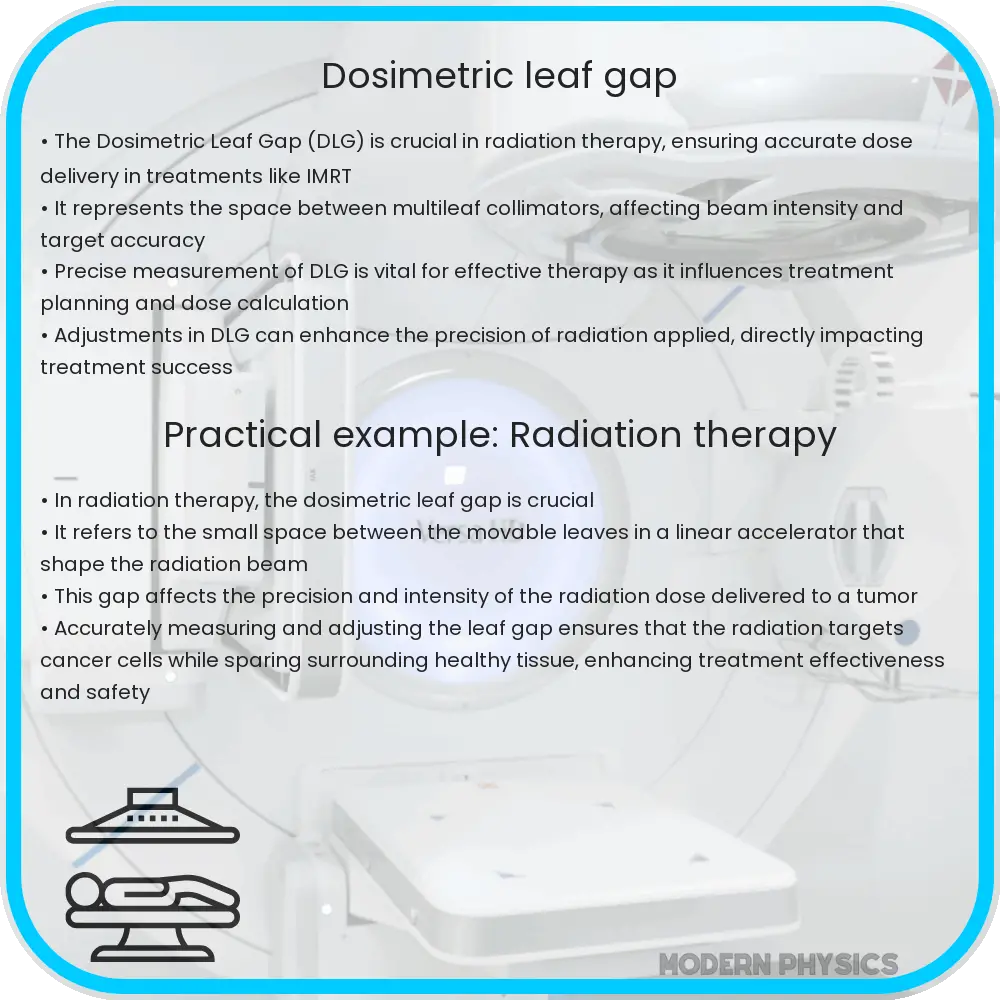
Understanding Dosimetric Leaf Gap: Its Role and Importance in Medical Physics
In the field of medical physics, precise delivery of radiation therapy plays a crucial role in the treatment of cancer. One of the fundamental components that ensure this precision in intensity-modulated radiation therapy (IMRT) and volumetric modulated arc therapy (VMAT) is the dosimetric leaf gap (DLG). DLG is a key parameter in the calibration of multi-leaf collimators (MLCs), which are used to shape the radiation beam to the contour of the tumor while sparing the surrounding healthy tissues.
The dosimetric leaf gap is defined as the small space between the ends of adjacent MLC leaves that impacts the dose of radiation delivered to the patient. It represents the offset needed to correctly model the dose output from the MLCs during treatment planning. Understanding and accurately calibrating this gap is essential for optimizing therapy effectiveness and patient safety.
Precision and Calibration of Dosimetric Leaf Gap
To achieve the necessary precision in radiation therapy, the dosimetric leaf gap is meticulously calibrated. This involves determining the effective gap that corresponds to the radiation transmission between the MLC leaves. The calibration process must be accurate as a minor deviation in DLG settings can lead to significant discrepancies in dose distribution, potentially affecting treatment outcomes.
Calibration is typically performed using advanced imaging and dosimetry techniques. Radiation oncologists and medical physicists work together to ensure that the measured dose distribution aligns with the planned dose. This process involves several steps:
- Measurement: Initial DLG values are obtained using specific measurement setups which include ionization chambers, film dosimetry, or other advanced dosimetric tools.
- Analysis: The collected data are then analyzed to assess the uniformity and accuracy of the radiation dose influenced by the MLC configuration.
- Adjustment: Based on the analysis, adjustments are made to the MLC settings to refine the DLG value, ensuring that it effectively matches planned therapeutic doses.
The careful calibration of DLG is a crucial step in treatment preparation, necessitating precise equipment and skilled professionals to execute. The ultimate goal is to ensure that the radiation dose delivered aligns closely with the treatment plan.
Impact of Dosimetric Leaf Gap in Medical Physics
The adjustment and management of the dosimetric leaf gap have a profound impact on the field of medical physics, particularly in the domains of treatment accuracy and patient safety. Proper management of DLG contributes to:
- Enhanced Treatment Accuracy: By finely tuning the DLG, radiation beams are more accurately shaped according to the tumor geometry, resulting in better adherence to the prescribed dose distribution.
- Reduced Radiation Exposure to Healthy Tissues: Accurate DLG calibration helps minimize the dose received by surrounding healthy tissues, which is crucial for reducing potential side effects and complications.
- Improved Patient Outcomes: With precise dose delivery and reduced exposure to healthy tissues, the likelihood of effective treatment and favorable patient outcomes is increased.
Conclusively, the meticulous management of the dosimetric leaf gap is vital for the success of radiation therapy, highlighting its importance in ongoing technological advancements and treatment strategies in medical physics.
Technological Advancements in Dosimetric Leaf Gap Calibration
As technology advances, so does the methodology involved in the calibration and management of the dosimetric leaf gap. The integration of sophisticated software capable of complex calculations and simulations represents a significant leap in ensuring highly accurate treatments. These software solutions facilitate the rapid assessment and adjustment of DLG, thereby streamlining the calibration process.
Additionally, the rise of artificial intelligence (AI) and machine learning in medical physics has led to the development of algorithms that predict optimal DLG values, further refining the process. These technological enhancements not only boost the precision but also significantly reduce the time required for calibrations, enabling quicker treatment initiation.
Continual Education and Training in DLG Management
The complexity of DLG management demands ongoing education and training for radiation oncologists and medical physicists. Continuous professional development ensures that these professionals are up to date with the latest techniques and technologies in DLG calibration.
Workshops, seminars, and certification programs are regularly organized by health institutions and professional bodies to train staff on the nuances of DLG and its impact on radiation therapy. Through these educational endeavors, healthcare providers maintain a high standard of treatment delivery, directly influencing the overall efficacy of cancer therapy.
Conclusion
The dosimetric leaf gap plays an indispensable role in the realm of radiation therapy, significantly influencing treatment accuracy and patient safety. Through meticulous calibration and ongoing technological advancements, medical professionals can ensure that the radiation delivery meticulously mirrors the treatment planning. This not only helps in achieving the desired therapeutic outcomes but also minimizes risk and enhances the quality of life for patients undergoing radiation therapy.
As we continue to witness innovations in medical technology, the importance of understanding and properly managing the DLG will remain a central focus in medical physics. It underscores the dynamic interplay between technology and healthcare, aiming for precision in cancer treatments and fostering better patient care practices.
Thus, the continuous improvement in DLG calibration techniques, along with robust training programs for medical professionals, are paramount not only to keep up with technological advancements but also to ensure the highest standards of patient-centric care in radiation oncology.