
Diurnal temperature variation is the difference between the highest and lowest temperatures within a single day, influencing weather, agriculture, and ecology.
Understanding Diurnal Temperature Variation
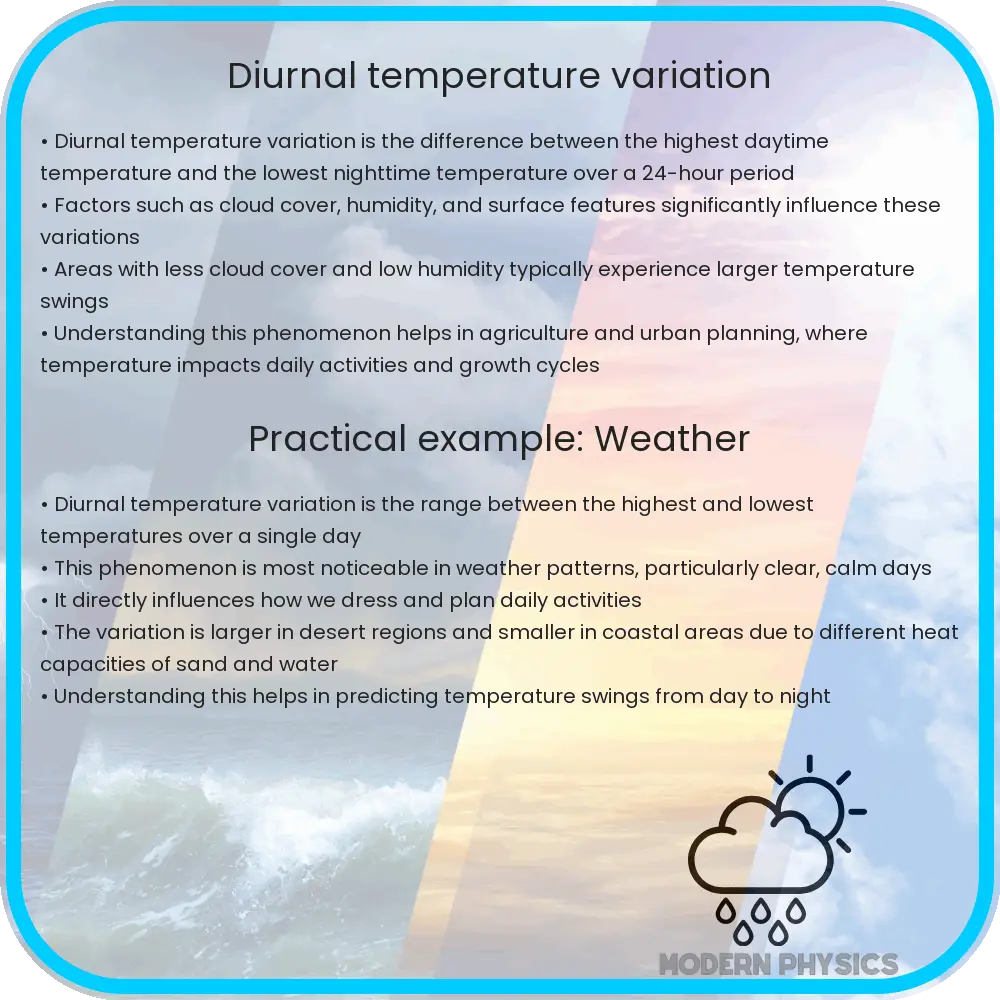
Diurnal temperature variation (DTV) refers to the difference between the highest and lowest temperatures recorded in a single day. This natural phenomenon is crucial for understanding daily weather patterns and has significant implications for agriculture, ecology, and daily human life.
Patterns of Diurnal Temperature Variation
Several factors influence the pattern of diurnal temperature variation, including geographic location, season, and local environmental conditions. Generally, DTV is more pronounced in desert regions where the air is dry, and less pronounced in coastal areas where the humidity tends to stabilize temperature fluctuations.
- Latitude: Locations closer to the equator experience smaller diurnal variations compared to those near the poles.
- Seasons: Diurnal temperature variation tends to be higher during the summer and lower during the winter due to changes in the sun’s position and the length of daylight.
- Cloud Cover: Clouds play a significant role in controlling daytime heating and nighttime cooling, thus affecting the extent of diurnal temperature changes.
For instance, on a clear day, the sun’s rays more effectively heat the ground, leading to higher daytime temperatures and thus a greater temperature drop at night. Conversely, a cloudy day might show lesser variation due to the insulation effect provided by clouds.
Effects of Diurnal Temperature Variation
The fluctuation between day and night temperatures can have numerous effects on both the environment and human activities:
- Agriculture: Large diurnal temperature variations can stress plants, affecting their growth and development. Certain crops thrive on cooler nights, while others require more stable temperature conditions.
- Weathering: Repeated heating and cooling cycles can cause rocks and other materials to expand and contract, leading to mechanical weathering. This process is particularly relevant in desert landscapes.
- Human Health: Extreme fluctuations in temperature can exacerbate health problems, such as respiratory or cardiovascular conditions, by placing additional stress on the body.
Forecasting Diurnal Temperature Variation
Accurate forecasting of diurnal temperature variations is important for effective planning and management in sectors like agriculture, disaster management, and urban planning. Meteorologists use various models and tools to predict these temperature changes, including:
- Atmospheric Models: These simulate the interactions between atmospheric components to predict temperature changes.
- Remote Sensing: Satellite data provides information on cloud cover, surface temperature, and other factors that influence diurnal changes.
- Ground-Based Observations: Weather stations continuously record local temperature, which is crucial for refining forecasts.
By integrating data from these sources, forecasters can provide more accurate temperature predictions, helping to mitigate the adverse effects of large temperature swings and promoting better preparedness for temperature-dependent activities.
Adapting to Diurnal Temperature Variation
Given the challenges posed by diurnal temperature variation, it is important for sectors like agriculture, construction, and health to adapt effectively. Various strategies can be implemented to mitigate the effects of these temperature fluctuations:
- Building Design: Architects can use materials that absorb or deflect heat differently during the day and release or retain it during the night. This approach helps in maintaining a more consistent indoor temperature regardless of external changes.
- Agricultural Practices: Farmers can choose crop varieties that are better adapted to wide temperature ranges, or adjust planting dates and irrigation methods to coincide with optimal temperature conditions.
- Health Advisories: Public health officials can issue advisories and guidelines to help at-risk populations manage health risks associated with significant temperature variations.
These adaptive measures not only mitigate the effects of DTV on daily activities but also contribute to the long-term sustainability of ecosystems and communities affected by these changes.
Conclusion
Diurnal temperature variation is a significant natural phenomenon that affects various aspects of life on Earth. From influencing agricultural productivity to affecting geological processes and human health, the impact of DTV is wide-reaching. Understanding the causes and patterns of DTV helps in forecasting these changes and in developing strategies for adaptation. As the planet’s climate continues to change, it becomes increasingly important to study and understand the diurnal temperature variation, ensuring that societies can better prepare and adapt to the new challenges posed by environmental changes. By investing in comprehensive research and adopting innovative adaptation strategies, we can mitigate the effects of diurnal temperature variations and enhance our resilience to its impacts.