
Explore the art of curtain wall design, balancing statics, safety, and aesthetics in modern architecture for sustainable, efficient buildings.
Understanding Curtain Wall Design: A Blend of Statics, Safety, and Aesthetics
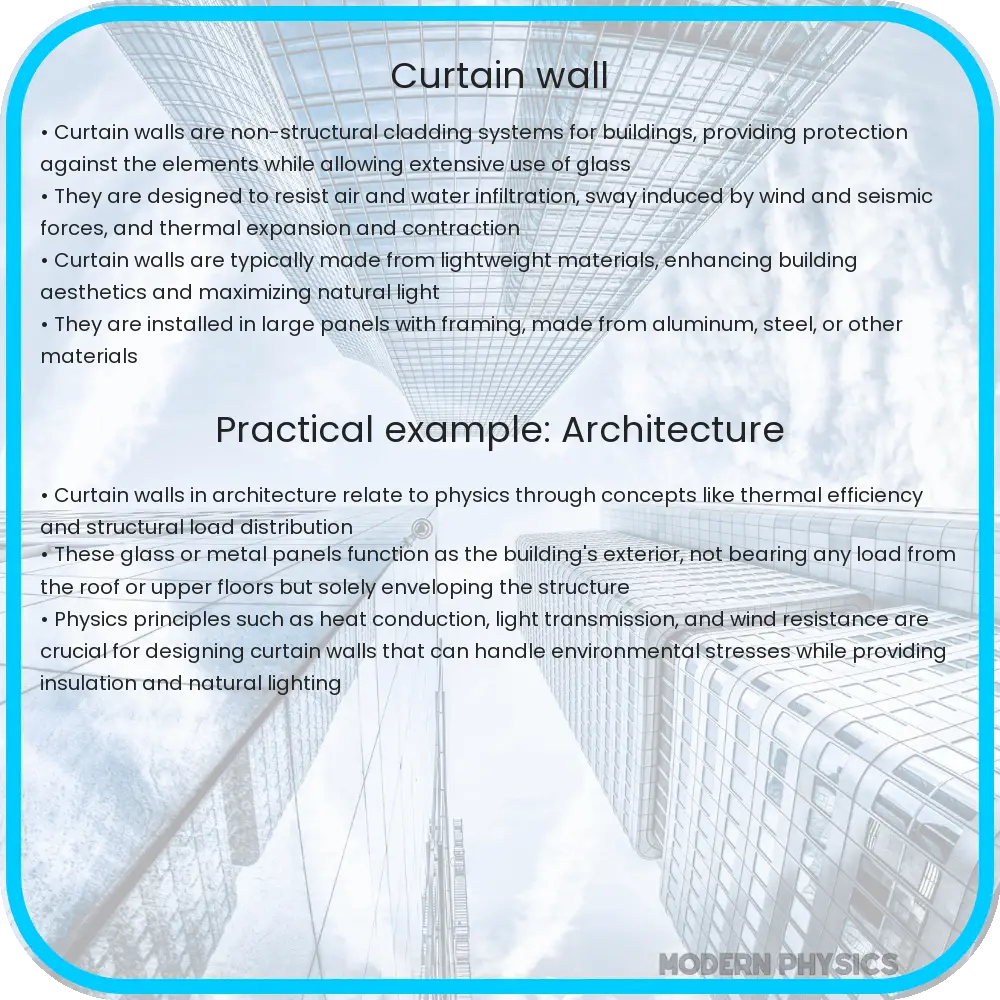
Curtain wall systems, an integral part of modern building design, offer both aesthetic appeal and functional benefits. These non-structural exterior walls do not bear any load of the building, yet play a crucial role in weather resistance and thermal efficiency. Integrating statics, safety, and aesthetics into curtain wall design is a multidisciplinary challenge that requires careful consideration of various factors.
Statics Integration in Curtain Wall Systems
The integration of statics in curtain wall design involves understanding the forces acting on the building. Curtain walls must withstand wind loads, seismic activity, and thermal expansions without transferring these stresses to the main building structure. The design process often utilizes advanced computational models to simulate these forces and determine the optimal configuration of the curtain wall. Materials like aluminum, glass, and steel are commonly used due to their strength and flexibility.
Safety Considerations
Safety is paramount in curtain wall design. The system must comply with fire safety regulations, preventing the spread of fire and smoke. Additionally, the glass used in curtain walls should be of a type that minimizes injury in case of breakage. Laminated or tempered glass is often preferred for its shatter-resistant properties. Furthermore, proper drainage systems must be incorporated to prevent water accumulation, which can lead to structural damage or mold growth.
Aesthetics and Design Flexibility
Curtain walls offer architects a canvas to imprint their creative designs. These walls can transform the external appearance of buildings, ranging from sleek, uniform glass facades to intricate patterns combining different materials and colors. The choice of materials and the design intricacy play a vital role in defining the building’s character, making it stand out or blend with its surroundings. Advanced glazing technologies also allow for energy-efficient designs that can control solar gain and enhance natural lighting.
Environmental Impact and Sustainability
Modern curtain wall designs increasingly focus on sustainability. The use of eco-friendly materials, along with designs that promote energy efficiency, is a growing trend. For instance, photovoltaic glass can generate electricity, while insulated glazing can reduce heating and cooling demands. These sustainable practices not only reduce the environmental footprint of buildings but also offer long-term economic benefits through energy savings.
Technological Innovations in Curtain Wall Design
Technological advancements have significantly influenced curtain wall design. The use of digital tools and software for precise calculations and visualizations has enhanced the accuracy and efficiency of designs. Smart glass technology, which allows control over light and heat transmission through the glass, is becoming increasingly popular. This innovation not only improves energy efficiency but also adds to the dynamic visual appeal of the building.
Challenges and Future Trends
Despite the advantages, designing curtain walls poses unique challenges. Balancing aesthetics, functionality, and cost-effectiveness is a complex task. Future trends in curtain wall design are likely to focus more on adaptive and responsive systems that can react to environmental changes, further enhancing energy efficiency and comfort levels within the building.
Another challenge is the maintenance and durability of curtain wall systems. Regular maintenance is crucial to ensure the longevity and performance of these systems. Innovations in self-cleaning glass and more durable materials are addressing these concerns.
Conclusion
Curtain wall systems, integrating statics, safety, and aesthetics, are a testament to modern architectural innovation and efficiency. They are not just about creating visually stunning exteriors but also about enhancing the performance and sustainability of buildings. The integration of advanced technology and sustainable practices in curtain wall design is paving the way for smarter, more efficient, and aesthetically pleasing buildings. As we move forward, the continued evolution of curtain wall systems will play a significant role in shaping the urban landscapes of the future, reflecting a harmonious blend of art, science, and environmental consciousness.