
Explore car suspension systems: Understand optimization, load management, and stability for improved safety and performance in vehicles.
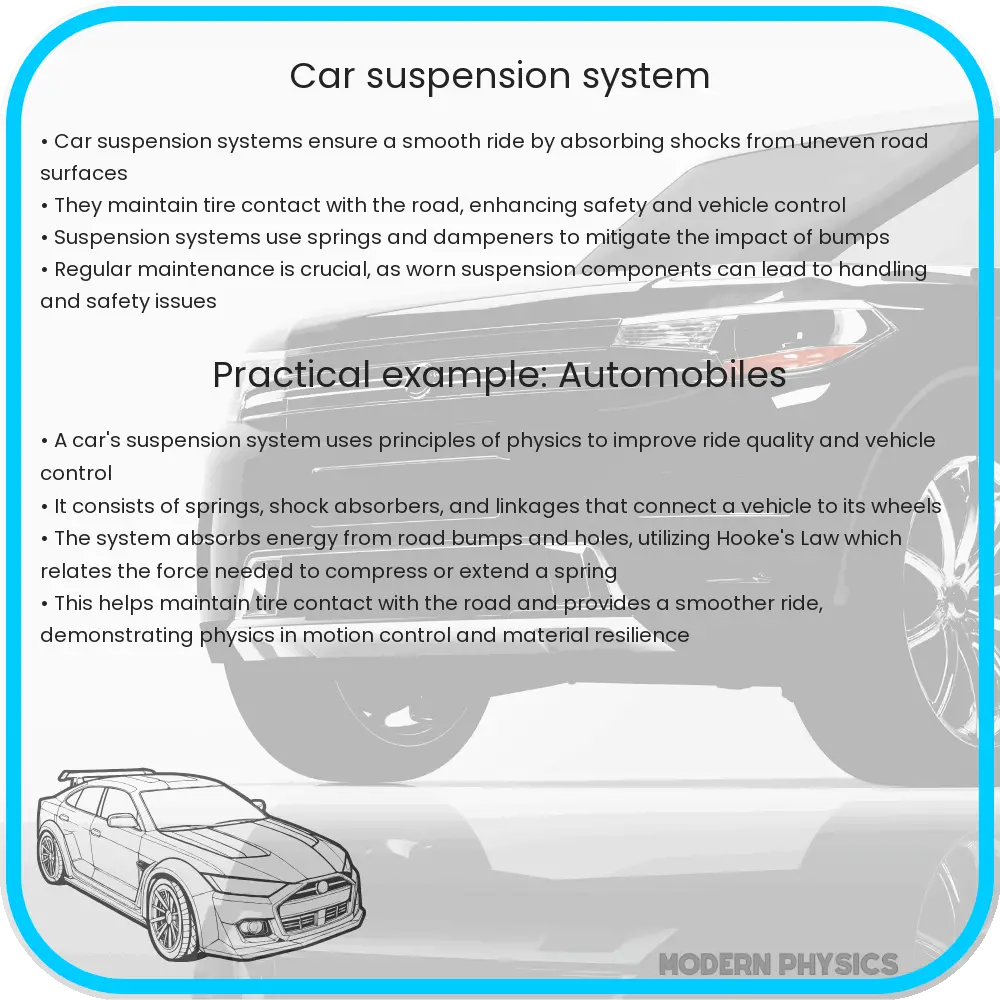
Understanding Car Suspension Systems: The Basics of Optimization, Load, and Stability
The suspension system of a vehicle is a critical component that not only ensures a smooth ride but also contributes significantly to the stability and safety of the vehicle. In this article, we delve into the intricacies of car suspension systems, focusing on optimization, load management, and stability.
What is a Car Suspension System?
A car’s suspension system is designed to maximize the friction between the tires and the road surface, provide steering stability, and ensure passenger comfort. The system typically consists of tires, air pressure, springs, shock absorbers, and linkages.
Optimization of Suspension Systems
Optimizing a car’s suspension involves balancing various factors, such as ride comfort, handling, and vehicle dynamics. Advanced systems use electronic controls to adapt to different driving conditions, balancing these factors in real-time.
- Adaptive Suspension: This technology allows for real-time adjustments, enhancing comfort and handling simultaneously.
- Tuning Spring Rates: Adjusting spring rates can improve load handling and reduce body roll during cornering.
- Damping Control: Optimizing the damping characteristics of shock absorbers can lead to better absorption of road irregularities.
Load Management in Suspension Systems
Managing the load effectively is crucial for the longevity and safety of the suspension system. Vehicles are designed to handle specific load limits, and exceeding these can lead to premature wear or failure.
- Load Distribution: Proper distribution of weight across all wheels is vital for maintaining stability and control.
- Upgraded Components: For vehicles frequently carrying heavy loads, upgrading components like springs and dampers is beneficial.
- Maintaining Balance: Balanced loading helps in preventing uneven tire wear and maintains proper alignment.
Stability in Suspension Systems
Stability in a vehicle’s suspension system is fundamental for safe driving. It involves several factors:
- Anti-Roll Bars: These bars reduce body roll during cornering, thus enhancing stability.
- Alignment: Proper wheel alignment is crucial for maintaining directional stability and tire longevity.
- Aerodynamics: Aerodynamic design can reduce lift and improve stability at high speeds.
Overall, the optimization of a car’s suspension system is a complex interplay of mechanical and electronic components designed to enhance load handling, comfort, and stability. Understanding these aspects is essential for any car enthusiast or automotive professional.
Advanced Technologies in Suspension Systems
Recent advancements in suspension technology have led to significant improvements in vehicle performance. Systems like magnetic ride suspension and air suspension offer unparalleled ride quality and handling. Magnetic suspension uses electromagnets and particles within the shock absorber fluid to rapidly adjust stiffness, while air suspension utilizes air springs for a smoother, adjustable ride.
Maintaining and Upgrading Suspension Systems
Regular maintenance of the suspension system is critical for ensuring its optimal performance. This includes checking and replacing worn-out parts, ensuring proper tire inflation, and regular wheel alignment checks. For those seeking enhanced performance, aftermarket upgrades like performance shocks, stiffer springs, and larger anti-roll bars can be considered.
The Role of Suspension in Vehicle Safety
The suspension system plays a pivotal role in vehicle safety. A well-maintained and properly functioning suspension system ensures better road grip, reduced braking distances, and improved handling, all of which are crucial for safe driving. Moreover, advancements in suspension technology contribute to advanced safety systems like electronic stability control (ESC) and anti-lock braking systems (ABS).
Environmental Considerations
With a growing emphasis on sustainability, the environmental impact of suspension systems is gaining attention. Lightweight materials are increasingly used to reduce the overall weight of the vehicle, thus enhancing fuel efficiency. Additionally, recyclable materials and eco-friendly manufacturing processes are being adopted in the production of suspension components.
Conclusion
In conclusion, the car suspension system is a vital component that significantly impacts a vehicle’s performance, comfort, and safety. Optimization of the suspension system for load and stability not only enhances the driving experience but also contributes to the vehicle’s longevity and safety. Advances in technology continue to revolutionize suspension systems, offering improved performance and environmental benefits. Regular maintenance and understanding the key aspects of suspension systems are essential for any vehicle owner or enthusiast. As automotive technology evolves, the role of the suspension system in achieving a balance between performance, comfort, and sustainability becomes even more significant.