
Learn about boundary microphones, innovative devices enhancing audio capture through unique placement and design, ideal for various settings.
Introduction to Boundary Microphones
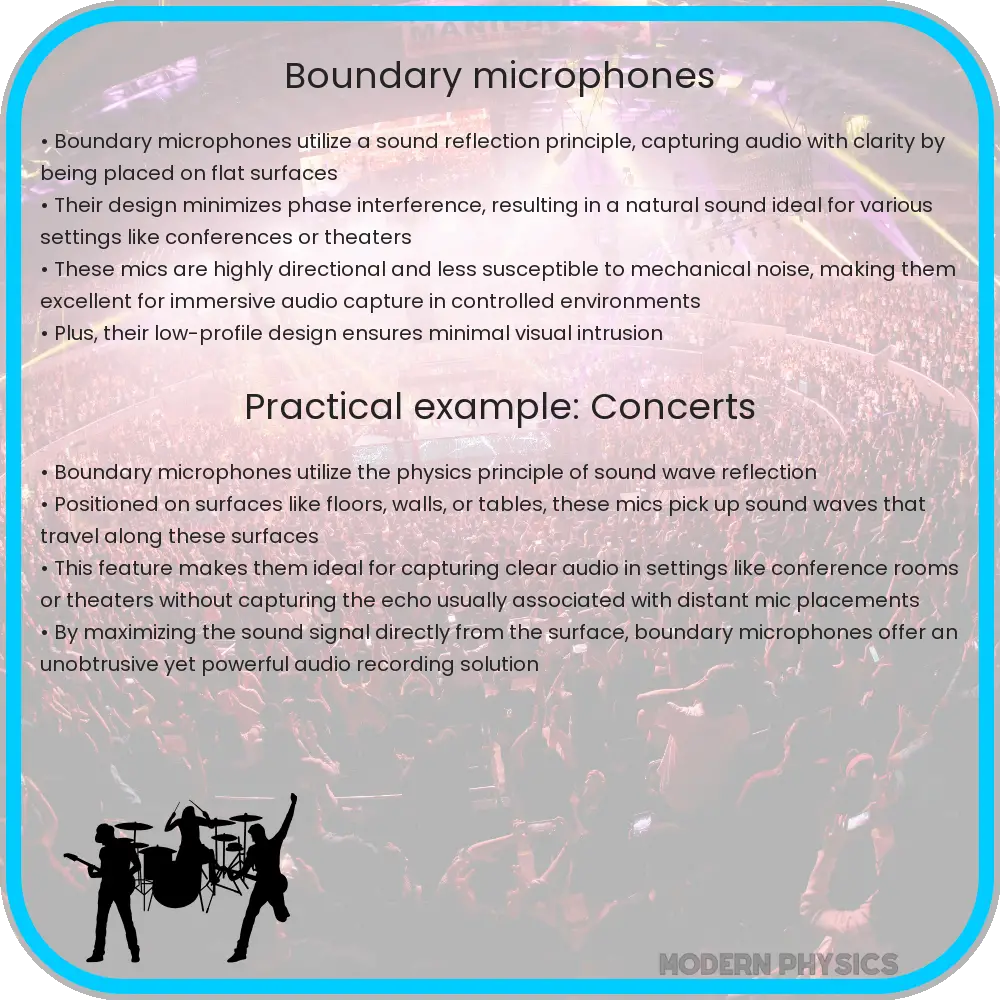
Boundary microphones, also known as “pressure zone microphones” or PZM, represent a fascinating application of acoustic principles, offering unique advantages in sound recording and amplification. Designed to be placed on a flat surface, boundary microphones utilize the physical boundary to enhance sound quality and reduce phase interference. This innovative approach to microphone placement allows for clearer audio capture, making them ideal for a variety of settings, from stage performances to conference rooms.
How Boundary Microphones Work
The core principle behind boundary microphones lies in their use of the boundary effect. When a microphone is placed close to a reflective surface, sound waves are effectively reinforced as they are reflected off the surface and back towards the microphone. This reinforcement occurs because both the direct sound wave and the reflected sound wave arrive at the microphone diaphragm simultaneously. By mounting the microphone flush against a surface, issues of phase interference are minimized, resulting in a clearer amplification of sounds.
Advantages of Using Boundary Microphones
- Clarity: Thanks to the minimization of phase interference, boundary microphones offer enhanced clarity. This is particularly beneficial in environments where sound quality is paramount, such as during live performances or in broadcasting.
- Versatility: Their unobtrusive design and ability to pick up sound from a wide angle make boundary microphones highly versatile. They can be used in a multitude of environments including theaters, sports arenas, and corporate boardrooms.
- Minimal Visibility: Another significant advantage is their low profile. Being small and mountable, boundary microphones can be positioned in strategic locations without distracting from the visual aesthetics of the venue.
Applications in Stage Use
Boundary microphones are particularly prized in stage settings for their discrete presence and wide area coverage. They are often strategically placed along the edge of a stage or set into the floor to capture everything from dialogue in a play to the intricate sounds of a classical music performance. This placement strategy allows sound engineers to capture high-quality audio without the microphones obstructing viewers’ sightlines or interfering with the performance itself.
Their ability to be incorporated directly into a performance area also makes boundary microphones ideal for use in live theater productions, where capturing the nuance of live performance is critical. Moreover, their robust construction means they can withstand the rigors of live performance, where quick set-ups and tear-downs are the norm.
Use in Conference Rooms and Educational Settings
Boundary microphones are also extensively used in professional settings such as conference rooms and educational institutions. In these environments, the ability to clearly capture voices from around a room is crucial. The microphones are typically placed on conference tables or lecterns to ensure that speakers are clearly heard by all participants, whether they are physically present or joining remotely. This clarity of sound is essential for effective communication and record-keeping in meetings and lectures.
In educational settings, boundary microphones facilitate a variety of audio-visual presentations and remote teaching requirements. They help in recording lectures that can be streamed or replayed for students, enhancing the learning experience by ensuring that every word is clearly heard regardless of the speaker’s position in the room.
Technical Considerations
When integrating boundary microphones into any setting, several technical considerations must be taken into account. For optimal performance, the surface on which the microphone is placed should be hard and reflective to maximize the boundary effect. Moreover, the user must consider the microphone’s polar pattern—typically, boundary microphones are omnidirectional, but directional options are available for more focused applications.
Care must also be taken to avoid placing these microphones near sources of noise such as air conditioning vents or electronic devices that might introduce interference. Proper placement and technical setup are crucial for leveraging the full benefits of boundary microphones.
Conclusion
Boundary microphones represent a significant advancement in capturing clear and precise sound in varied environments, from bustling stages to quiet conference rooms. By understanding and utilizing the boundary effect, these microphones offer numerous advantages, including enhanced audio clarity and minimal interference from phase issues. Moreover, their discreet form factor and versatility make them an ideal choice for both performance arts and professional settings.
The broad adoption of boundary microphones in diverse fields highlights their effectiveness and reliability. Whether used in live performances, corporate settings, or educational environments, boundary microphones ensure high-quality audio capture, contributing significantly to successful communication and recording endeavors. As technology advances, the continuing refinement and adaptation of boundary microphones will likely open new avenues for their use, further cementing their role as indispensable tools in audio recording and amplification.