
Explore the fascinating world of biopolymers in soft matter, covering their structure, function, and dynamic roles in biology and technology applications.
Understanding Biopolymers: Structure and Function in Soft Matter
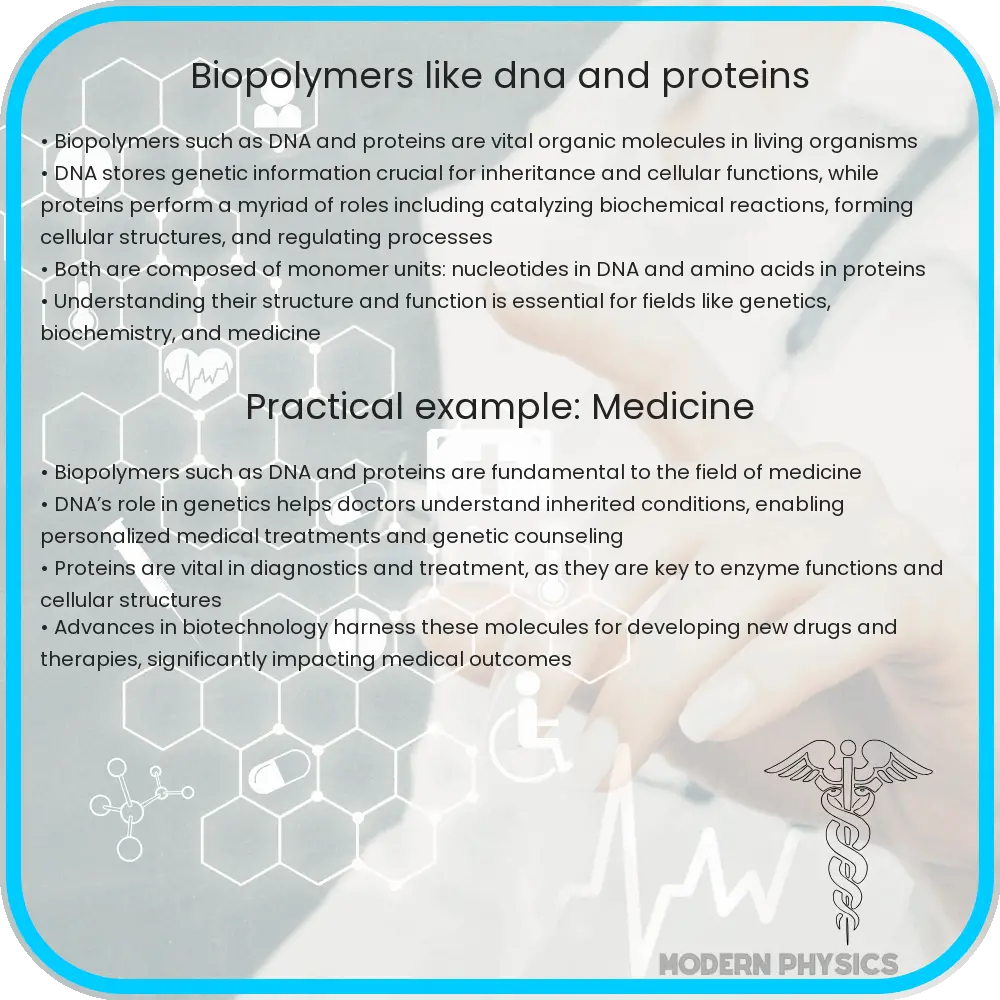
Biopolymers are a significant class of materials found in nature, consisting of monomeric units covalently bonded to form large molecules. They play crucial roles in the structure and function of living organisms and are increasingly utilized in various industrial applications due to their biocompatibility and sustainability. This article delves into the intricate world of biopolymers, exploring their structure, function, and dynamics within soft matter systems.
Structural Aspects of Biopolymers
Biopolymers can be broadly classified into three major categories: proteins, nucleic acids, and polysaccharides. Each category has unique structural features that determine its function and behavior in biological systems.
- Proteins: Composed of amino acid chains, proteins exhibit a wide range of structures from simple alpha-helices and beta-sheets to complex folded configurations. Their structure is crucial for their biological functions, including catalysis (enzymes), transport (hemoglobin), and support (collagen).
- Nucleic Acids: DNA and RNA, the carriers of genetic information, consist of nucleotide chains. The double helix structure of DNA and the single-stranded configuration of RNA are pivotal in genetic encoding, replication, and synthesis of proteins.
- Polysaccharides: These are long carbohydrate molecules, such as cellulose and starch, that serve various functions including energy storage and providing structural integrity to cell walls.
Functionality and Dynamics in Soft Matter
In soft matter physics, biopolymers are essential components due to their versatility and responsiveness to environmental stimuli. They contribute significantly to the mechanical properties of biological tissues, such as elasticity and viscosity. For example, the viscoelastic nature of biopolymers like hyaluronic acid is crucial in connective tissues and in lubricating joints. Additionally, biopolymers can undergo phase transitions, self-assembly, and dynamic reconfigurations, which are vital for cellular processes such as membrane formation, signaling, and motility.
The understanding of biopolymers in soft matter not only illuminates fundamental biological processes but also inspires the design of novel materials and devices mimicking biological systems. These materials find applications in drug delivery, tissue engineering, and environmentally friendly packaging, showcasing the broad impact of biopolymers in science and technology.
Applications and Innovations in Biopolymer Research
The exploration of biopolymers extends beyond basic biological functions to innovative applications in various fields. Advances in biotechnology and materials science have paved the way for the development of biopolymer-based products with enhanced performance and environmental benefits. For instance, biodegradable plastics derived from polysaccharides and proteins are being developed as alternatives to conventional petroleum-based polymers, addressing the global issue of plastic pollution. In medicine, biopolymers are revolutionizing drug delivery systems, allowing for targeted therapy with minimal side effects, and scaffolding in tissue engineering for regenerative medicine.
Furthermore, the study of biopolymers is integral to the development of sustainable energy solutions. Biopolymers such as cellulose and chitin are being utilized in the production of biofuels and biocomposites, contributing to a reduction in reliance on fossil fuels and promoting a more sustainable energy future. The dynamic and responsive nature of biopolymers also leads to their application in smart materials, which can change properties in response to external stimuli such as pH, temperature, and light, offering innovative solutions in various industrial applications.
Challenges and Future Directions
Despite the promising prospects, the field of biopolymers faces several challenges. These include the optimization of production processes, improving the mechanical properties and longevity of biopolymer-based materials, and addressing the economic aspects to make biopolymers competitive with traditional materials. Moreover, ongoing research is needed to fully understand the complex behaviors of biopolymers in diverse environments and their long-term ecological impact.
The future of biopolymer research holds tremendous potential for new discoveries and technologies. Interdisciplinary approaches combining biology, chemistry, physics, and engineering are crucial for advancing our understanding and utilization of biopolymers. As the demand for sustainable and biocompatible materials grows, the role of biopolymers is set to become increasingly significant, driving innovation and contributing to a more sustainable future.
Conclusion
Biopolymers are a fascinating and vital field of study, bridging the gap between biological sciences and material engineering. Their unique properties and functionalities make them indispensable in various biological and industrial applications. As research continues to unveil the mysteries of biopolymer structure, function, and dynamics, we can expect to see an expansion in their applications, addressing some of the most pressing environmental and health challenges of our time. Embracing the potential of biopolymers will lead to groundbreaking advancements in science and technology, heralding a new era of sustainability and innovation.