
Explore how audio mixers enhance recordings and performances by manipulating sound waves to achieve professional sound quality.
Understanding Audio Mixers: A Dive into Pro Sound Quality, Acoustics & Technology
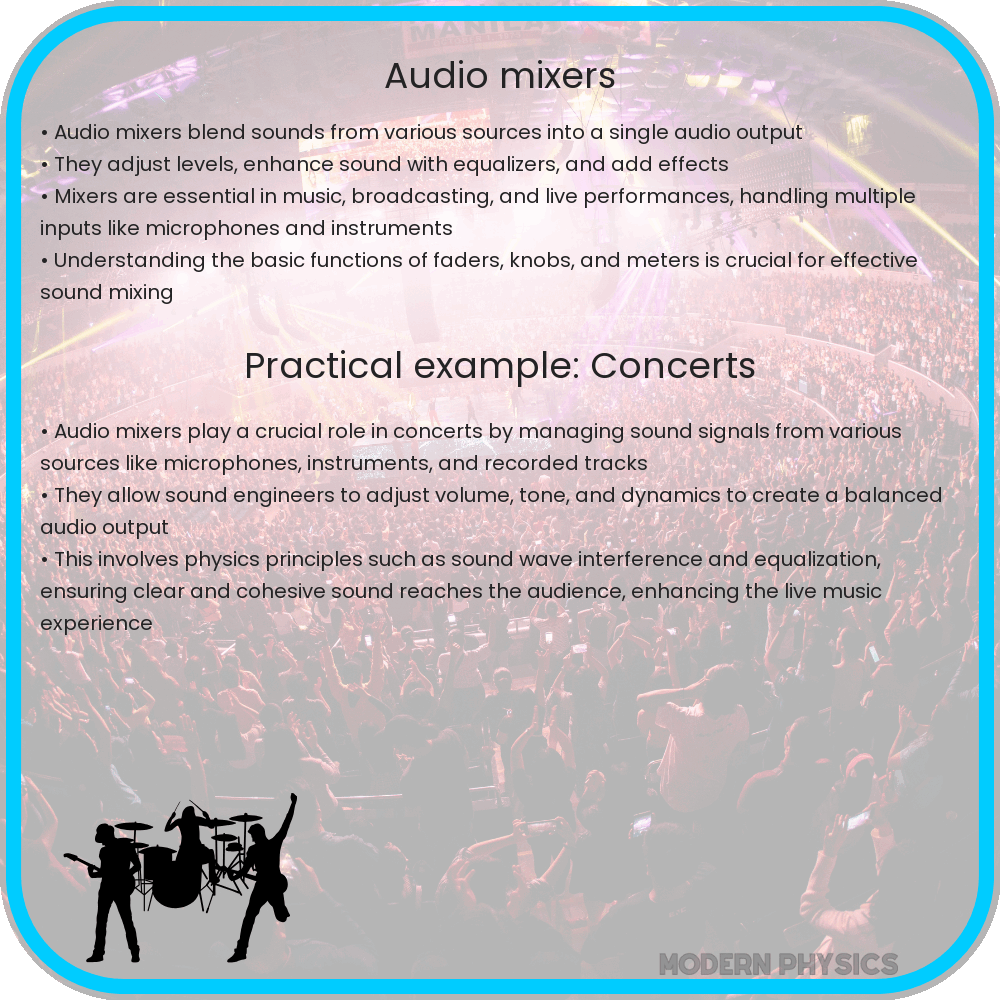
Audio mixers, often known as mixing consoles or soundboards, play a pivotal role in shaping the sound quality of recordings and live performances alike. This article aims to elucidate the physics of sound involved in audio mixing and the technological concepts behind audio mixers, making you better equipped to understand their importance in achieving professional sound quality.
The Basics of Sound and Acoustics
At its core, sound is a type of energy that travels through the air as waves resulting from the vibration of an object. These sound waves are captured by our ears and are identified as different sounds. Understanding this basic principle is crucial when diving into the realm of audio mixers which manipulate these sound waves to produce desired outcomes.
The characteristics of sound waves include frequency, amplitude, and wavelength. Frequency, measured in Hertz (Hz), dictates the pitch of the sound; amplitude affects the loudness, and wavelength determines the distance over which the wave’s shape repeats.
Components of an Audio Mixer
- Input Channels: This is where signals from different audio sources are received. Each channel can typically be controlled individually to adjust various aspects of the sound.
- EQ Controls: These are used to adjust the balance of frequency components, enhancing the audio’s quality by boosting or cutting specific frequencies.
- Auxiliary Channels (Aux Sends): Aux sends allow for the addition of effects or routing of some audio to other outputs without affecting the main mix.
- Faders: Faders help control the volume by sliding up or down, thus adjusting the intensity of the channel’s audio signal.
- Pan Control: It distributes the sound across the stereo field, moving between the left and right channels of the audio output.
How Audio Mixers Enhance Sound Quality
In a professional setting, audio mixers are indispensable due to their ability to balance and blend multiple inputs into a sonically pleasing output. Minimally, a mixer will adjust levels, enhance sound with EQ adjustments, and distribute audio to various outputs. These functionalities ensure that the audio in any given environment can be adapted to suit the needs of the performance or recording.
The precise adjustment of frequencies through an audio mixer’s equalizer allows sound engineers to manipulate sounds to correct issues such as feedback, muddiness, or harshness in the output. This is often essential in live performance settings, where acoustics can significantly influence sound quality.
Technological Advances in Audio Mixers
Modern mixers have evolved from purely analog boards to incorporate digital technology. Digital mixers can save settings for easy recall and offer built-in effects such as reverb, delay, and chorus, which enhance the acoustic attributes without the need for external devices. Furthermore, the integration of software has made mixers more versatile, allowing remote control, deeper editing options, and simplified interfaces that streamline the mixing process.
The Role of Audio Mixers in Different Environments
Audio mixers find their application not just in music studios and concerts but also in broadcasting, filmmaking, and even public speaking events. In broadcasting, mixers ensure that the audio level is consistent and clear, essential for audience understanding and engagement. Filmmakers use audio mixers to blend dialogue, background scores, and sound effects seamlessly, enhancing the auditory experience of the film. For public events, mixers help in managing speeches and music, ensuring clarity and preventing sound distortions that could distract listeners.
Practical Tips for Operating Audio Mixers
For beginners or those new to audio equipment, starting with basic mixer setups is advisable. Familiarize yourself with each component’s function by experimenting with controls one at a time. Here are some quick tips:
- Start with a Basic Setup: Initially, use minimal inputs and outputs to understand the flow of signals.
- Adjust Levels Gradually: Begin with low volume levels to avoid sudden high output that could lead to feedback.
- Use EQ Sparingly: Excessive equalization can distort the sound, so apply subtle changes to find the ideal balance.
- Practice Routing: Learn how to send audio to different outputs effectively, which is crucial for managing live performances.
Conclusion
Understanding and effectively using audio mixers is both an art and a science that enhances sound quality in various settings. From the basic principles of sound and acoustics to the complex functionalities of modern digital mixing consoles, audio mixers play an indispensable role in the world of audio engineering. Whether you are a budding sound engineer or just a music enthusiast, grasping the core functions and proper handling of audio mixers can significantly impact the quality of sound production. Remember, the key to mastery in audio mixing lies in continuous learning and practice. Embrace every opportunity to tweak and fiddle with your mixer — each adjustment not only improves the sound but also deepens your understanding of this fascinating field.