
Explore the benefits of anti-reflective coating for glasses, including enhanced vision, reduced glare, and eye strain relief for optimal eye health.
Understanding Anti-Reflective Coating: A Vision Enhancement Solution
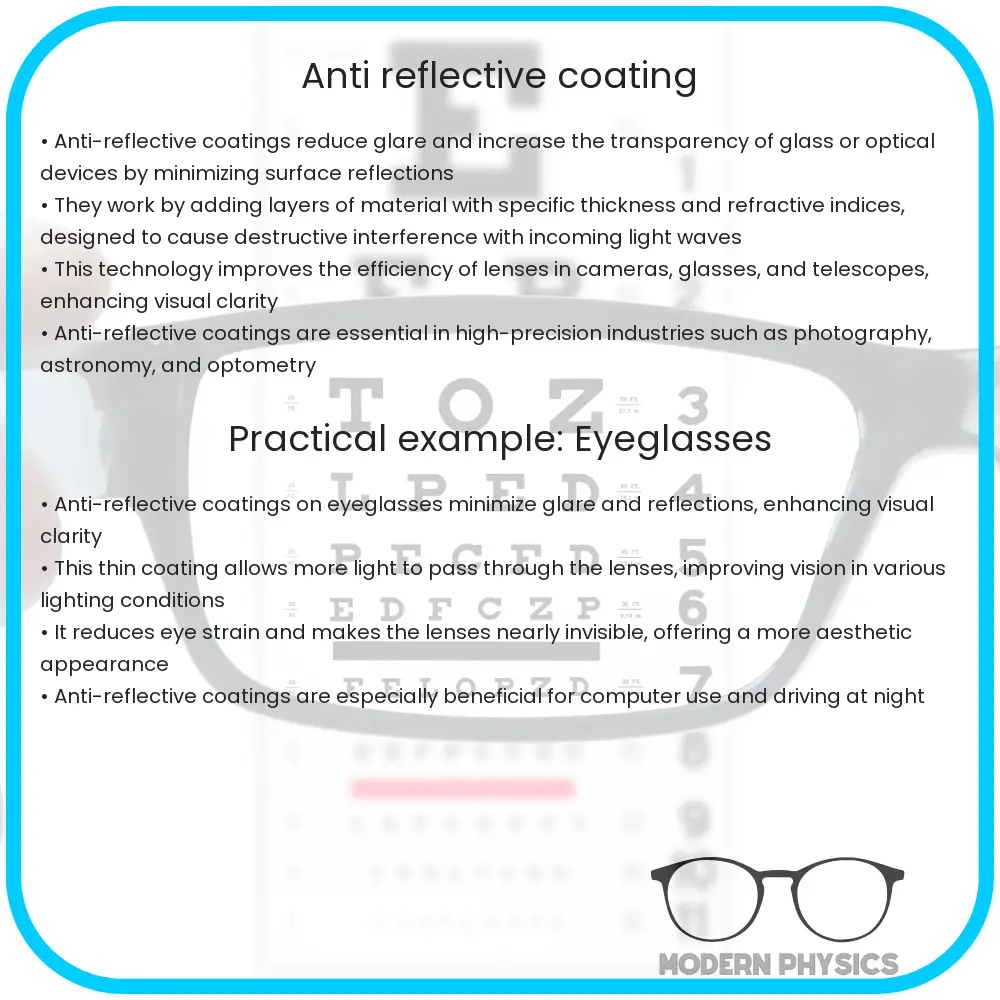
Anti-reflective (AR) coating, also known as anti-glare coating, is a thin film applied to the surface of lenses to minimize reflection. This innovative technology enhances visual clarity and comfort by allowing more light to pass through the lens directly into the eye, significantly reducing glare from sunlight and artificial lighting. The benefits of AR coating are particularly noticeable during activities such as driving at night or working in front of a computer screen, where glare reduction is crucial for optimal vision and eye health.
The Science Behind Anti-Reflective Coating
The effectiveness of AR coating lies in its unique ability to counteract reflections. This is achieved through a complex layering process, where multiple ultra-thin layers of material are applied to the lens. Each layer is scientifically engineered to block specific wavelengths of light, thereby reducing glare and reflection. The principal components often include compounds such as magnesium fluoride (MgF2) and silicon dioxide (SiO2), which are chosen for their optical properties and compatibility with the lens material.
Benefits of Anti-Reflective Coating
- Enhanced Visual Clarity: By reducing surface reflections, AR coating allows nearly 99% of available light to enter the eye, improving vision sharpness and color contrast.
- Reduced Eye Strain: AR-coated lenses help in minimizing eye strain caused by prolonged exposure to computer screens and harsh lighting, making them ideal for digital device users.
- Improved Aesthetics: Lenses with AR coating virtually eliminate reflections, making the lenses almost invisible. This not only enhances the wearer’s appearance but also improves eye contact and facial expressions.
- Scratch Resistance: Modern AR coatings often include layers that offer additional protection against scratches, extending the durability and lifespan of the lenses.
Understanding the technological intricacies and benefits of anti-reflective coating is essential for anyone looking to improve their vision and eye comfort. Whether for prescription glasses, sunglasses, or digital screen protection, AR coating offers a significant enhancement to the quality of vision and overall eye health.
Choosing the Right Anti-Reflective Coating for Your Needs
Selecting the appropriate AR coating for your eyewear involves considering several factors, including the type of activities you engage in, your sensitivity to glare, and any specific vision requirements you may have. It is also important to consult with an eye care professional who can recommend a coating that best suits your individual needs. Some AR coatings are designed to be more effective for high-index lenses, which require special attention due to their increased reflectivity, while others are tailored for specific environments, such as heavy computer use or driving.
Maintenance and Care for AR-Coated Lenses
To ensure the longevity and effectiveness of your AR-coated lenses, proper maintenance is crucial. Always use a soft, microfiber cloth and a lens cleaning solution recommended by your optometrist to clean your glasses. Avoid using abrasive materials or household cleaners, as these can damage the coating. Additionally, storing your glasses in a protective case when not in use will help prevent scratches and other physical damage to the coating.
The Future of Anti-Reflective Coatings
The field of anti-reflective coatings is continually evolving, with research focused on developing even more effective and durable solutions. Innovations include coatings that repel water and oils, making lenses easier to clean, and coatings that filter out harmful blue light from digital devices. As technology advances, we can expect AR coatings to become even more integral to optical health, enhancing vision and comfort in an increasingly digital world.
Conclusion
Anti-reflective coating represents a significant advancement in optical technology, offering numerous benefits that enhance both vision quality and eye health. By reducing glare, increasing light transmission, and improving lens durability, AR coatings provide a clearer, more comfortable visual experience for eyeglass wearers. Whether for daily wear, specialized tasks, or digital device use, incorporating anti-reflective coatings into your eyewear can greatly improve your visual comfort and performance. As technology continues to advance, the future of AR coatings looks promising, with potential for even greater improvements in visual health and lens technology. Embracing these innovations will lead to a future where eyewear not only corrects vision but also significantly enhances it, making an essential contribution to overall eye care and quality of life.