
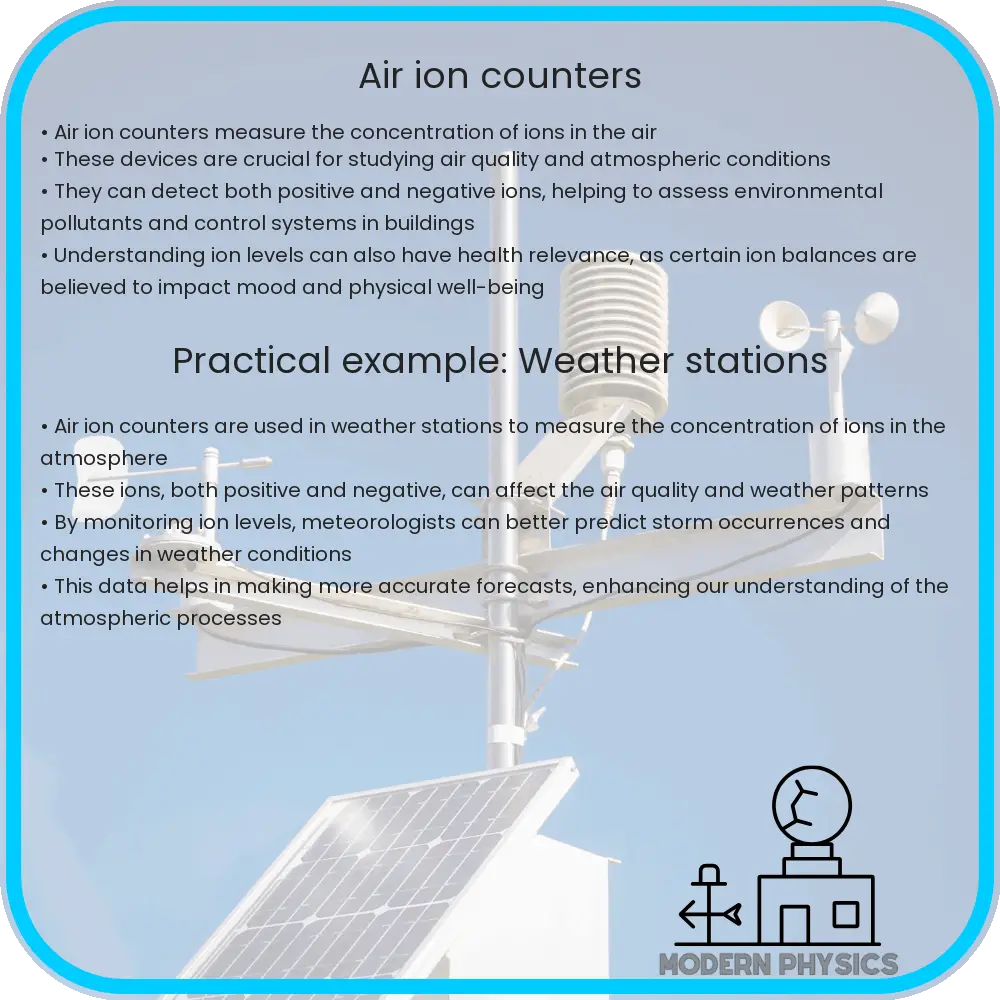
Air ion counters are instruments that measure ion concentrations in the air, essential for environmental science, air quality, and health studies.
Understanding Air Ion Counters: An Overview
Air ion counters are scientific instruments designed to measure the concentration of ions in the air. These ions, which are molecules or atoms with an electrical charge, play a crucial role in environmental science, indoor air quality assessment, and health-related studies. This article aims to delve into the accuracy, portability, and practical usage tips of air ion counters to help users optimize their applications.
Accuracy of Air Ion Counters
The accuracy of air ion counters is one of their most vital characteristics. It determines how reliable the readings of ion concentrations are. Accuracy can be affected by several factors, including the design of the ion detector, the calibration of the device, and environmental conditions such as temperature and humidity. Most high-quality air ion counters have a variance in accuracy of +/- 10% under controlled conditions. For scientific research, choosing a device with a proven track record of accuracy verified by independent calibrations is essential.
Portability of Air Ion Counters
Portability is another significant aspect of air ion counters, especially for field studies and real-time air quality monitoring. Modern air ion counters are compact and lightweight, making them easy to transport and use in various environments. Some models are even designed with built-in batteries and wireless data transfer capabilities, facilitating remote monitoring and data logging. The compact design allows researchers and environmental engineers to obtain ion measurements across multiple sites with ease.
Usage Tips for Air Ion Counters
- Regular Calibration: To maintain accuracy, it is crucial to calibrate air ion counters regularly. Follow the manufacturer’s guidelines on calibration intervals and procedures.
- Environment Consideration: Always be aware of the environmental conditions when using air ion counters. High humidity and temperature extremes can influence the accuracy of the readings.
- Data Logging: Utilize the data logging feature if available. Continuous data collection can help in analyzing trends and making informed decisions based on the ion concentration over time.
- Device Maintenance: Regular maintenance according to the manufacturer’s instructions is essential. This includes cleaning the sensors and replacing any consumable components as needed.
By adhering to these usage tips, users can greatly enhance the effectiveness and reliability of their air ion counters. Whether for research, environmental monitoring, or health assessments, understanding how to operate these devices correctly is key to obtaining valid and actionable data.
Applications of Air Ion Counters
Air ion counters have a wide range of applications in both environmental science and public health. In environmental science, they are used to study air quality and understand the effects of pollution on climate and ecosystems. Data collected can help in the formulation of strategies to reduce pollution levels and improve air quality. In terms of health, measuring the concentration of ions in indoor environments can reveal the presence of pollutants that may cause respiratory issues or other health problems. Thus, air ion counters are crucial tools for both researchers and public health officials.
Choosing the Right Air Ion Counter
Selecting the right air ion counter depends on the specific requirements of your application. Key aspects to consider include the sensitivity of the device, the type of ions it can detect, its range of detection, and whether it is suitable for the environmental conditions of the intended use area. For indoor air quality assessments, for example, a highly sensitive unit that can detect both positive and negative ions would be ideal. However, for rough outdoor environmental studies, a more rugged and less sensitive model might be more appropriate.
Conclusion
Air ion counters are invaluable tools in the realms of environmental science and health studies, providing essential data on air quality and ion concentration. Understanding the accuracy, portability, and appropriate usage of these devices allows for optimal application in various settings, from laboratories to field studies. With regular maintenance and calibration, an air ion counter can offer reliable service for years, aiding significantly in pollution control and health assessments. As technology advances, the capabilities and accuracy of air ion counters are expected to improve, further enhancing their utility in scientific and health-related fields. By carefully selecting the right model based on specific needs and following best usage practices, users can greatly benefit from what these sophisticated tools have to offer.