
Acoustic sealing enhances comfort and privacy by minimizing sound transmission through structural gaps in buildings and vehicles.
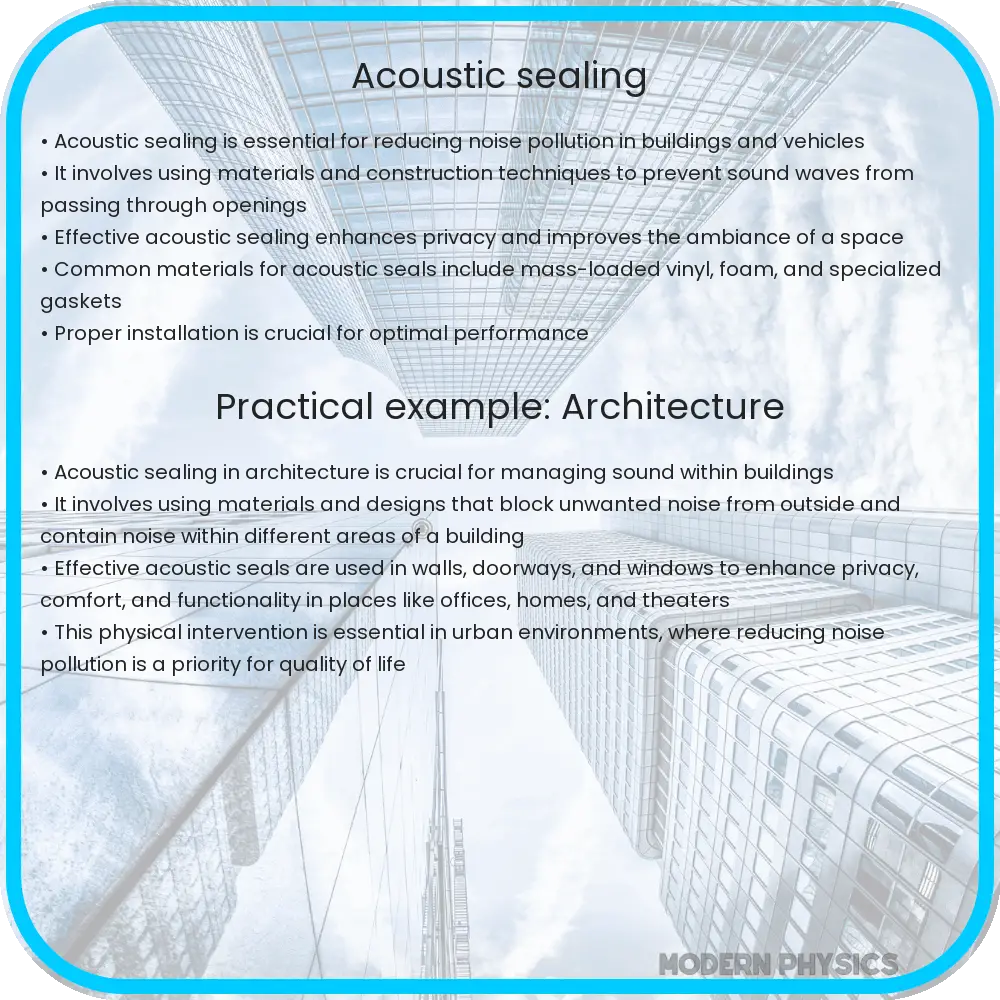
Understanding Acoustic Sealing: Enhancing Comfort and Reducing Noise
Acoustic sealing is a process designed to create a barrier that minimizes sound transmission through gaps and openings in buildings and vehicles. This practice not only enhances comfort by keeping extraneous noises at bay but also plays a crucial role in preserving privacy and improving the overall acoustic quality of a space. In this article, we’ll explore the fundamentals of acoustic sealing, its importance, and how it is applied in different environments.
Why is Acoustic Sealing Important?
Noise pollution has been recognized as an environmental antagonist to both humans and wildlife. Excessive noise can lead to a plethora of health issues, including stress, hearing loss, and disrupted sleep. In urban environments, and in industrial settings, mitigating noise is crucial for maintaining a healthy and pleasant living and working environment. Acoustic sealing is one of the most effective measures used to reduce the penetration of unwanted sounds.
How Does Acoustic Sealing Work?
Acoustic seals are designed to fill gaps through which sound waves travel. These seals use materials that absorb or block sound and are placed in strategic locations such as window and door frames, or any other structural breaches. The effectiveness of an acoustic seal depends largely on two factors:
- Material Density: Heavier materials tend to block sound more effectively. The density of the sealing material acts as a barrier, impeding the path of the sound waves.
- Elasticity: A material’s ability to absorb sound is also critical. Elastic materials can dampen vibrations, which helps in absorbing sounds before they can pass through a structure.
Using a combination of materials with different densities and elastic properties often yields the best results in soundproofing. Common materials used for acoustic seals include acoustic foams, rubber gaskets, and specially formulated sealants.
Applications of Acoustic Sealing
Acoustic sealing finds its relevance in numerous applications across different fields. Here are some of the key areas where acoustic seals are crucial:
- Construction: In building construction, acoustic seals are used in walls, ceilings, and floors to prevent the transmission of sounds between different rooms or exterior noise entering the building.
- Automotive: Car manufacturers apply acoustic seals in door panels, under the hood, and in trunk compartments to reduce engine noise and improve the comfort level within the vehicle.
- Industrial: In factories and plants, machinery and equipment often generate significant noise. Acoustic seals in machine enclosures can substantially reduce noise exposure to workers.
- Consumer Electronics: Devices like headphones, speakers, and home appliances also benefit from acoustic sealing to enhance sound quality by minimizing unwanted external noise.
The theory behind acoustic sealing can be understood through the basic principles of sound wave transmission. When sound waves encounter a barrier, three key actions occur: reflection, absorption, and transmission. Effective acoustic sealing aims to maximize reflection and absorption while minimizing transmission of sound waves through any openings. This is often achieved through the usage of materials that disrupt the sound waves’ path and absorb the acoustic energy.
Selecting Materials for Acoustic Sealing
The choice of materials for acoustic seals is pivotal in determining their efficiency. Here’s a closer look at the most commonly used materials:
- Acoustic Foams: These are designed to absorb sound waves more than they block. Acoustic foams are usually open-celled and lightweight, making them ideal for applications where sound absorption is more critical than sound blocking.
- Rubber Gaskets: Rubber is both dense and elastic, characteristics that make it excellent for sealing gaps where sound blocking is essential. Rubber gaskets are commonly used around windows and doors.
- Sealants: Flexible sealants, like silicone or polyurethane, can fill irregular gaps, preventing the transmission of sound waves. These are particularly useful in places where traditional gasket or foam materials may not be applicable due to space constraints or shapes.
Maintenance and Sustainability of Acoustic Seals
For acoustic seals to remain effective, regular maintenance is crucial. This includes periodic checks for gaps or degradation in sealant materials. Additionally, as sustainability becomes a priority in construction and manufacturing, choosing eco-friendly materials that do not compromise acoustic sealing properties is increasingly important. Many industries are exploring biodegradable or recycled materials for this purpose.
Conclusion
Acoustic sealing is a fundamental aspect of modern construction and design that significantly contributes to the comfort, privacy, and health of indoor environments across various sectors. By understanding and implementing effective acoustic sealing techniques, we can greatly enhance the quality of our living and working spaces. Whether in bustling cities, noisy industrial settings, or even our quiet home environments, the principles of soundproofing through acoustic sealing play a crucial role in protecting and improving our daily lives. Through strategic material selection and regular maintenance, acoustic sealing not only achieves its purpose but also moves toward sustainable practices that benefit everyone.
Embracing the science behind acoustic sealing helps us to appreciate the quiet moments more profoundly and underscores the importance of sound management in our increasingly noisy world.