
Discover how 3D glasses revolutionize immersive viewing with unparalleled clarity, comfort, and optical precision for a spectacular experience.
The Evolution of 3D Glasses: Enhancing Your Viewing Experience
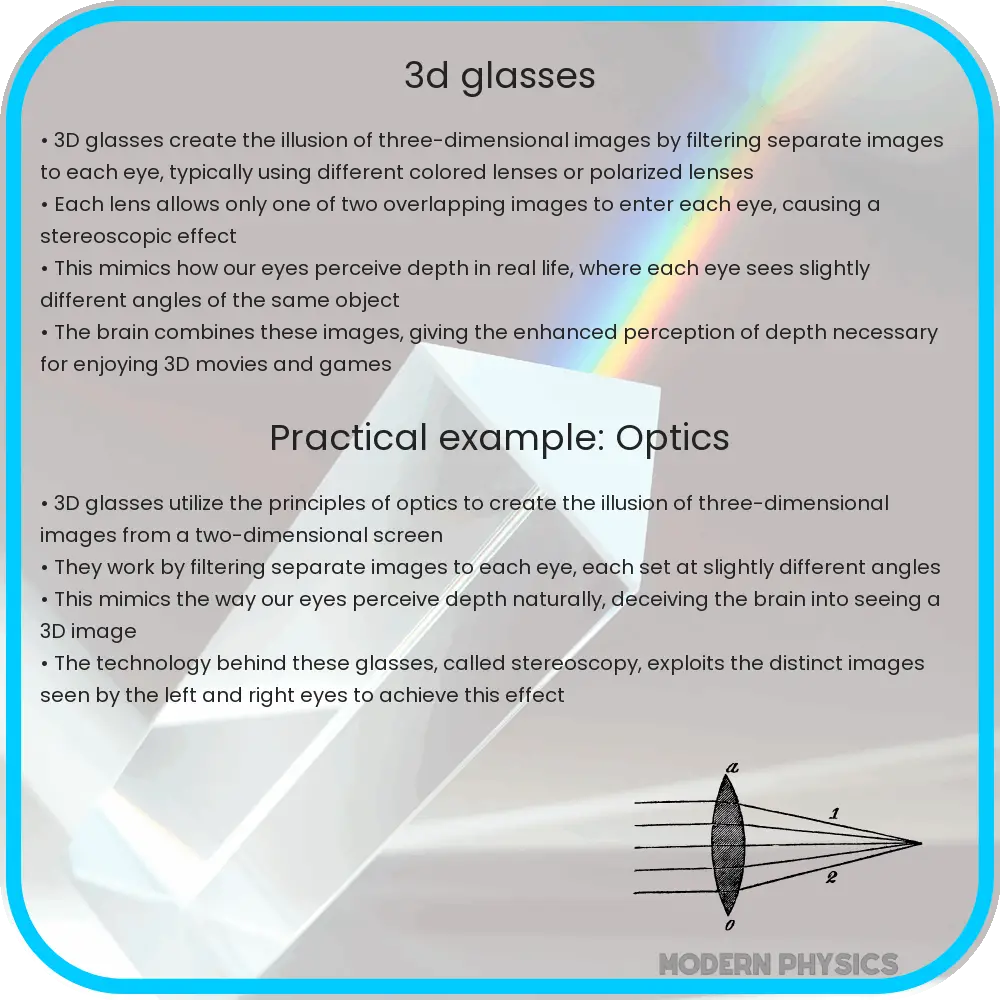
3D glasses have transcended from being mere novelty items to essential accessories for immersive entertainment. The technology behind these glasses is fascinating, combining clarity, comfort, and optical precision to bring images to life. This article delves into the intricacies of 3D glasses, highlighting how advancements in these areas have significantly improved the viewing experience.
Clarity: Seeing Beyond the Screen
Clarity in 3D glasses is paramount for a vivid viewing experience. High-quality lenses filter and direct light to each eye, creating a depth effect that transforms flat images into dynamic scenes. This is achieved through polarized lenses, which separate images for the left and right eyes, or active shutter glasses, which synchronize with the display to deliver separate images to each eye in rapid succession. The goal is to achieve crisp, clear images that are free from blurring or ghosting, enhancing the overall realism of the 3D experience.
Comfort: Designed for Extended Wear
Comfort is a crucial aspect of 3D glasses design, ensuring that viewers can enjoy extended periods of use without discomfort. Modern 3D glasses are lightweight, featuring ergonomic designs that fit snugly over the nose and ears. Adjustable frames and soft materials reduce pressure points, making them suitable for all ages. Some models even accommodate prescription glasses, ensuring that everyone can dive into the 3D experience without compromise.
Optical Precision: The Science Behind the Scenes
Optical precision in 3D glasses is the result of meticulous engineering, ensuring that the glasses accurately convey the intended images to each eye. This precision is critical in avoiding visual fatigue and ensuring a seamless blend of images into a cohesive 3D scene. Advanced lens materials and coatings minimize reflections and lens aberrations, ensuring that the optical path delivers the highest fidelity images. The science of optical precision extends to the chemical composition of the lenses, often utilizing polymers with specific refractive indices to enhance the 3D effect. For instance, the use of polycarbonate materials with a refractive index of 1.586 ensures minimal distortion and high impact resistance, contributing to both the durability and the quality of the viewing experience.
Is this conversation helpful so far?
Technological Innovations: The Future of 3D Viewing
The future of 3D glasses lies in the continuous innovation of technology, aiming to further enhance the user experience. Augmented reality (AR) and virtual reality (VR) technologies are beginning to merge with traditional 3D viewing, promising an even more immersive and interactive experience. These advancements may lead to glasses that not only project 3D images but also incorporate real-world elements, offering a hybrid experience that could revolutionize entertainment, education, and professional training.
Environmental Considerations and Accessibility
As technology advances, environmental considerations and accessibility also play pivotal roles in the evolution of 3D glasses. Manufacturers are increasingly focusing on sustainable materials and production processes, aiming to reduce the environmental impact of these devices. Moreover, accessibility features, such as audio descriptions and adjustable settings for users with different visual capabilities, are becoming more prevalent, ensuring that 3D technology can be enjoyed by a broader audience.
The Role of Consumer Feedback in Shaping Innovations
Consumer feedback is invaluable in the continuous improvement of 3D glasses. It drives manufacturers to refine designs for comfort, improve clarity and optical precision, and innovate towards more sustainable and accessible solutions. This dynamic interaction between consumers and developers helps shape the future of 3D viewing technology, ensuring it meets the evolving needs and preferences of users worldwide.
Conclusion
3D glasses have come a long way from their early days, evolving into sophisticated devices that offer unparalleled clarity, comfort, and optical precision. These advancements are not just enhancing our viewing experience but are also pushing the boundaries of immersive entertainment. With the integration of AR and VR technologies, the potential for future innovations seems limitless, promising even more immersive and interactive experiences. As we look forward to these developments, it’s clear that 3D glasses will continue to play a pivotal role in how we consume media, learn, and interact with the digital world. Through continued innovation, environmental consciousness, and a focus on accessibility, the journey of 3D glasses is just beginning, promising a future where the lines between reality and digital visualization blur, bringing our imaginations to life in ways we have yet to fully comprehend.